English
English

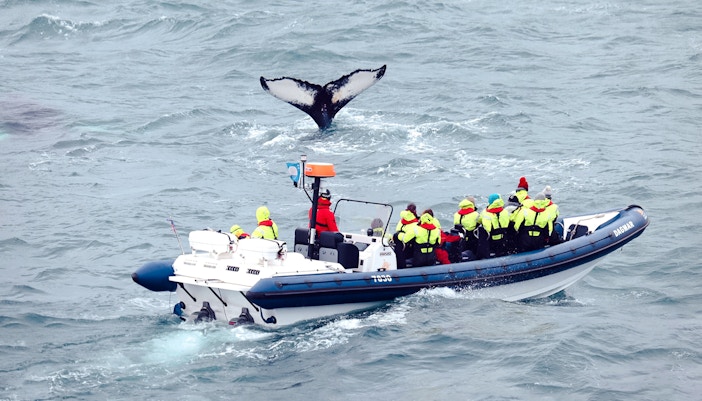
Reykjavik’s Faxaflói Bay is broad, wildlife-rich, and easily accessible from the capital. You can spot humpbacks, minkes, porpoises, and seasonal puffins on nearby islands. Tours operate year-round, with summer offering the most stable sightings.
Recommended tour:
Reykjavik: Whale Watching and Puffin Tour on RIB Speedboat for a fast and agile ride across the bay for spotting whales at eye level.
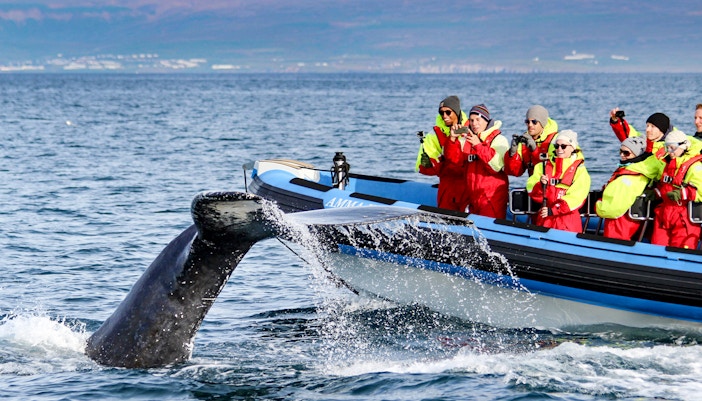
Often called the “Whale Capital of Iceland,” Húsavík sits right beside Skjálfandi Bay, one of the richest feeding grounds in the North Atlantic. This bay benefits directly from the cold glacial river that empties into it, supercharging nutrient levels and attracting huge numbers of humpbacks.
Recommended tour:
Húsavík: Whale Watching and Puffin Tour on RIB Speedboat will get you closest to Iceland’s humpbacks and Puffin Island.
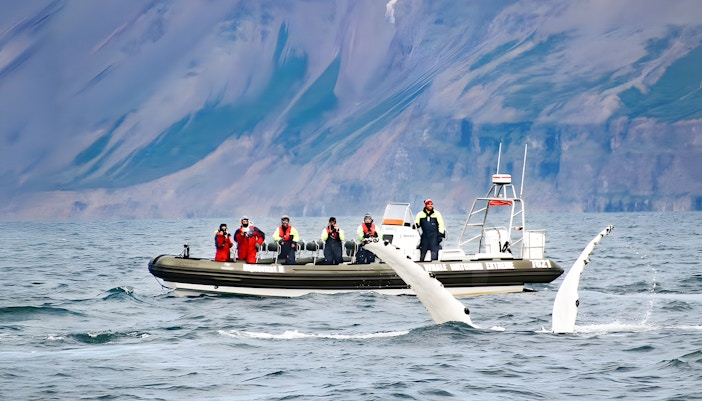
Akureyri offers a different experience inside Eyjafjörður, Iceland’s longest fjord. Its sheltered waters are calmer than the open bays, making it ideal for stable tours and scenic fjord landscapes. Minke and humpback whales are common here.
Recommended tour:
Go for the RIB Whale Watching Tour from Akyureyri for a fast-paced ride through glacier-carved fjord scenery.
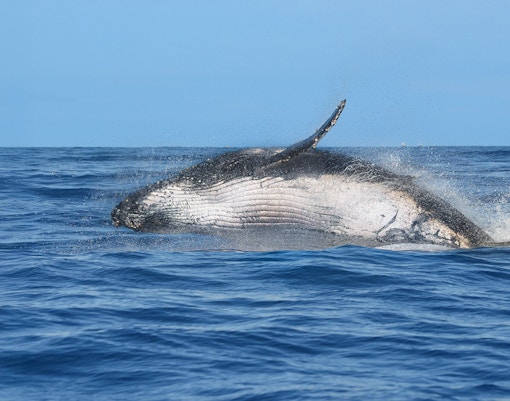
June to August offers peak whale activity, warmest seas, and incredible visibility under long days. Puffins, Arctic terns, and thousands of seabirds join the spectacle. This is Iceland’s whale watching at its most vibrant.
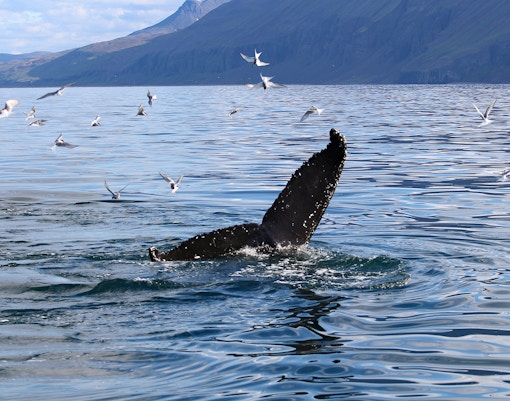
April and May mark the whales’ return as they follow the plankton bloom north. Sightings increase rapidly week by week. Weather can be mixed, but the anticipation of the season’s first humpbacks makes it exciting.
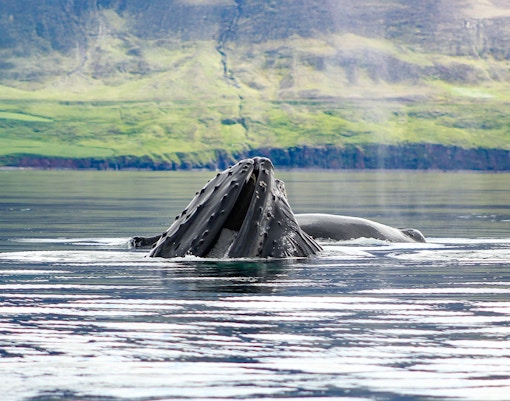
September is excellent for whales, especially in Húsavík. Cooler weather and fewer crowds make it a relaxed time to visit.
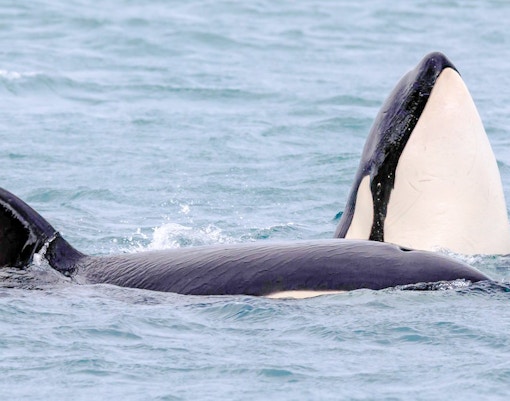
Migratory whales leave, but few orcas do appear in certain western bays following herring schools, and some tours focus entirely on this seasonal phenomenon.
Sightings are very frequent in summer, especially in Húsavík, but nature can never be guaranteed. Many operators offer free return tickets if no whales appear.
Both are good, but mornings often have calmer seas. Afternoons bring warmer light and excellent visibility during summer.
Yes. Húsavík is known for humpbacks, Reykjavik sees humpbacks and minkes, and Akureyri has consistent minke and humpback activity in sheltered fjord waters.
Blue whales appear occasionally in Húsavík in early summer, but they are not predictable. They are incredible sightings when they happen.
Winter offers orca-focused tours in select regions but fewer migratory whales. Summer remains the prime season for variety.
Iceland’s bays are deep and nutrient-rich, so whales often feed surprisingly close to shore, especially in Húsavík’s Skjálfandi Bay.
Allow at least half a day. Weather can cause delays, and having flexibility increases your chances of great sightings.