English
English


Húsavík sits on the edge of Skjálfandi Bay, one of Iceland’s richest feeding grounds for whales. Nutrient-dense waters attract humpback, minke, blue whales, dolphins, and porpoises in high numbers throughout the season, resulting in some of the country’s highest and most consistent sighting rates. Combined with decades of responsible whale-watching practices, expert local guides, and a strong focus on conservation and education, Húsavík has earned its reputation as the whale-watching capital of Iceland.
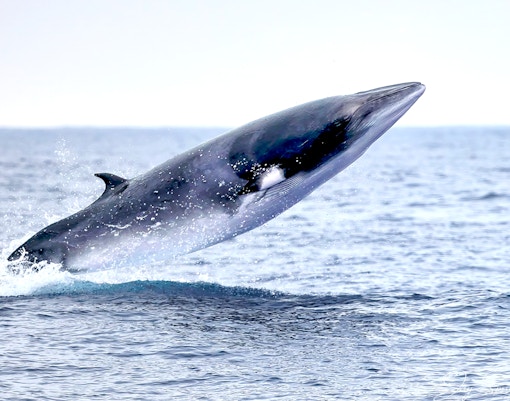
Spring marks the start of whale watching in Húsavík as migratory whales return to feed in Skjálfandi Bay. Sightings of minke whales and early humpbacks are common, and puffins begin arriving from mid-April. The RIB whale & puffin tour opens for slots around this time and runs until the first week of June. Sea conditions can be brisk, but thermal suits keep guests comfortable.
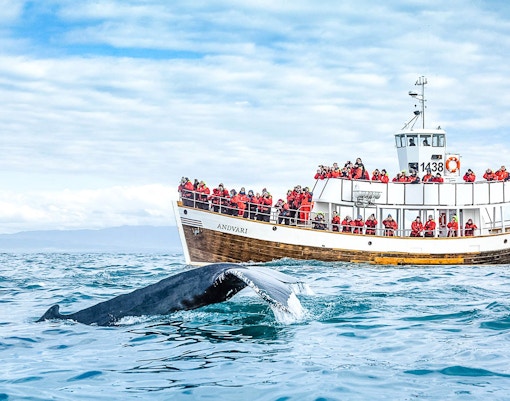
This is the best and busiest time for whale watching in Húsavík, offering near-guaranteed sightings. Humpback whales are frequently seen feeding and breaching, with chances of spotting blue whales, dolphins, and porpoises.
Both the 3-hour traditional oak boat tour and the 2-hour RIB speedboat tour operate at full capacity during this period, with calm seas, longer daylight, and peak puffin activity until mid-August.
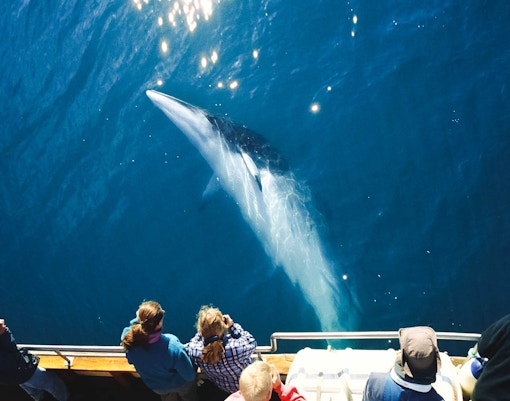
September remains an excellent month for whale watching, especially for travelers seeking fewer crowds. Humpbacks and dolphins are still active, and cooler air temperatures make sightings comfortable thanks to onboard thermal gear. We highly recommend opting for the classic oak boat tour, which offers more deck space and a relaxed pace.
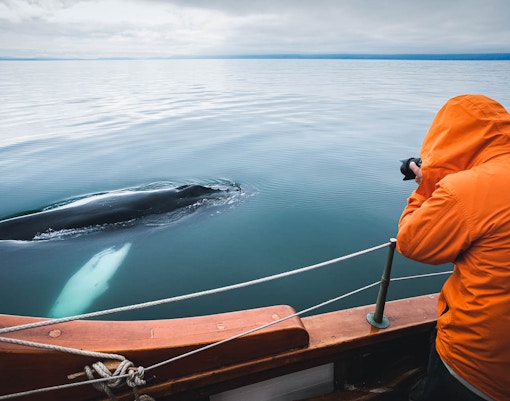
Regular whale watching in Húsavík slow down significantly during winter due to weather and daylight conditions. While occasional sightings may occur, your tours primarily operate from April to September, when safety, comfort, and sighting rates are at their best.
The main whale watching season runs from April to October, with peak sightings during June, July, and August when marine life is most active in Skjálfandi Bay.
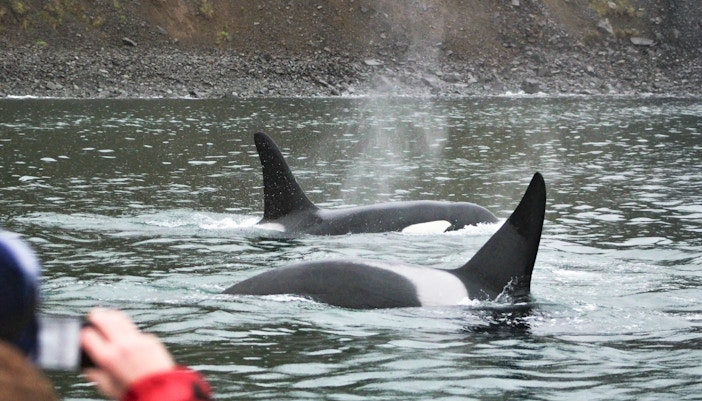
Common sightings include humpback whales and minke whales, along with dolphins and porpoises. Blue whales, fin whales, and orcas are rarer but possible, especially mid-summer.
Yes. April, May, September, and early October can still offer excellent sightings, often with fewer crowds, though weather conditions are more variable.
Whales can be spotted throughout the day. Morning and early afternoon tours are popular due to calmer seas, while late-day tours often feel quieter and less crowded.
Yes. Strong winds or rough seas can lead to rescheduled or canceled tours, particularly at the beginning and end of the season. Summer tends to be more stable.
Yes. The summer months are ideal for families, especially on traditional oak boats, which are stable, spacious, and equipped with warm safety gear.
Thanks to Skjálfandi Bay’s nutrient-rich waters and sheltered conditions, Húsavík consistently delivers higher sighting rates and greater species diversity than most other whale watching locations in Iceland.