Skjalfandi Bay: Location, getting there, history, and essential information you need to know before visiting
Quick overview
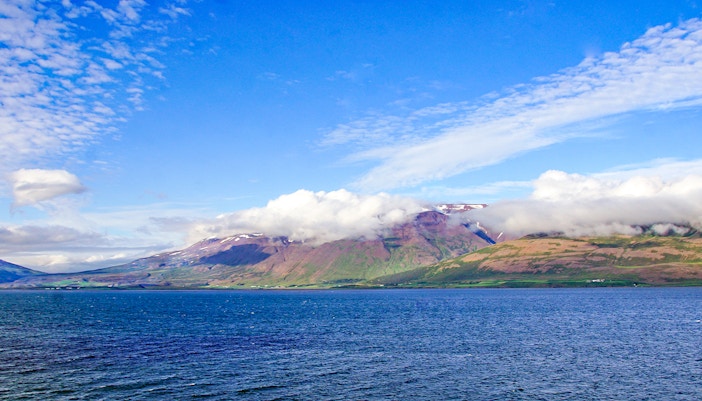
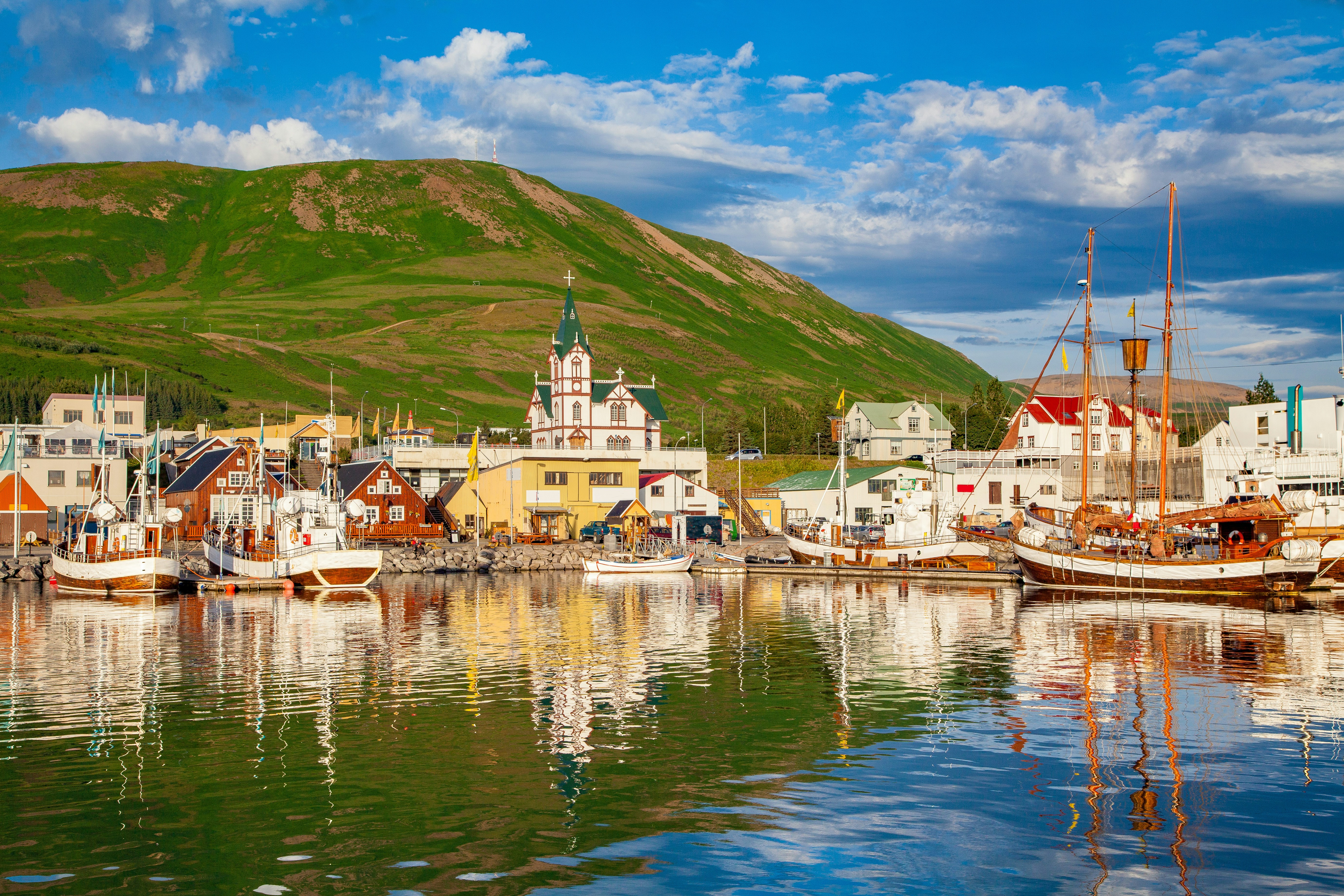
- Location: Skjálfandi Bay lies along North Iceland’s coastline, opening into the Greenland Sea, with the town of Húsavík sitting on its western shore.
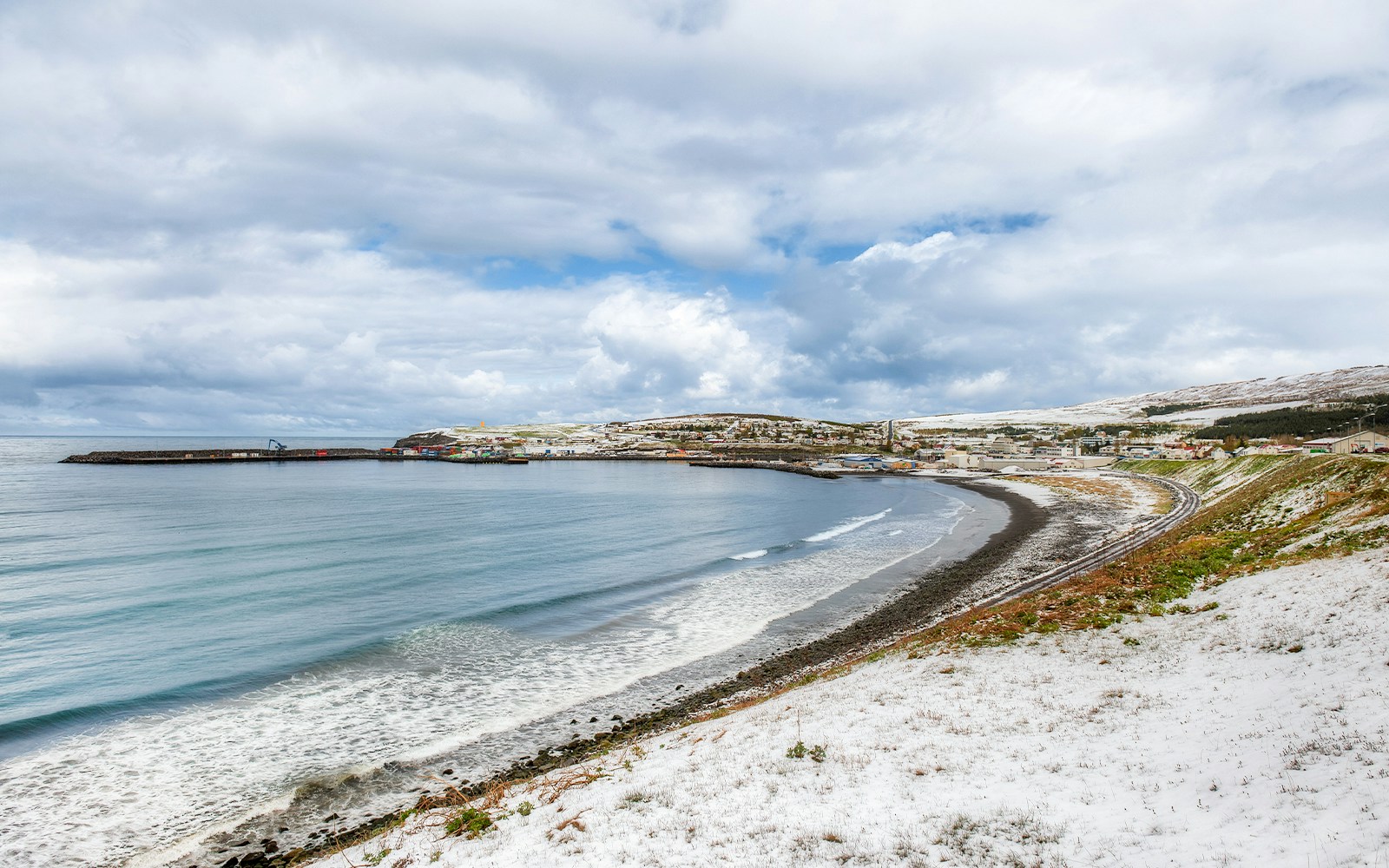
- Geography: The bay is broad and gently curved, framed by rolling hills, volcanic landscapes, and distant mountain ranges that reflect Iceland’s geologically active past.
- Seafloor & waters: Shaped by tectonic activity and ancient glacial movement, the bay has deep channels and sheltered waters compared to the open North Atlantic.
- Climate: The region experiences a cool subarctic climate, with mild summers, cold winters, and frequent changes in weather driven by Arctic and Atlantic air masses.
- Cultural backdrop: Historically, the bay supported fishing and coastal livelihoods and remains closely tied to North Icelandic maritime traditions.
- Popular boarding point: Húsavík
- Best time to visit: April to September, when feeding activity peaks and conditions are calmer.
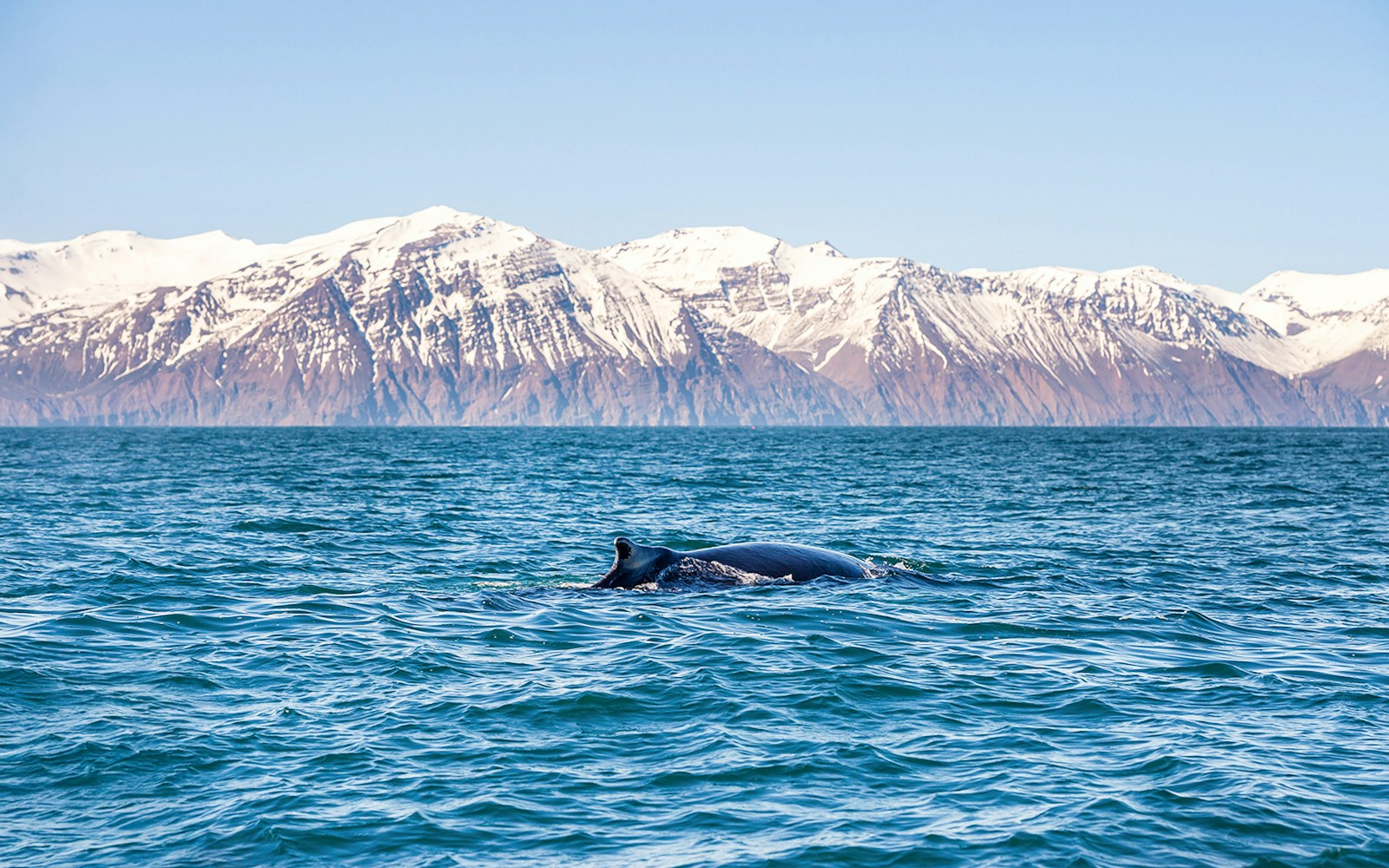
- Marine life you can spot: Regular sightings of humpback whales, minke whales, white-beaked dolphins, and harbor porpoises.
- Why it stands out: Calm waters, dramatic coastal scenery, and consistently high whale-sighting success make Skjalfandi Bay one of Iceland’s most reliable whale-watching locations.
A brief history of Skjalfandi Bay
The bay’s name is thought to be derived from the Icelandic word skjálfa, meaning “to shake,” a reference to the seismic and volcanic forces that shaped the region. Earthquakes and geothermal activity have long influenced both the landscape and the lives of people living along the bay, reinforcing a deep respect for Iceland’s powerful natural environment.
For centuries, Skjálfandi Bay played a central role in local livelihoods through fishing and maritime trade. Small villages along its shores depended on the bay’s rich waters for sustenance, while its natural harbors provided safer passage for boats navigating the often challenging northern seas. In the modern era, as traditional fishing practices evolved, the bay gradually shifted toward conservation, research, and sustainable use of marine resources.
Geography of Skjálfandi Bay
Skjálfandi Bay is a broad bay on Iceland’s northern coast that opens into the Greenland Sea, where Arctic and Atlantic waters meet. Shaped by volcanic and tectonic activity linked to the Mid-Atlantic Ridge, the area features basalt coastlines, shallow-to-deepening seabeds, and a constantly evolving shoreline. With nutrient-rich waters, open landscapes, and minimal development, the bay is defined by its raw, northern character and dynamic natural environment.
What to expect on whale watching tours at Skjalfandi Bay
Calm yet powerful Arctic waters
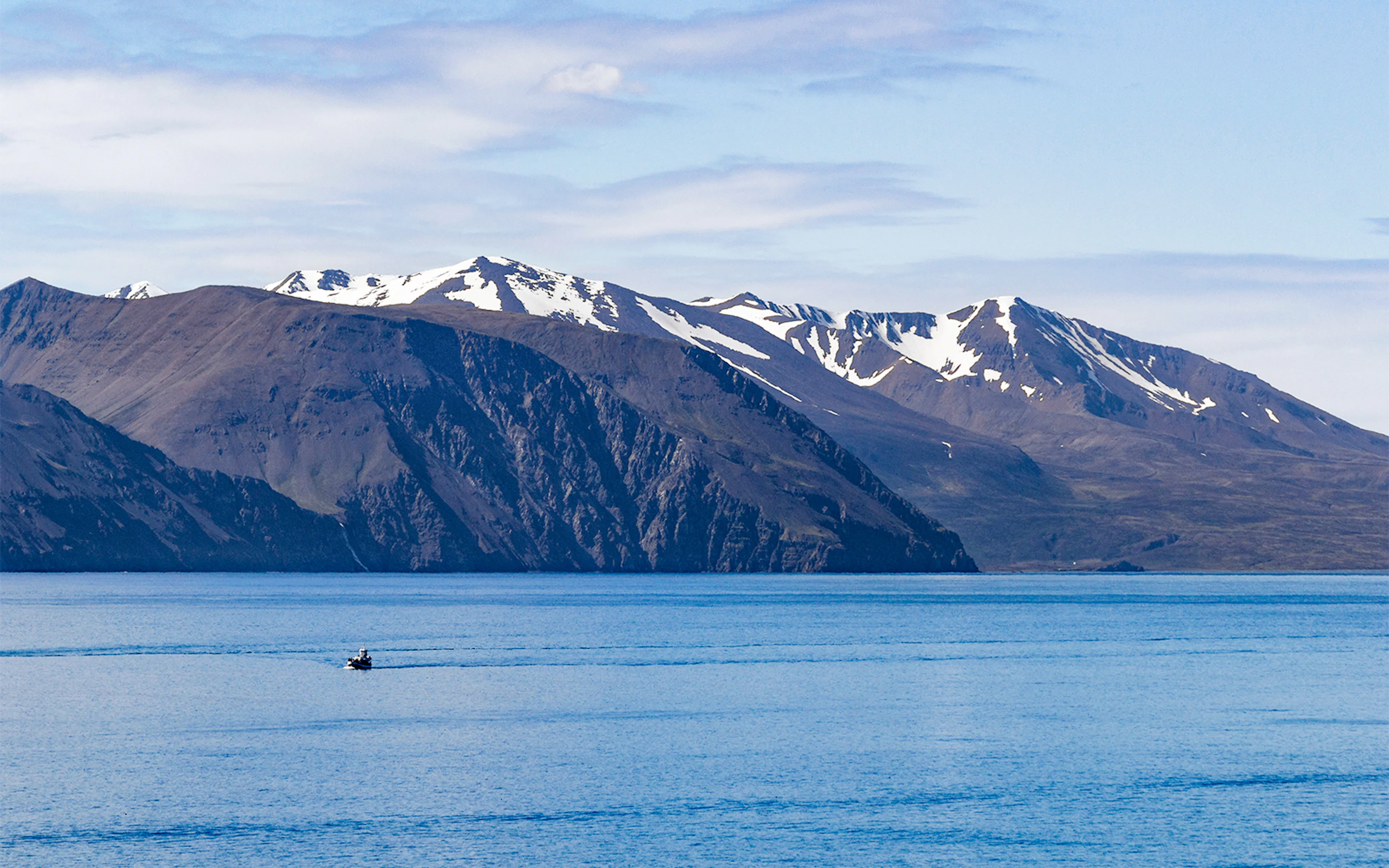
Skjálfandi Bay is a wide, open bay where cold Arctic waters meet warmer Atlantic currents. This creates gently rolling seas on most days, especially compared to open-ocean routes, while still feeling wild and untamed. Conditions can change quickly, but tours are planned around the bay’s natural shelter and daily weather patterns.
Dramatic coastal scenery throughout the journey
From the moment you leave Húsavík harbor, expect sweeping views of low coastal plains backed by distant mountains and volcanic terrain. On clear days, the contrast between dark basalt shorelines, open water, and snow-dusted peaks adds a striking backdrop to the experience.
High chances of whale encounters
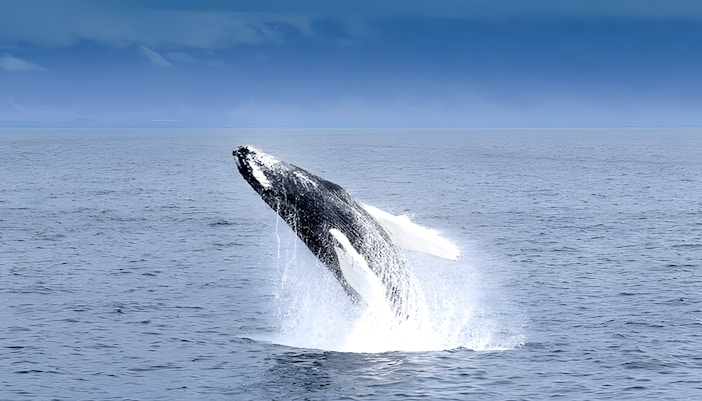
Skjálfandi Bay is known for consistently strong sightings, especially humpback and minke whales. Depending on the season, you may also encounter blue whales, dolphins, porpoises, and a wide variety of seabirds gliding above the water or diving for fish near the surface.
Expert-led spotting and interpretation
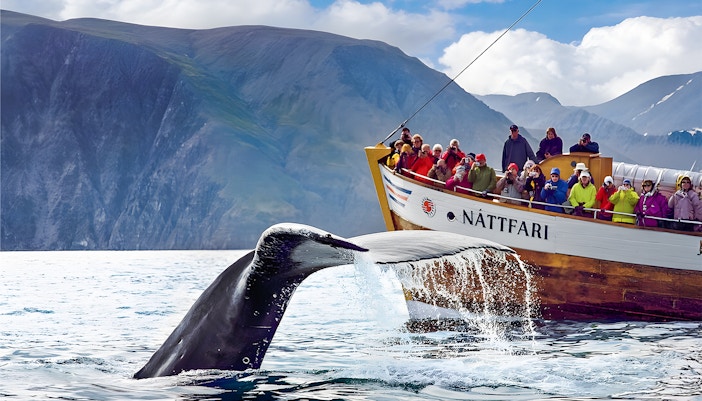
Tours are led by trained wildlife guides or marine biologists who actively scan the bay for blows, fins, and movement. As sightings happen, guides explain whale behavior, migration patterns, and how the bay’s ecosystem supports such rich marine life, making the experience both exciting and educational.
Close observation without disturbing wildlife
Boats follow strict whale-welfare standards, maintaining respectful distances and often slowing or switching off engines near whales. This allows you to watch natural behaviors, surfacing, fluking, feeding, or breaching- without stressing the animals.
A balance of comfort and adventure
Depending on the tour you choose, expect either a stable traditional oak boat with indoor seating and warm overalls, or a faster RIB speedboat for closer, water-level encounters. Either way, you’ll spend extended time on deck, moving around to follow sightings and enjoy uninterrupted views of Skjálfandi Bay’s marine world.
Glimpses of Skjalfandi Bay and nearby spots
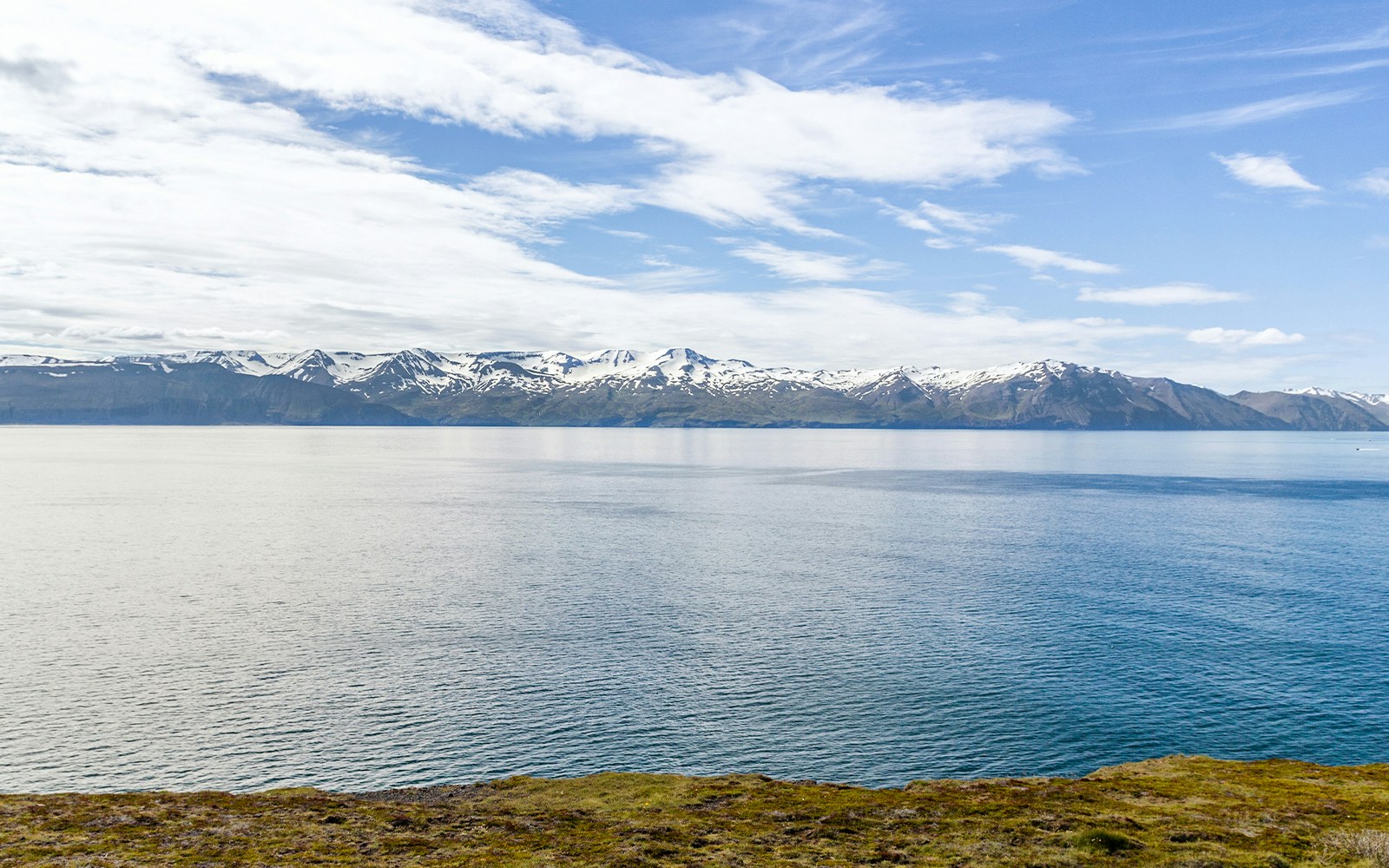
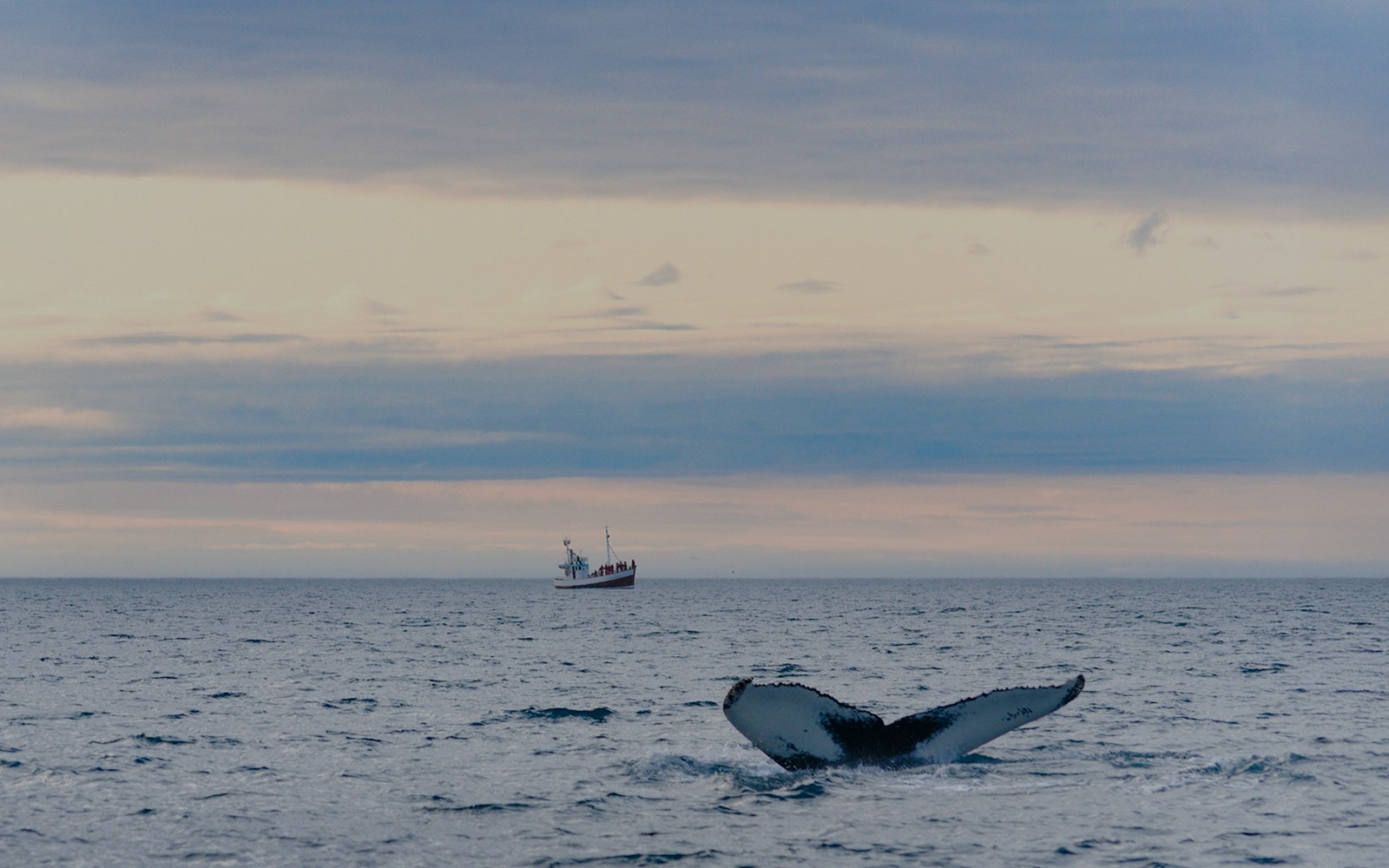
Skjálfandi Bay’s open seascape
A vast, Arctic-facing bay where cold northern waters meet warmer Atlantic currents, creating wide horizons and ever-changing ocean textures.
Visitor tips
- Dress in layers, year-round: Weather can change quickly in North Iceland, even in summer. Windproof jackets and warm layers are always useful.
- Check conditions before heading out: Sea and weather conditions can shift rapidly, so it’s smart to check local forecasts the same day you visit.
- Plan extra time for scenery: The bay’s wide horizons, mountains, and coastal views are best enjoyed slowly; don’t rush your visit.
- Bring a camera with a zoom: Wildlife and distant landscapes are often best captured with a zoom lens rather than a phone alone.
- Respect nature and wildlife: Stick to marked paths, keep a safe distance from animals, and follow local guidelines to protect the environment.
- Visit nearby Húsavík: The town adds cultural context with cafés, museums, and coastal walks that complement your time at the bay.
- Expect cooler temperatures than in the south: Even on sunny days, North Iceland feels brisk, especially near the water.
Frequently asked questions about Skjalfandi Bay
Skjálfandi Bay lies on the northern coast of Iceland, opening directly into the Greenland Sea, with the town of Húsavík along its shoreline.
The bay is known for its dramatic natural setting, rich marine environment, and its long-standing connection to fishing, seafaring, and coastal life in North Iceland.
Its wide, open shape allows Arctic and Atlantic waters to mix, influencing sea conditions, climate, and the surrounding coastal landscape.
Yes. The bay sits within Iceland’s active volcanic and tectonic zone, shaped over time by lava flows, earthquakes, and geothermal activity.
Being in North Iceland, the bay experiences cooler temperatures, crisp air, and changing light conditions, with long daylight hours in summer and dramatic skies year-round.
Yes. While conditions vary by season, the bay and nearby towns like Húsavík can be visited throughout the year, each season offering a different atmosphere and scenery.