English
EUR
Language
Currency
Contents

Whale watching season in Reykjavík: Best months for sightings and seasonal guide

Whale watching in Reykjavík is one of the easiest and most rewarding wildlife experiences in Iceland. This guide breaks down the Reykjavík whale watching season month by month, helping you plan the best time to go based on sightings, weather, and tour availability.

Why whale watching in Reykjavík is unlike anywhere else in Iceland

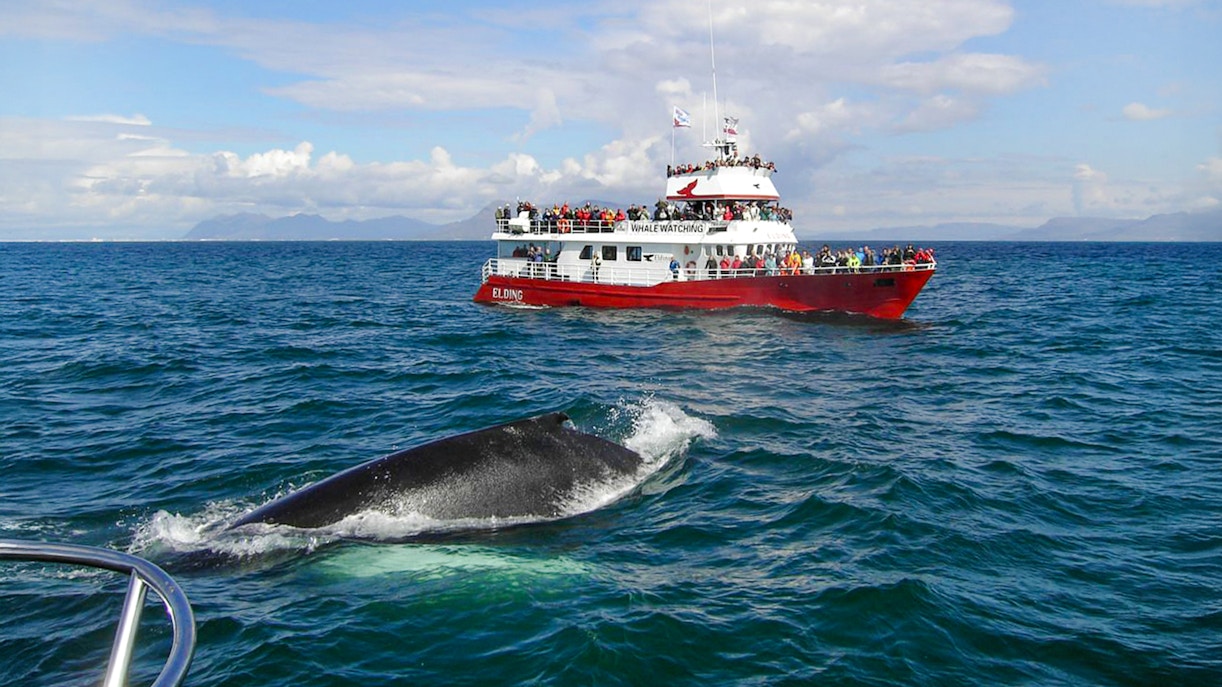
Whale surfacing near a whale watching boat in Reykjavik, Iceland.

Whale watching in Reykjavík is special because it lets you experience Iceland’s rich marine life without leaving the city. Tours depart directly from the Old Harbour, just minutes from downtown cafés, museums, and landmarks, making it the most convenient place in the country to spot whales, especially for travelers on tight schedules or first-time visitors.

The surrounding waters of Faxaflói Bay are a productive feeding ground where humpback whales, minke whales, white-beaked dolphins, and harbor porpoises are seen regularly. Thanks to the bay’s wide, open nature, sightings often happen close to shore, with Reykjavík’s skyline and distant volcanic mountains creating a dramatic backdrop you won’t find on tours farther north.
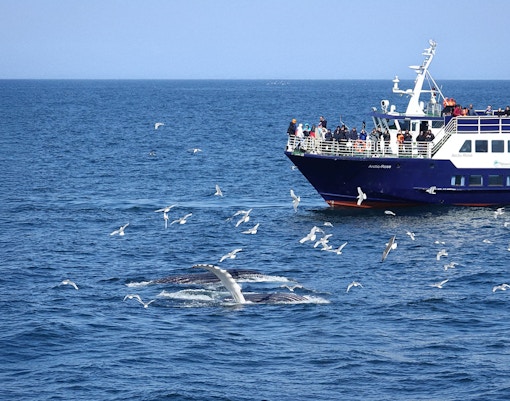
Best time for whale watching in Reykjavik 

Whale watching in Reykjavík is possible year-round, but the experience changes noticeably with the seasons. The prime season runs from April to October, when calmer seas and longer daylight hours create ideal conditions for spotting marine life in Faxaflói Bay.

June to August is the absolute peak, giving you the highest sighting rates and the widest variety of wildlife. This is when humpback whales are most active, usually seen feeding or breaching, and puffins can be spotted on nearby islands.

From November to March, whale watching continues but is more weather-dependent. Sightings are less predictable, though dolphins and porpoises are regularly seen, and occasional whales still appear.

For the best balance of comfort, variety, and high sighting success, plan your Reykjavík whale watching tour between late spring and early autumn, with summer being the most reliable and rewarding time to go.

Your seasonal guide for whale watching in Reykjavik (Month-by-month guide)

Guests on Reykjavik whale watching cruise observe whale tail near boat.

April–May: Season begins

Spring marks the return of whales to Eyjafjörður, with humpback whales moving into the fjord to feed. Sightings become increasingly consistent through May, alongside occasional minke whales and white-beaked dolphins. Tours begin running more regularly, and early-season sailings are well-suited to the fjord’s sheltered waters. Cool temperatures are common, but provided floatable overalls ensure a comfortable experience.
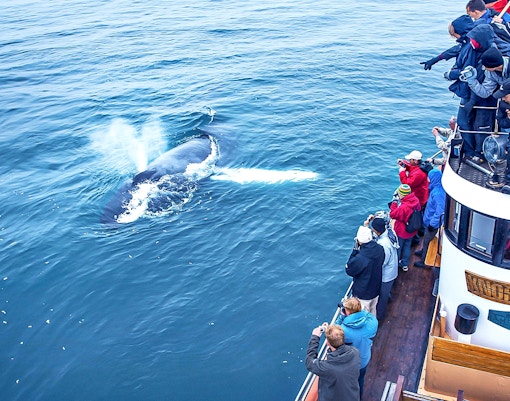
Guests on a boat watching a whale in Eyjafjörður, Iceland.

June–August: Peak whale watching season

This is the best and most reliable period for whale watching in Akureyri. The calm, protected waters of Eyjafjörður offer excellent conditions, and humpback sightings are frequent throughout summer. Both catamaran and RIB speedboat tours operate at full schedule, benefiting from long daylight hours, smooth cruising, and regular close-to-shore encounters. July and August are the busiest months, so advance booking is recommended.
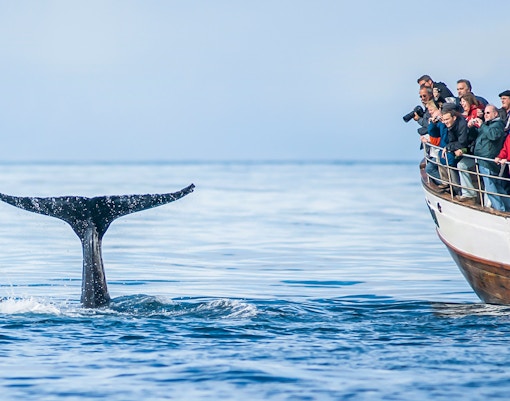
Guests on boat watching whale tail in Eyjafjörður, Iceland.

September: Quieter fjord, rewarding sightings

September offers a more relaxed atmosphere with fewer visitors, while humpback whales are still commonly spotted before migration begins. Sea conditions often remain favorable, and cooler temperatures are balanced by onboard thermal gear. This is an ideal month for travelers seeking strong sightings without peak-season crowds.
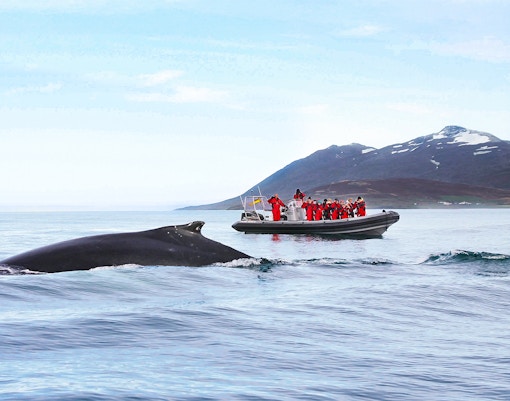
Guests photographing a whale near their RIB speedboat during a whale watching tour in Akureyri.

October–March: Limited and weather-dependent

During winter, whale watching in Akureyri becomes more limited due to reduced daylight and harsher sea conditions. While whales may still pass through the fjord, regular scheduled tours depend heavily on the weather. For the most reliable sightings, comfort, and safety, April to September remains the recommended whale watching season in Akureyri.


Book whale watching tours in Reykjavik

Reykjavik: Whale Watching Boat Tour
Free cancellation
Book now, pay later
3 hr
3 hr
Guided tour
More details
from
€96.87
Reykjavik: Whale Watching Tour on RIB Speedboat
Free cancellation
Book now, pay later
2 hr
2 hr
Guided tour
More details
from
€169.57
Husavik: Whale Watching Boat Tour
Free cancellation
Book now, pay later
3 hr
3 hr
Guided tour
More details
Husavik: Whale Watching and Puffin Tour on RIB speedboat
Free cancellation
Book now, pay later
2 hr
2 hr
Guided tour
More details
Husavik: Whale Watching Tour With a Guide
Free cancellation
Book now, pay later
3 hr
3 hr
Guided tour
More details
Husavik: Small-Family Run, Locally Owned, Sustainable Whale Watching
Free cancellation
Book now, pay later
3 hr
3 hr
More details
from
€83.02
Akureyri: Whale Watching Boat Tour
Free cancellation
Book now, pay later
2 hr 30 min
2 hr 30 min
Guided tour
Meals included
More details
from
€100.33

Frequently asked questions about the whale watching season in Reykjavik

When is the whale watching season in Reykjavík?

Whale watching in Reykjavík runs year-round, but the best and most reliable season is April to October, when calmer seas and richer feeding grounds attract more whales closer to shore.

What is the best month to see whales from Reykjavík?

June, July, and August are the peak months, offering the highest sighting rates, longer daylight hours, and frequent appearances by humpback and minke whales.

What types of whales can I see during the season?

During peak season, you may spot humpback whales, minke whales, white-beaked dolphins, and harbor porpoises. Orcas and blue whales are rare but possible sightings.

Is whale watching from Reykjavík good for first-time visitors?

Absolutely. Reykjavík’s tours depart from the city’s Old Harbour, use stable boats with indoor lounges, and are led by marine biologists, making them ideal for first-time whale watchers.

How long do whale watching tours from Reykjavík last?

Most tours last 2.5 to 3.5 hours, depending on sea conditions and wildlife activity.

Is summer the only time to see puffins on whale watching tours?

Yes. Puffins are typically seen from May to August, often near nearby islands in Faxaflói Bay during summer sailings.

Which is better for the season: classic boat or RIB speedboat?

Classic boats are best for comfort and year-round travel, especially in cooler months. RIB speedboats are ideal in summer, offering faster travel and closer encounters when sea conditions are calm.
More reads

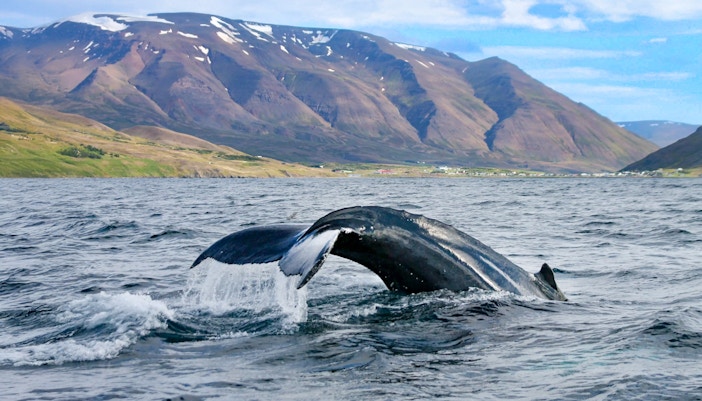
Whale tail diving into Akureyri waters during RIB speedboat tour.

Akureyri Whale Watching Season

Guests observing whale from Silent boat in Husavik, Iceland.

Husavík Whale Watching Season

Whale in Skjálfandi Bay with Vik mountains, northern Iceland.

Skjálfandi Bay