Visiting Perlan Museum | Your complete guide
Perlan Museum is an immersive nature museum best known for its indoor ice cave, Northern Lights planetarium show, and panoramic Reykjavík views. The visit is compact enough to manage in 1.5–2 hours, but it’s layered enough that timing still matters — especially if you don’t want to shape your whole route around the next available planetarium screening. The biggest difference between a rushed visit and a good one is sequencing the show, ice cave, and deck in the right order. This guide covers arrival, timing, tickets, and what to prioritize.
Quick overview
If you want the shortest useful version before you book, start here.
- When to visit: Daily, 9am–9pm. Early morning or after 5pm is noticeably calmer than late morning to mid-afternoon, because rainy-day visitors, tour groups, and cruise passengers tend to converge in the middle of the day.
- Getting in: From $45 for standard entry. Private guided visits typically start from about $150 per group. You can usually walk in, but online booking makes more sense in summer, on rainy weekends, and when you want less friction at the entrance.
- How long to allow: 1.5–2 hours for most visitors. It pushes closer to 3 hours if you watch every show, linger in the galleries, or stop at the dome café for the view.
- What most people miss: The Látrabjarg bird-cliff replica and water-and-wildlife galleries often get rushed past, even though they add the living side of Iceland that the volcano and glacier exhibits don’t.
- Is a guide worth it? Usually no for a standard visit, because the route is easy to follow and a good audioguide covers the basics; a guide only adds real value if you want deeper geology and climate context.
Jump to what you need
🕒 Where and when to go
🗓️ How much time do you need?
🎟️ Which ticket is right for you?
🗺️ Getting around
🧊 What to see
♿ Facilities and accessibility
Where and when to go

How do you get to Perlan Museum?
Perlan sits on Öskjuhlíð hill, about 2km (1.25 miles) south of central Reykjavík, with downtown close enough for a quick taxi ride but just far enough away to feel separate from the city center crowds.
Varmahlíð 1, 105 Reykjavík, Iceland
→ Open in Google Maps (Perlan Museum)
- Free shuttle: Harpa Concert Hall stop → about 10-minute ride → runs roughly every 20–30 minutes from 9am–5:30pm and drops you at the entrance.
- City bus: Strætó routes 13 and 18 → stop below the hill → expect a steep 5–7-minute uphill walk from the nearest stop.
- Taxi / rideshare: Central Reykjavík → about 5–10 minutes → the easiest option if you’re short on time or skipping the uphill walk.
- Walking: Downtown Reykjavík → about 30 minutes → scenic through Öskjuhlíð, but the final stretch is uphill.

Which entrance should you use?
Perlan is straightforward: there’s one main public entrance, but the small decision that saves time is whether you’ve already booked or still need to buy at the desk. Most delays here are ticket-counter delays, not security delays.
- Pre-booked tickets: For mobile or printed tickets. Expect 0–10 minutes during most of the day.
- On-site ticket desk: For walk-up visitors. Expect 10–15 minutes on rainy weekends, summer afternoons, and during tour-bus peaks.
When is Perlan Museum open?
- Monday–Sunday: 9am–9pm
- Seasonal note: Summer and bad-weather afternoons feel busiest, even with the same opening hours
- Last entry: You can enter through the day, but arriving after about 7pm leaves too little time for the full ice cave, show, and deck circuit
When is it busiest? Late morning to mid-afternoon in June–August, plus rainy weekends year-round, when outdoor plans collapse into indoor ones and the planetarium slots fill fastest.
When should you actually go? Aim for 9am–11am or after 5pm, when the galleries feel more open and you’re less likely to build your whole visit around the next available Áróra show.
Which Perlan Museum ticket is best for you
| Ticket type | What's included | Best for | Price range |
|---|---|---|---|
Wonders of Iceland admission | Entry + indoor ice cave + Áróra planetarium show + observation deck + permanent exhibits | A first visit where you want the full Perlan experience without having to make extra decisions inside | From €38.72 |
Private guided Perlan experience | Entry + private guide + tailored route through the exhibits | A visit where you want the science and storytelling explained clearly instead of reading everything yourself | From €129 per group |
Hop-On Hop-Off bus + Perlan combo | Perlan entry + 24-hour Hop-On Hop-Off bus pass | A short Reykjavík stay where you want transport and sightseeing wrapped into the same day | From €64 |
Perlan + FlyOver Iceland combo | Perlan entry + FlyOver Iceland admission | A rainy-day Reykjavík plan where you want one educational indoor stop and one more high-energy immersive experience | From €73 |
Perlan + FlyOver Iceland combo | Perlan admission + FlyOver Iceland entry | A rainy-day Reykjavík plan where you want one educational indoor stop and one high-energy ride | Combo (from €73) |
Private guided Perlan experience | Entry + private guide when arranged separately | A geology- or climate-focused visit where the exhibits make more sense with expert commentary | Guided visit (from $150 per group) ↗ |
How do you get around Perlan Museum?
Layout and suggested route
Perlan is compact and zone-based rather than maze-like, which makes it easy to self-navigate as long as you don’t leave the planetarium timing until the end.
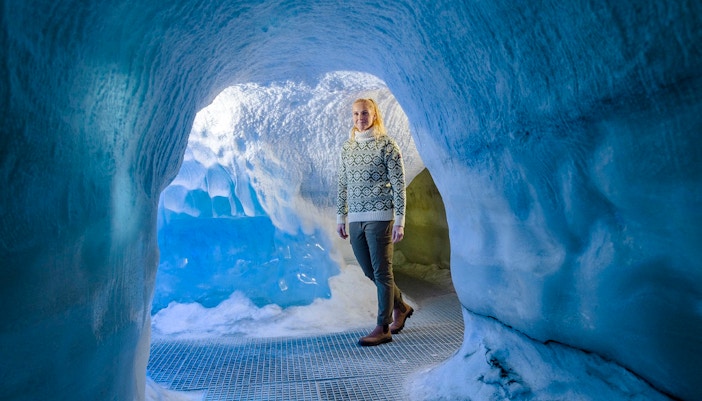
- Ice cave and glaciers: The coldest and most distinct part of the visit → real snow-and-ice tunnel plus glacier interpretation → budget 20–30 minutes.
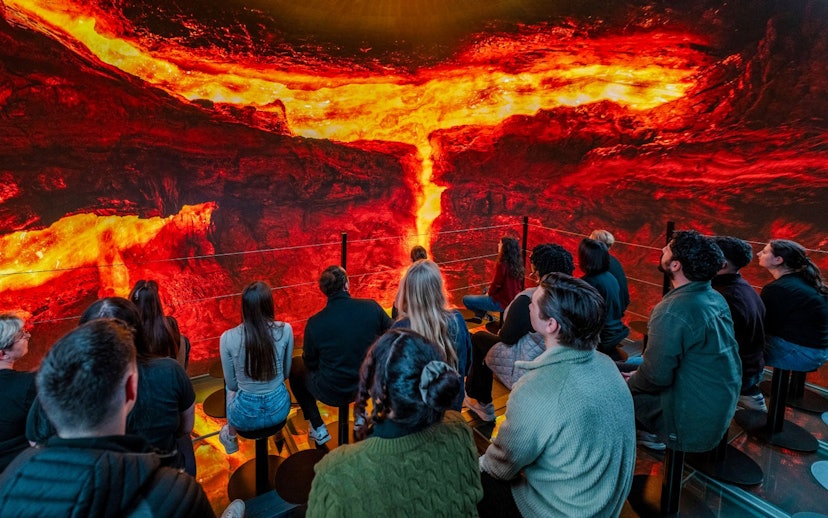
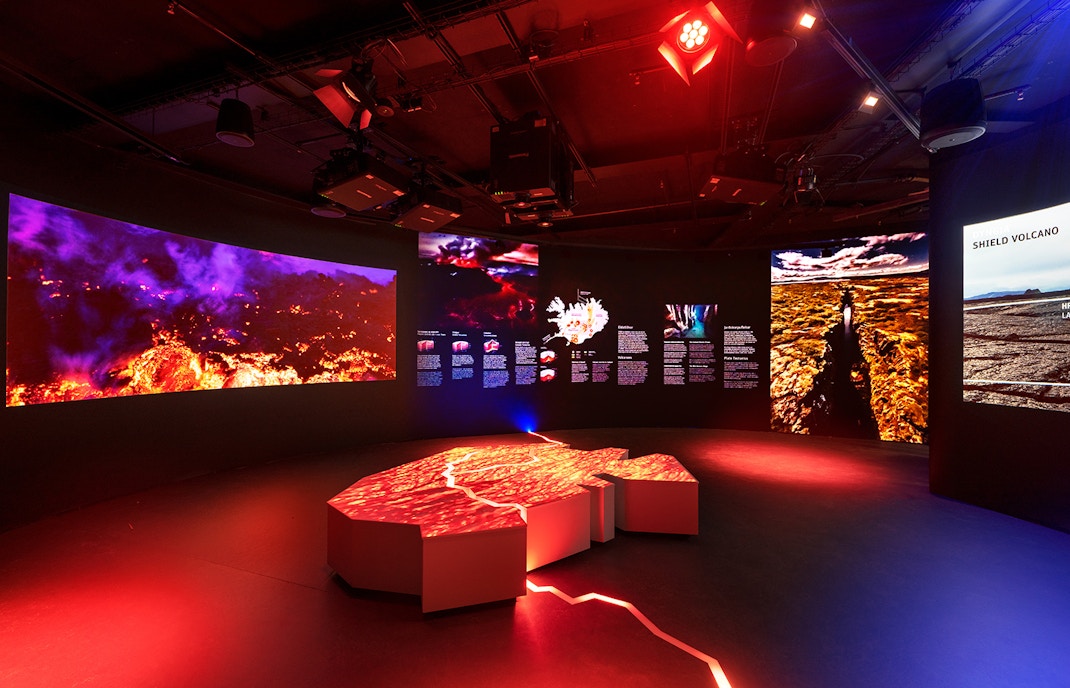
- Forces of Nature: Volcanoes, earthquakes, geothermal energy, and simulation-heavy exhibits → the loudest and most dramatic zone → budget 25–35 minutes.
- Water and wildlife: Marine life, bird cliffs, and Icelandic ecosystems → calmer, more interactive galleries → budget 20–25 minutes.
- Planetarium and dome: Áróra show plus the observation deck and café above → the most schedule-dependent stop → budget 30–45 minutes.
Suggested route: Start by checking the next Áróra screening, then do the ice cave, work through Forces of Nature and the wildlife galleries, and head up for the show and deck last; most visitors do the reverse, which creates backtracking and makes the quieter lower galleries easier to miss.

Maps and navigation tools
- Map: On-site orientation boards → they cover the main galleries, planetarium, and deck route → check them in the atrium before you start.
- Signage: Good enough for most visitors → the museum is easy to follow without getting lost → you don’t need a downloaded map for a standard visit.
- Audio guide / app: Free smartphone audioguide in multiple languages → adds context to the science-heavy exhibits → best used on your own phone over the museum Wi-Fi.
💡 Pro tip: Check the next planetarium time before you step into the first gallery, it’s the one timed part of an otherwise flexible visit, and missing it can scramble your route.
Where are the masterpieces inside Perlan Museum?
Áróra Northern Lights planetarium show
Attribute — Experience type: 8K fulldome planetarium show
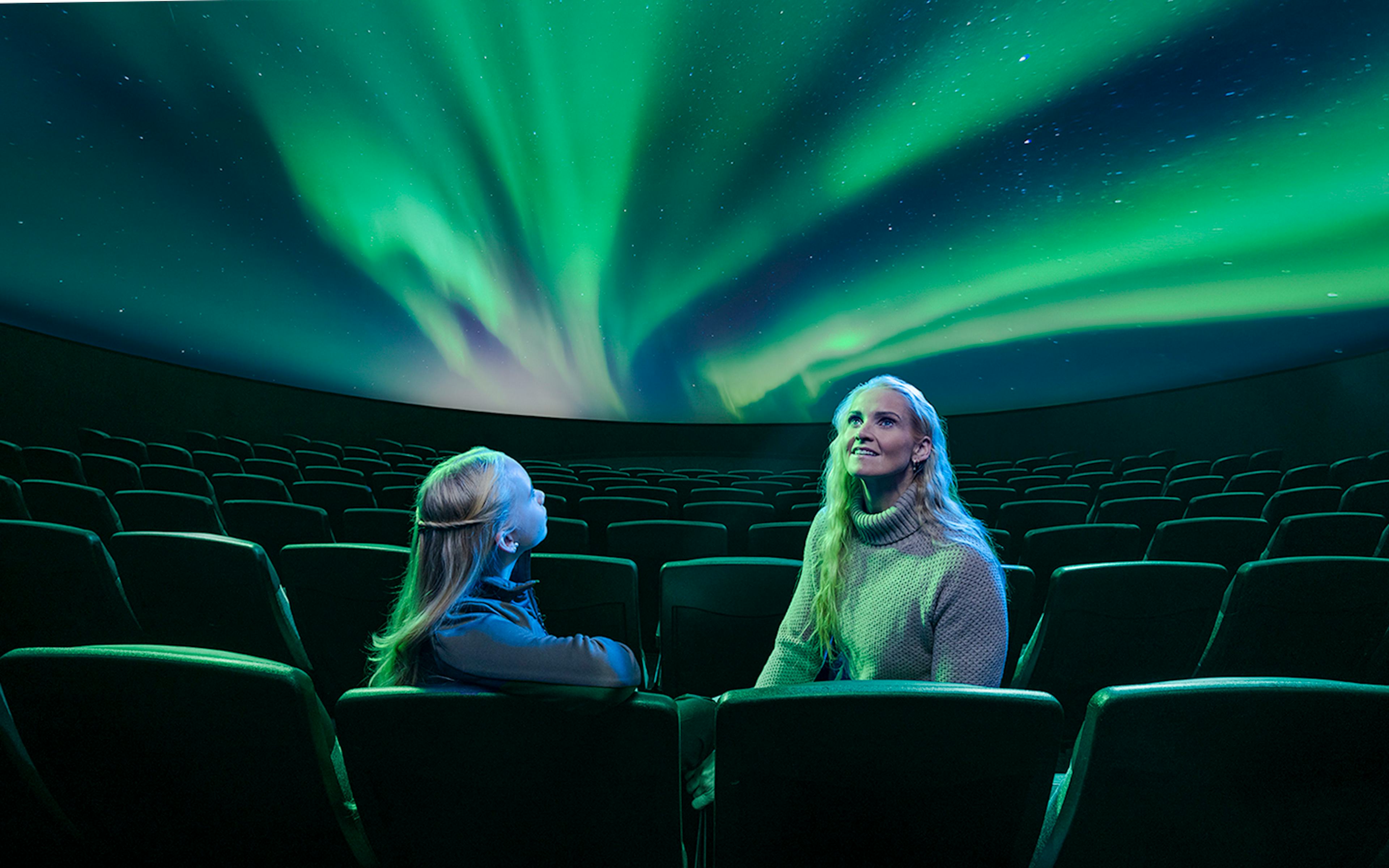
This is Perlan’s smartest crowd-pleaser because it gives you the Northern Lights on demand, without needing darkness, clear skies, or luck. The visuals are the main draw, but the sound design matters too — it’s immersive enough that sensitive visitors sometimes find it louder than expected. What people rush past is the value of seat choice: the center gives the most complete dome effect.
Where to find it: In the planetarium inside the upper museum route, before you continue to the dome and observation deck.
Real indoor ice cave
Attribute — Experience type: Walk-through glacier tunnel built from real snow and ice
The ice cave is the most tactile part of the visit, and it feels colder and more convincing than most visitors expect. It’s not just a photo stop — the surrounding glacier displays explain what Iceland is losing as its ice retreats. What people miss is how much better it feels early in the visit, when you still have warm hands, extra energy, and cleaner photo moments before the route gets busier.
Where to find it: In one of Perlan’s former water tanks, early in the main exhibition route.
Forces of Nature and volcano experience
Attribute — Experience type: Interactive geology gallery and simulation-based volcano exhibit
This is where Perlan leans hardest into Iceland’s ‘fire’ half, with earthquakes, geothermal displays, and a volcano sequence built to feel physical rather than purely informational. It’s the best section for visitors who want more than pretty visuals. What many people miss is the smaller science displays around the headline simulator — they explain the real forces behind eruptions instead of leaving you with just the spectacle.
Where to find it: In the central exhibition galleries after the ice cave and glacier section.
Styrmir indoor geyser
Attribute — Experience type: Indoor geothermal installation
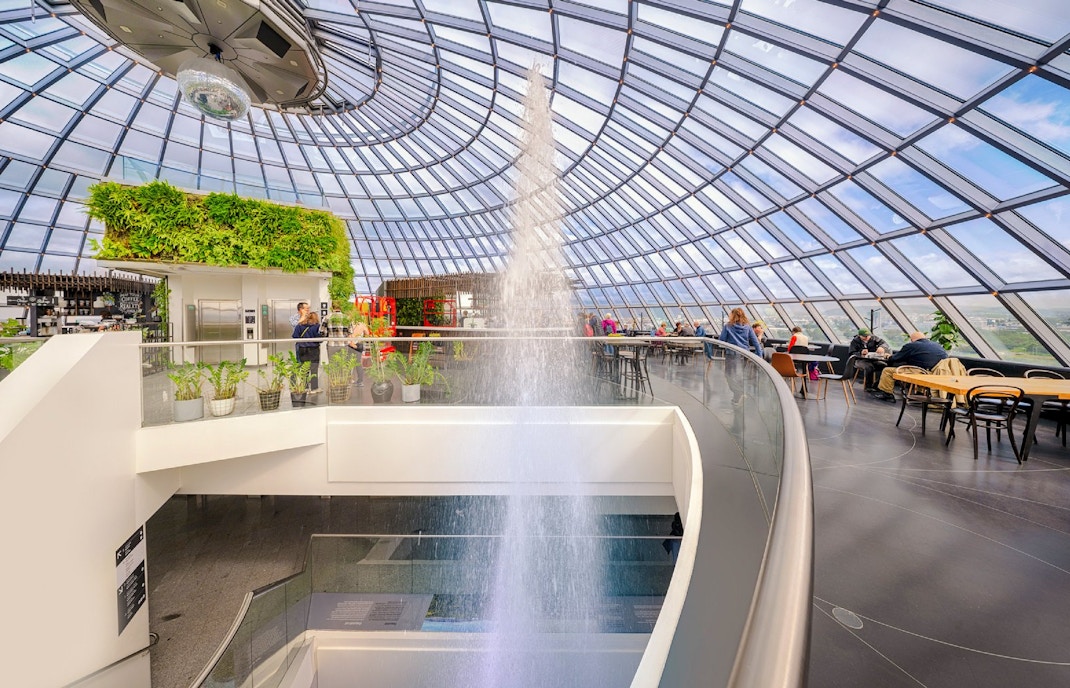
Styrmir works because it greets you with Iceland’s geothermal personality before you’ve even committed to a route. The eruption itself is quick, but it gives the atrium a sense of movement and scale that makes the building feel like more than a museum shell. Many visitors walk past it between galleries without pausing long enough to catch a full eruption cycle.
Where to find it: In the main atrium at the heart of the building, visible soon after you enter.
Látrabjarg bird cliffs
Attribute — Experience type: Wildlife habitat reconstruction
This 10-meter replica of Iceland’s famous seabird cliffs is one of the most overlooked sections in Perlan, partly because it doesn’t shout for attention the way the ice cave and planetarium do. Slow down here and you’ll notice the sound design, nesting details, and scale of the cliff itself. Many visitors also miss the binoculars, which make the smaller details much easier to read from the viewing platform.
Where to find it: In the water-and-wildlife galleries, after the geology-heavy middle of the route.
360° observation deck
Attribute — Experience type: Panoramic rooftop viewpoint
The deck is the payoff that ties the entire visit together: after seeing Iceland’s glaciers, volcanoes, water, and weather interpreted inside, you step out and see the real city landscape those forces shaped. The view is excellent in any season, but the light changes everything. What visitors often rush past are the orientation panels and telescopes, which help you identify mountains, coastline, and distant landmarks instead of just taking one quick photo and moving on.
Where to find it: Around the glass dome at the top of the building, directly accessible from the upper museum route.
Facilities and accessibility
- 🎒 Cloakroom / lockers: Lockers near the entrance make it easier to store coats and bags before the ice cave and planetarium.
- 🧥 Coat loans: Extra outer layers are available near the ice cave if you arrive underdressed for the -10°C tunnel.
- 🍽️ Café / restaurant: The revolving dome café and restaurant is the main sit-down option, and it’s most worth it for the view and break rather than for a quick budget meal.
- 🍦 Ice cream counter: There’s an on-site ice cream option if you want a fast stop without committing to a full café break.
- 🛍️ Gift shop / merchandise: The ground-floor shop is an easy last stop for Iceland-themed souvenirs, books, and kid-friendly gifts.
- 🪑 Seating / rest areas: Benches are placed through the galleries, which helps if you want to pace the visit slowly or sit between sections.
- 📶 Wi-Fi: Free Wi-Fi supports the smartphone audioguide and makes mobile ticket entry straightforward.
- 🅿️ Parking: Free parking sits directly outside the entrance, which is one of the practical advantages of visiting Perlan over a tighter downtown museum.
- ♿ Mobility: Perlan is one of Reykjavík’s easier attractions for mobility access, with ramps, elevators to all floors, wide galleries, an accessible route from the parking area, and elevator access to the observation deck.
- ♿ Mobility: The main limitation is transport rather than the building itself, because the free shuttle is less flexible than arriving by taxi or private car if you use a wheelchair or mobility device.
- 👁️ Visual impairments: The free smartphone audioguide helps with context, but much of the interpretation still relies on screens, scenery, and visual displays rather than tactile elements.
- 🧠 Cognitive and sensory needs: Early morning and after 5pm are the calmest windows, while the Áróra show has loud sound and low lighting; ear protection is available on request.
- 👨👩👧 Families and strollers: Elevators and wide gallery routes make stroller use manageable through the full visit, and the self-paced format is easier than navigating fixed tour timings with children.
Perlan works well for children because it mixes movement, sound, cold, views, and hands-on exhibits instead of asking them to stand still and read for 2 hours.
- 🕐 Time: 1.5–2 hours is realistic with children if you prioritize the ice cave, volcano exhibits, planetarium, and the deck instead of trying to read every panel.
- 🏠 Facilities: Lockers, seating, Wi-Fi, and an on-site café make it easier to reset mid-visit without leaving the building.
- 💡 Engagement: Save the bird cliffs and sound-based wildlife displays for later in the route, because they work well as a second wind after the ice cave and planetarium.
- 🎒 Logistics: Bring one extra warm layer per child for the ice cave, and book or arrive early enough that you’re not squeezing the planetarium in at the end.
- 📍 After your visit: Nauthólsvík Geothermal Beach is nearby if you want a short outdoor stop after the museum and the weather is on your side.
Rules and restrictions

What you need to know before you go
- Entry requirement: One Perlan admission ticket covers the ice cave, Áróra show, observation deck, and permanent exhibits, so most visitors only need the standard entry pass.
- Bag policy: Use the entrance lockers for coats and bulkier bags so you’re not carrying them through the ice cave and show spaces.
- Re-entry policy: Same-day re-entry is possible if staff validate your ticket, which is useful if you want a café break without finishing your visit.

Not allowed
- 🚫 Flash photography: Flash isn’t allowed during the Áróra planetarium show because it disrupts the projection for everyone in the dome.

Photography
- Photography is allowed in most of Perlan, and the ice cave plus the observation deck are two of the best photo spots in the building. The one clear exception is the planetarium experience, where flash should not be used during the Áróra show.
- If you’re planning photos, handheld shooting works better than elaborate gear setups because the route is compact and the busiest periods can feel tight around the headline exhibits.
Good to know
- Show timing: Check the next Áróra screening as soon as you enter, because it’s the one timed element that can reshape the rest of your route.
- Weather trade-off: Bad weather makes Perlan a stronger plan but a busier one, since many visitors decide to come here only after outdoor tours stop looking appealing.
Practical tips
- Booking and arrival: You can usually book Perlan last-minute, but summer afternoons and rainy weekends are the moments when online booking saves the most time at the entrance.
- Pacing: Do the ice cave before you settle into the planetarium and café, because once you’ve warmed up under the dome it’s harder to motivate yourself back into a -10°C tunnel.
- Crowd management: The best window is 9am–11am or after 5pm, because midday is when tour buses, cruise visitors, and weather-driven walk-ins overlap.
- What to bring or leave behind: Bring a light extra layer even in summer, since the ice cave is kept at 14°F (-10°C), and use the lockers so you’re not hauling a bulky coat through the galleries.
- Food and drink: Treat the dome café as a scenic break rather than your main meal plan; if you want better value or more choice, eat before you come and save the café for coffee, dessert, or the view.
- Transport timing: If you’re relying on the free shuttle, don’t leave right at the posted departure time — it can fill quickly on busy days and missing one can reset your whole schedule by 20–30 minutes.
- Visit strategy: If you only have 90 minutes, prioritize the next available Áróra show, the ice cave, and the observation deck, then use any remaining time on the volcano section instead of trying to cover everything evenly.
What else is worth visiting nearby?

Commonly paired: FlyOver Iceland
Distance: About 4km — around 10 minutes by taxi
Why people combine them: Both are strong rainy-day Reykjavík picks, and they complement each other well: Perlan gives you Iceland’s science and landscapes in context, while FlyOver Iceland gives you the high-energy sensory version.
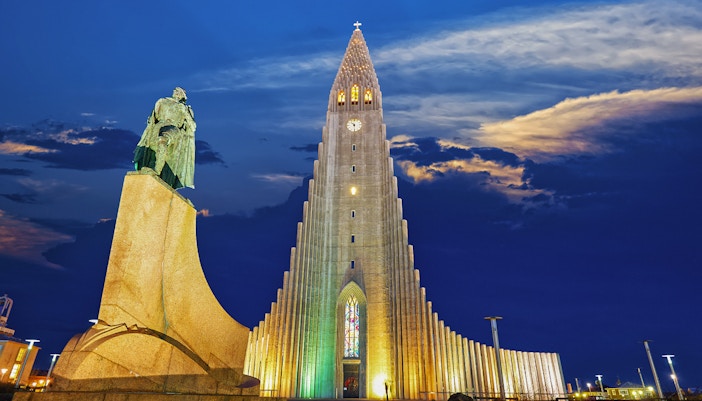
Commonly paired: Hallgrímskirkja
Distance: About 2km — around 5 minutes by taxi or 25–30 minutes on foot
Why people combine them: Visitors often compare the two best city views, and doing both on the same day makes sense if you want Reykjavík from a hilltop dome and from a church tower.

Also nearby
Aurora Reykjavík
Distance: About 4km — around 10 minutes by taxi
Worth knowing: It goes much deeper on aurora science and photography, so it’s the better follow-up if Perlan’s planetarium leaves you wanting more Northern Lights context.
Whales of Iceland
Distance: About 4km — around 10 minutes by taxi
Worth knowing: This pairs well if Perlan’s wildlife section is the part you want more of, especially if you’re traveling with children who like large-scale marine displays.
Eat, shop and stay near Perlan Museum
- On-site: The revolving café and restaurant under the dome is the most convenient option, and it’s worth it primarily for the panoramic setting rather than for a quick cheap meal.
- On-site dessert: The ice cream stop is useful if you want something fast after the galleries without committing to a full sit-down break.
- Better options nearby: Central Reykjavík has more choice and better value, but it’s usually smarter to eat before visiting and use Perlan for coffee or dessert afterward.
- Timing fit: The café works best as a mid-visit pause or scenic finish, not as the reason to come on its own.
- 💡 Pro tip: If you’re visiting between 12 noon and 2pm, expect the dome area to feel busier than the galleries — go through the exhibits first, then stop for coffee once the lunch rush eases.
- Perlan gift shop: This is the most practical place to buy Iceland-themed books, nature-focused souvenirs, and easy-to-pack gifts without adding another stop to your day.
- Downtown Reykjavík shopping streets: If you want a wider range than museum souvenirs, shop later in central Reykjavík rather than trying to turn Perlan into your main retail stop.
Perlan’s hilltop setting is calm, scenic, and easy if you have a car, but it’s not the most practical base for most Reykjavík trips. You’re close to the museum and open views, yet slightly removed from the restaurants, nightlife, and walkable city-center rhythm most visitors want. For a short stay, it’s usually better to visit Perlan than to stay beside it.
- Price point: The immediate area is more about quiet and convenience than volume of hotel choice, so better-value and broader lodging options are usually found closer to downtown.
- Best for: Visitors with a car, travelers who prefer a quieter edge-of-center base, or anyone building a museum-and-nature day around Öskjuhlíð.
- Consider instead: Downtown Reykjavík or the Old Harbor makes more sense for most stays, because you’ll have easier access to restaurants, city tours, and evening plans after Perlan closes.
Frequently asked questions about visiting Perlan Museum
Most visits take 1.5–2 hours. If you watch the Áróra show, do the ice cave, spend time on the observation deck, and stop at the café, you can easily stretch that to 2.5–3 hours without feeling like you’re lingering unnecessarily.
No, you usually don’t need to book far in advance. Perlan has good capacity and many visitors book within 48 hours, but online booking still makes sense in summer, on rainy weekends, and when you want to avoid a short ticket-desk wait.
Not in the classic sense, because Perlan rarely has the kind of long entrance lines that make a dedicated skip-the-line ticket essential. Pre-booking online is still worth it, though, because it can save around 10–15 minutes when rainy weather pushes extra visitors indoors.
You don’t need to plan around a strict timed-entry slot, but arriving 10–15 minutes before you want to start is smart. That gives you time to scan in, check the next available Áróra screening, and decide whether to do the ice cave or the show first.
Yes, you can bring a small bag or backpack. Perlan also has entrance lockers, and they’re worth using if you’re carrying bulky outerwear or anything awkward, because the route is easier when you’re not dragging a heavy coat through the galleries.
Yes, photography is allowed in most of the museum. The main restriction is the planetarium show, where flash should not be used during Áróra, while the observation deck and indoor ice cave are two of the easiest and most popular photo stops in the building.
Yes, Perlan works well for groups. The building is large enough to absorb tour groups, the route is simple to follow, and private guided visits can be arranged if your group wants more context than a standard self-guided visit provides.
Yes, it’s one of Reykjavík’s better family-friendly indoor attractions. The mix of an ice cave, volcano simulations, wildlife displays, and a dome show gives children enough variety that the visit feels active rather than like a long, read-every-panel museum stop.
Yes, Perlan is one of the more accessible major attractions in Reykjavík. Elevators connect all floors, the galleries are wide, the route from the parking area is accessible, and the observation deck can be reached without stairs.
Yes, food is available on-site. The dome café and restaurant is the main option, with an ice cream stop for something quicker, but many visitors find it smarter to eat before they come and use the café mainly for a view break.
No, not as a general visitor. The observation deck is now accessed through the museum ticket, and there isn’t a standard view-only option, so it makes sense to treat the deck and café as part of the full Perlan visit rather than as a separate stop.
Yes, they’re included in the standard Perlan admission ticket. That’s what makes the pricing easier to understand once you’re inside — you’re not being asked to add paid extras for the ice cave, Áróra, or the observation deck after entry.