Tours Iceland


Húsavík whale watching tours | Explore Iceland’s prime whale habitat on Skjálfandi Bay

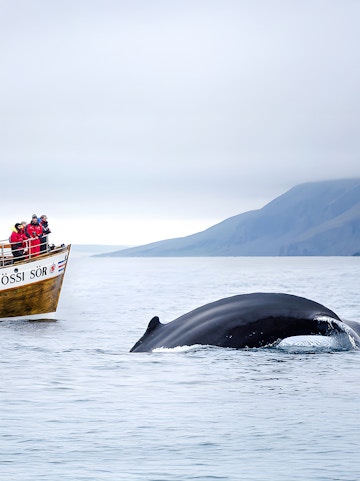
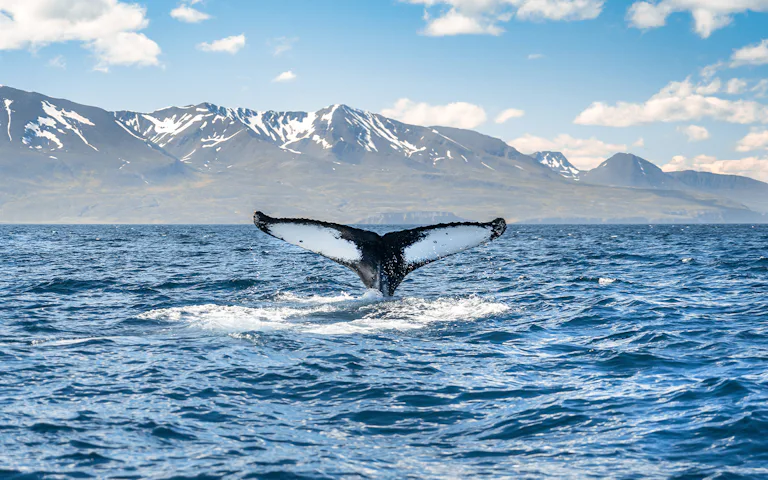
Húsavík sits on the edge of Skjálfandi Bay, a rich feeding ground known for its cold Arctic currents and nutrient-heavy waters. Boats head toward Lundey and Flatey, two islands that attract seabirds and mark the route into prime whale territory. This region sees consistent humpback activity through the summer, and sightings often begin within minutes of leaving the harbor. The town has a long history with marine research making it a clear choice for travellers who want to explore one of Iceland’s most reliable whale watching areas.

Overview:

  • Whale capital of Iceland: Húsavík sits on Skjálfandi Bay and offers the country’s highest whale sighting success rates.
  • Average distance travelled from Husavik: Within Skjálfandi Bay, usually 5–15 km.
  • What you’ll see: Humpback whales, minke whales, white-beaked dolphins, and porpoises.
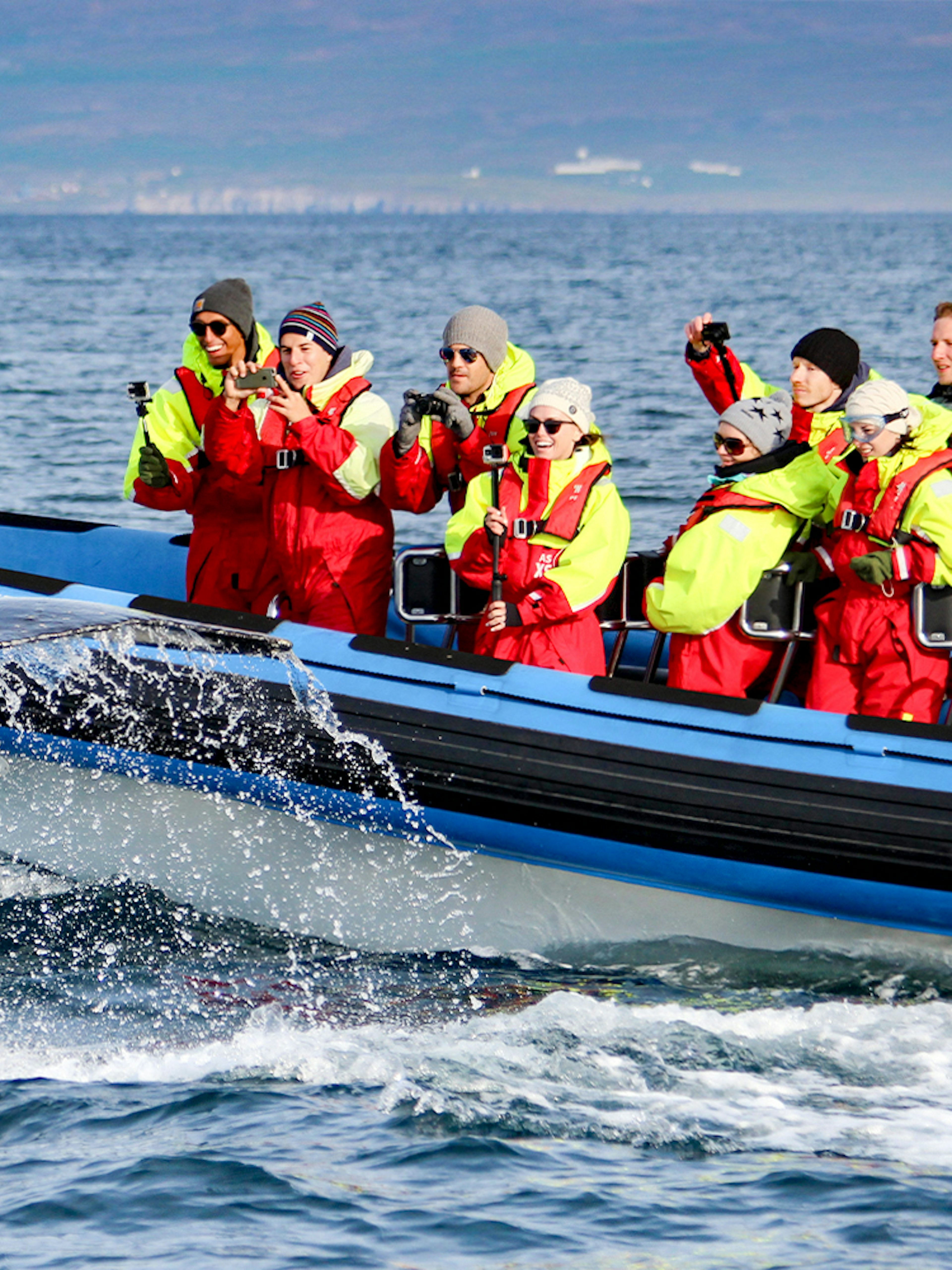
  • Tour formats: Choose from classic wooden boats for comfort or RIB speedboats for faster, closer encounters.
  • Best time to go: April to October is peak season, with May–August offering the highest success rates.

Things to know before booking your whale watching tour in Husavik

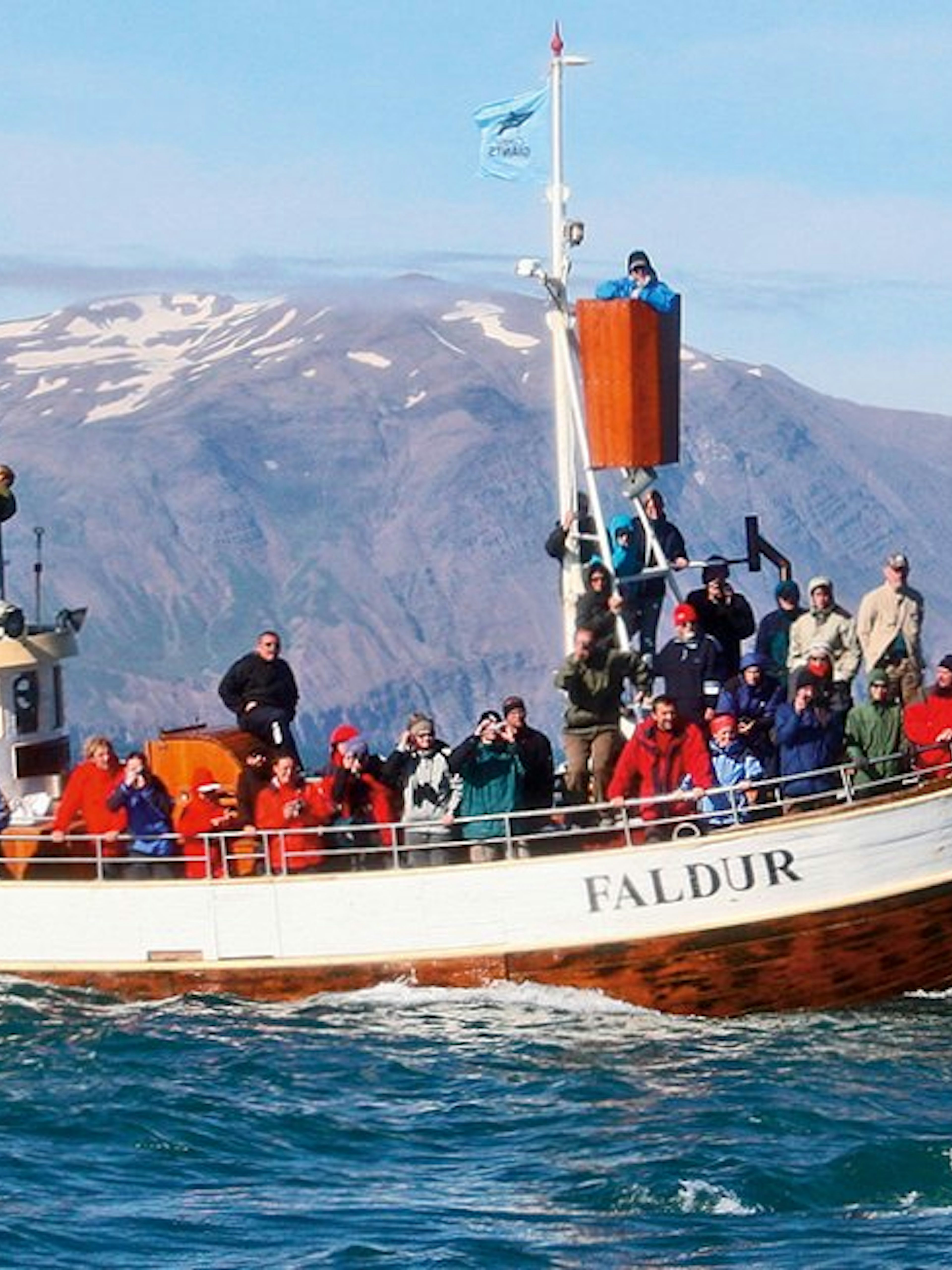
  • Choose your boat type: Classic cruise boats offer a steady ride with space to move around, best for families and relaxed viewing. RIB boats are faster and closer to the water for high-intensity wildlife spotting. The carbon-neutral oak boat is quiet, eco-friendly, and ideal for a calm, low-noise experience.
  • Tour duration varies: Oak boat tours run about 3 to 3.5 hours, giving time to explore feeding areas and seabird islands. {experience type="POPUP" id="35328" text="RIB tours"" are shorter, around 2 hours, but cover more distance and can reach whales faster.
  • Make an eco-friendly choice: The silent whale watching tour on the carbon neutral oak boat minimizes engine noise and emissions, allowing whales to behave naturally while supporting sustainable tourism practices.
  • Group size and atmosphere: Oak boats and classic cruise boats host larger groups, which is good for a social, guided experience. RIBs limit passengers to 12, creating a more personal and active adventure.
  • Check the focus of the tour: Some tours include whales + puffin watching at Lundey or Flatey, while others prioritize whale sightings only. If you want both whales and puffins in one trip, choose accordingly.
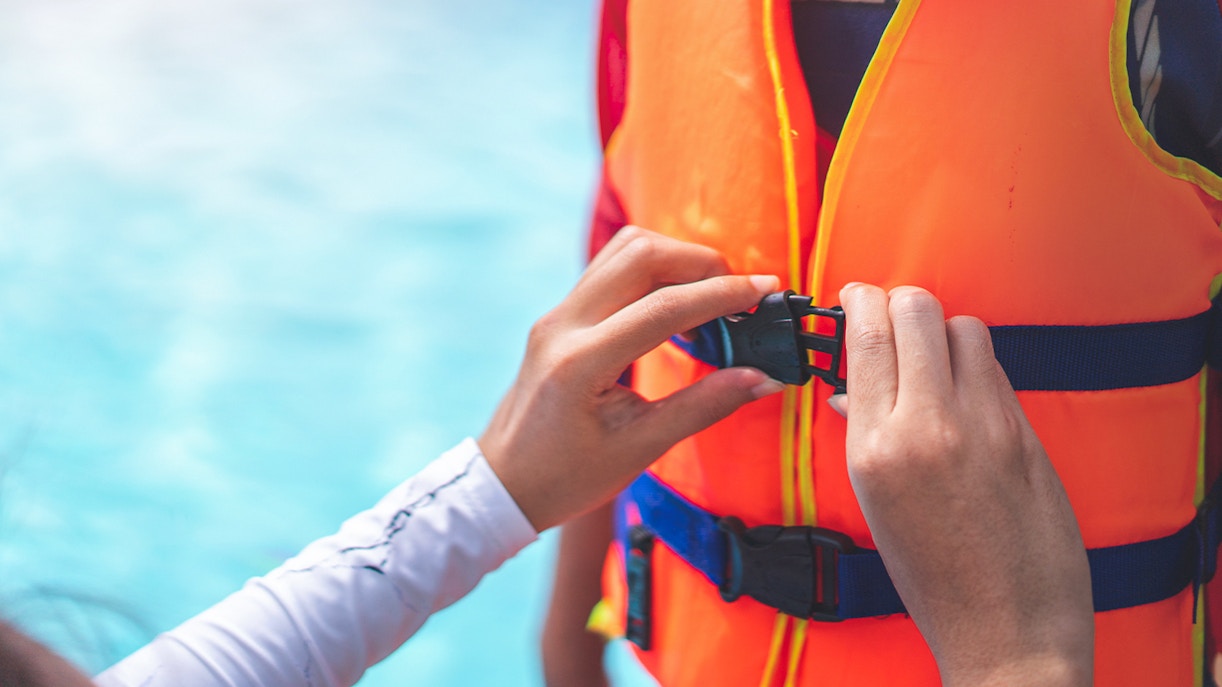
  • Inclusions across tours: Expect warm overalls, live commentary, and on some tours even light refreshments like hot chocolate or cinnamon buns. All tours provide flotation gear and follow whale-safe guidelines.
  • Accessibility considerations: Most oak boat tours are wheelchair accessible, but RIBs may not be suitable for guests with limited mobility. Advance notice can ensure the crew is prepared.
  • Ethical whale encounters: All the tours comply with the IceWhale Code of Conduct to safeguard marine life through low-impact navigation, safe proximity rules, and strict limits on interaction time.

What to expect on whale watching tours in Husavik?
Easy transportation to the islands and feeding grounds
Remarkably consistent sightings in Skjálfandi Bay
Guided experience
A window into Iceland’s marine life and seabird islands
A history rooted in marine research and responsible practice
Scenery shaped by volcanic cliffs and Arctic light
1/6

Easy transportation to the islands and feeding grounds

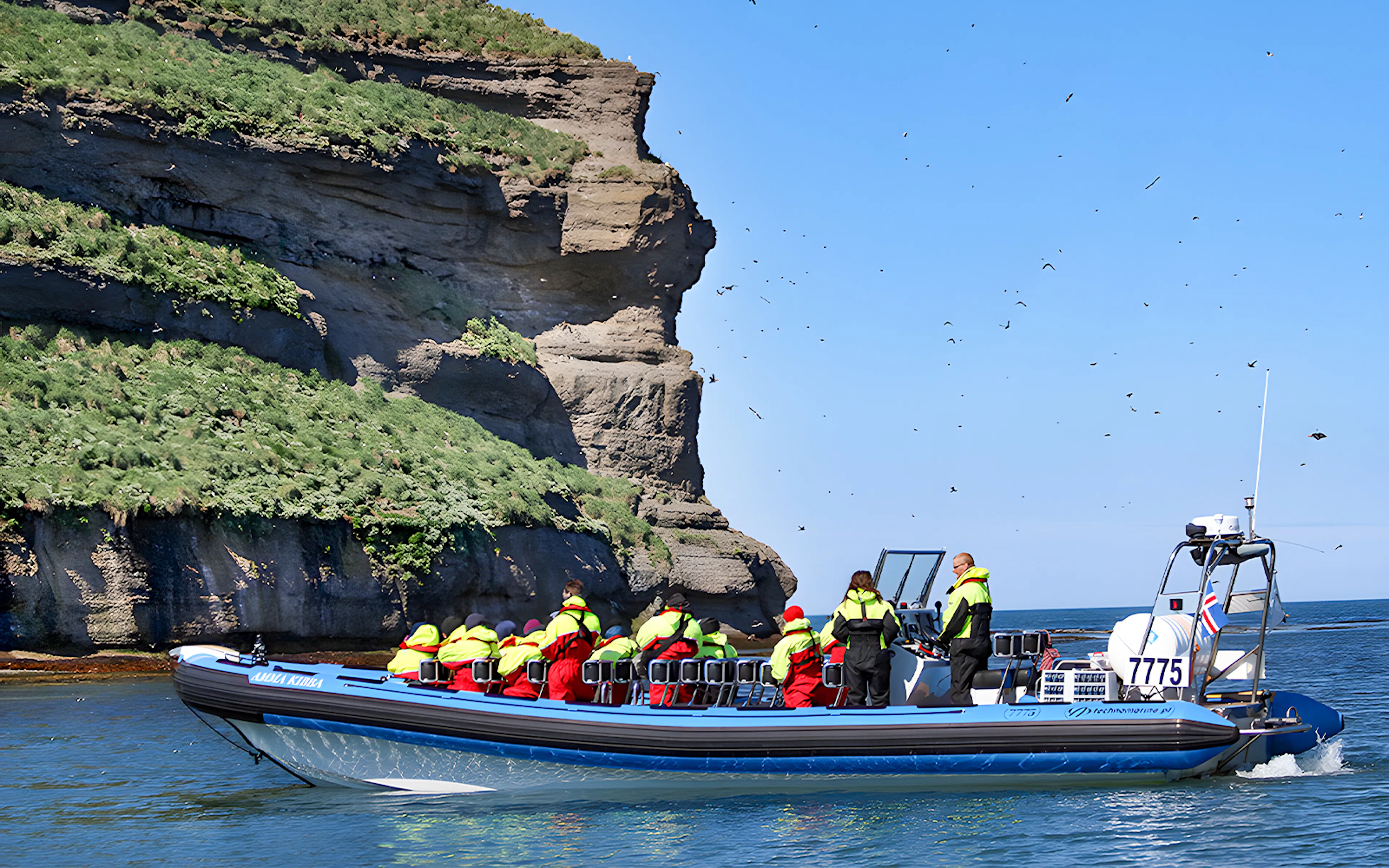
Skjálfandi Bay’s rich feeding grounds and nearby islands lie just minutes from Húsavík Harbour, so boats reach wildlife hotspots quickly, offering more time with whales and less time travelling.

Remarkably consistent sightings in Skjálfandi Bay

Húsavík sits beside one of Iceland’s most reliable whale habitats. Humpbacks return here each summer, minkes patrol the inner bay, and sightings often begin soon after boats clear the harbor. Local captains know these waters in detail, and decades of research from the Húsavík Whale Museum and local marine institutes shape how tours navigate the bay.

Guided experience

Expert guides provide live commentary throughout the tour, explaining whale behaviour, spotting blows before anyone else, and pointing out seabirds or sudden surface activity you might miss.

A window into Iceland’s marine life and seabird islands

Tours pass Lundey and Flatey, two islands packed with puffins and seabirds that thrive on the same productive waters as the whales. The bay has recorded everything from playful white-beaked dolphins to the occasional blue whale cruising through deep channels.

A history rooted in marine research and responsible practice

Húsavík’s rise as a whale watching hub came from its early focus on marine studies. Local operators follow research-based guidelines that keep boats at respectful distances and prioritize the animals’ natural behavior. Many tours use quiet vessels, support local conservation projects, and share ongoing findings from researchers who spend their careers on the bay.

Scenery shaped by volcanic cliffs and Arctic light

Skjálfandi Bay is framed by the Kinnarfjöll mountains, Tjörnes peninsula, and distant peaks that shift color with changing light. In summer, the long northern evenings create calm conditions that make spotting easier.

Find you perfect whale watching tours in Husavik 

TourBoarding pointDurationBoat typeRIB speedboatIdeal For

Húsavík: Whale Watching Boat Tour

Gentle Giants ticket center, Húsavík

3 hours

Traditional oak boat

Whale watching cruise, specialized guide, live commentary, warm safety overalls and rain jackets, wheelchair accessible, free cancellation up to 24 hours, voucher if no whales seen

First-time visitors, those seeking a classic, steady-paced experience

Húsavík: Whale Watching and Puffin Tour on Cruise

North Sailing ticket office, Húsavík

3.5 hours

Traditional oak boat

Whale and puffin watching, live commentary, light refreshments (hot chocolate, cinnamon buns), warm overalls, wheelchair accessible, free cancellation up to 24 hours, voucher if no whales seen

Visitors wanting both whales and puffins in one tour, family-friendly

Húsavík: Silent Whale Watching Tour on Carbon Neutral Oak Boat

Húsavík harbour

3 hours

Carbon neutral oak boat

Eco-friendly whale watching cruise, live commentary, light refreshments, warm overalls, wheelchair accessible, free cancellation up to 24 hours, voucher if no whales seen

Environmentally conscious travelers, those seeking quieter, eco-friendly experience

Húsavík: Whale Watching and Puffin Tour on RIB Speedboat

Gentle Giants ticket center, Húsavík

2 hours

RIB speedboat

Round-trip speedboat cruise, specialized guide, live commentary, warm safety overalls and rain jackets, small group (max 12), free cancellation up to 24 hours, voucher if no whales seen

Thrill-seekers, small groups, faster-paced adventure, closer encounters with whales and puffins

Your Husavik whale watching tour itinerary

Whale species and marine animals you can spot in Skjálfandi Bay

Humpback whale
Minke whale
White-beaked dolphins
Harbour porpoises
Blue whales (occasional)
Puffins (seasonal, around Lundey and Flatey)
1/6

Humpback whale

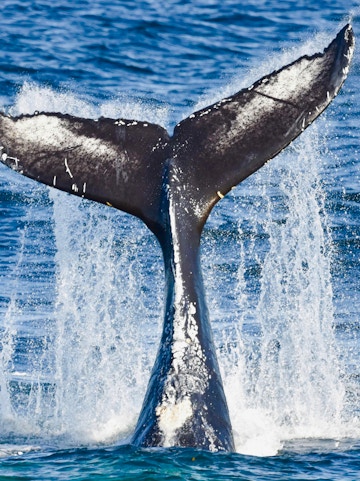
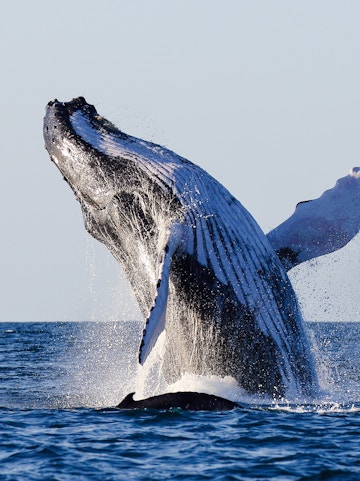
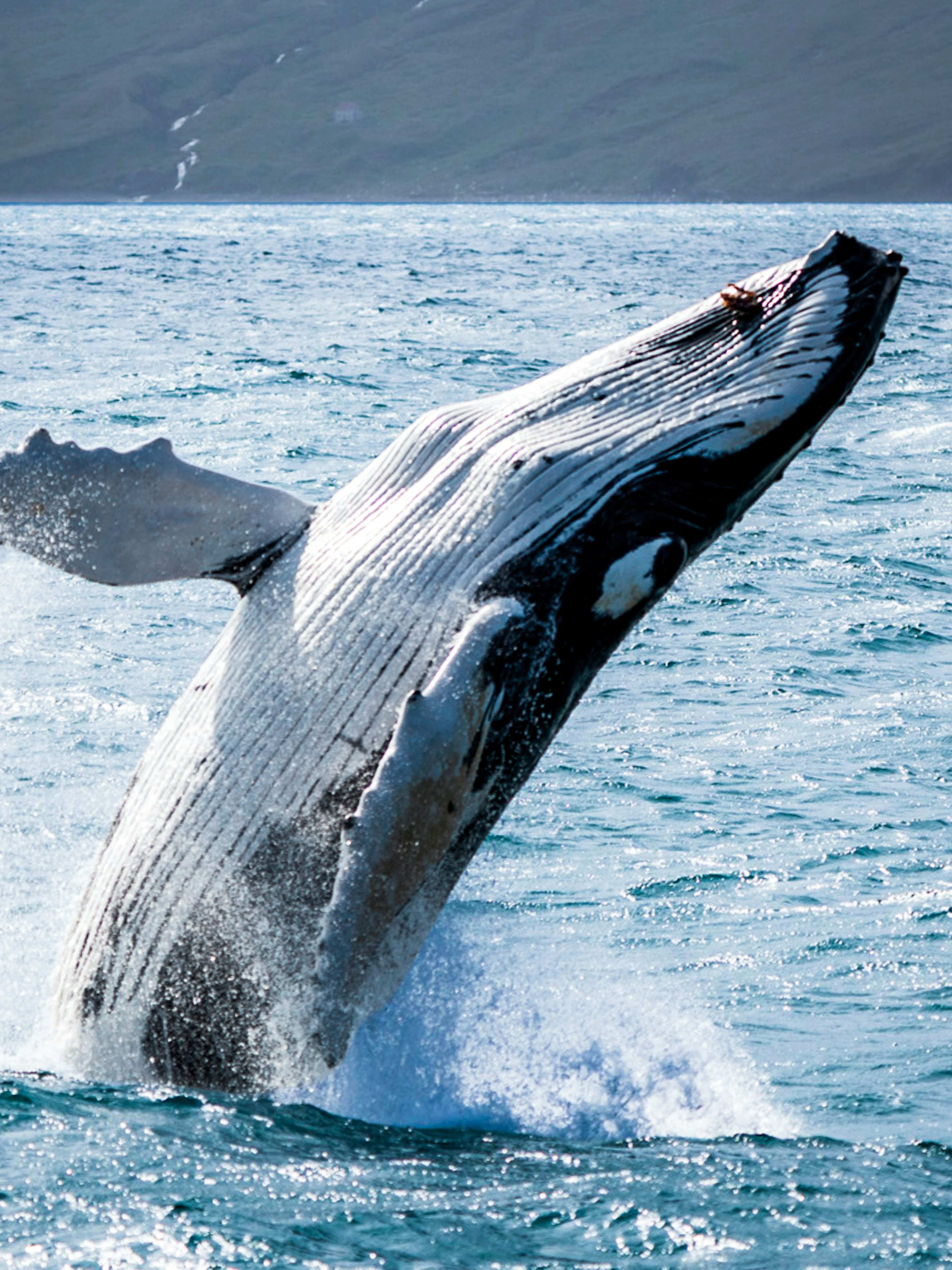
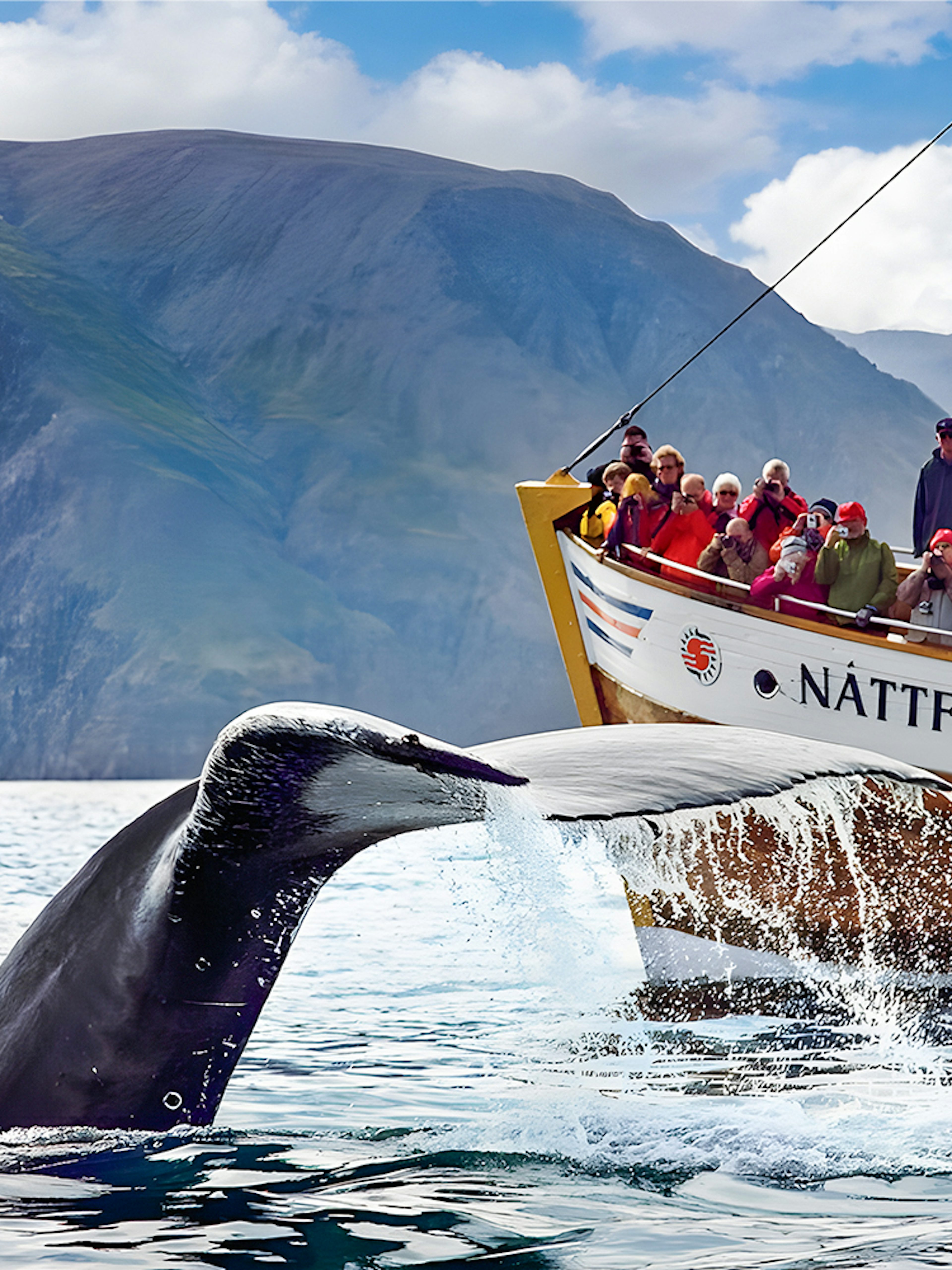
Humpbacks use Skjálfandi Bay as a summer feeding ground, often surfacing in slow, rhythmic intervals that make them easy to track. Their bubble feeding, high tail lifts, and unhurried circling patterns are common here, giving you long, steady viewing moments as they move through the bay’s channels.

Minke whale

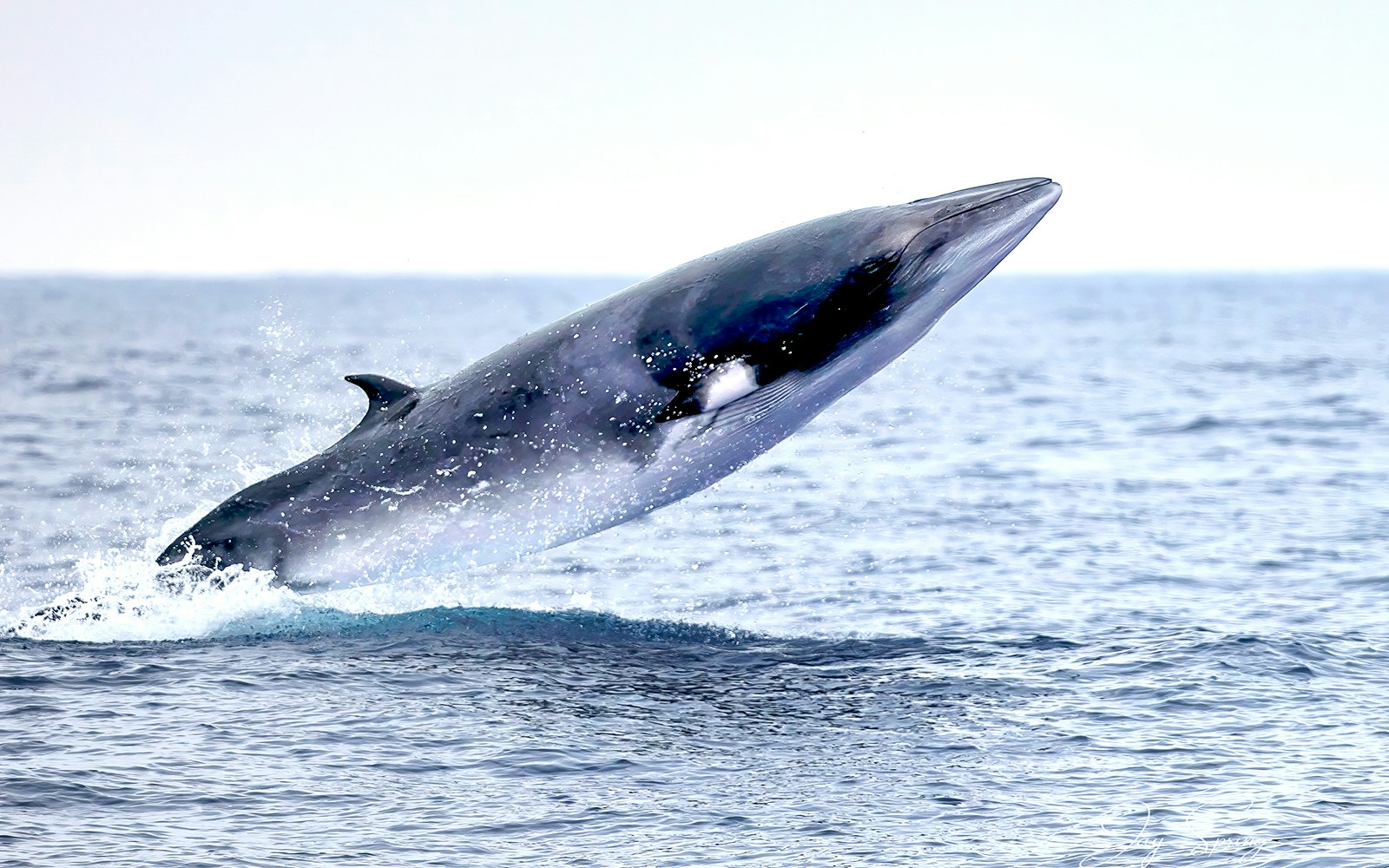
Minke whales in Skjálfandi Bay tend to travel close to the surface and follow smooth, predictable paths along the bay’s inner channels. Their quick, low-arc surfacing makes them easier to spot here than in open waters, and they often pass quietly along the boat’s viewing side before slipping back under.

White-beaked dolphins

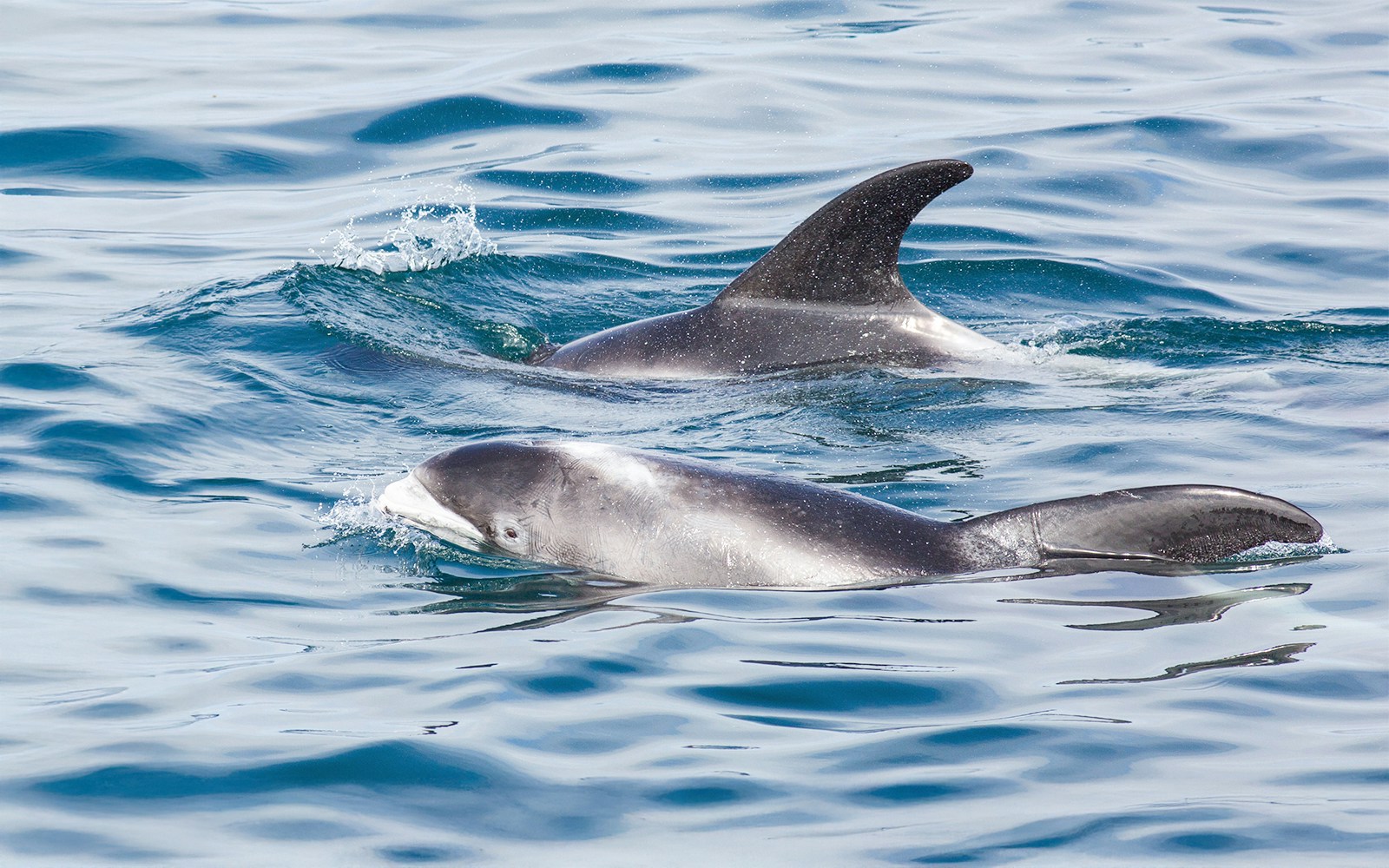
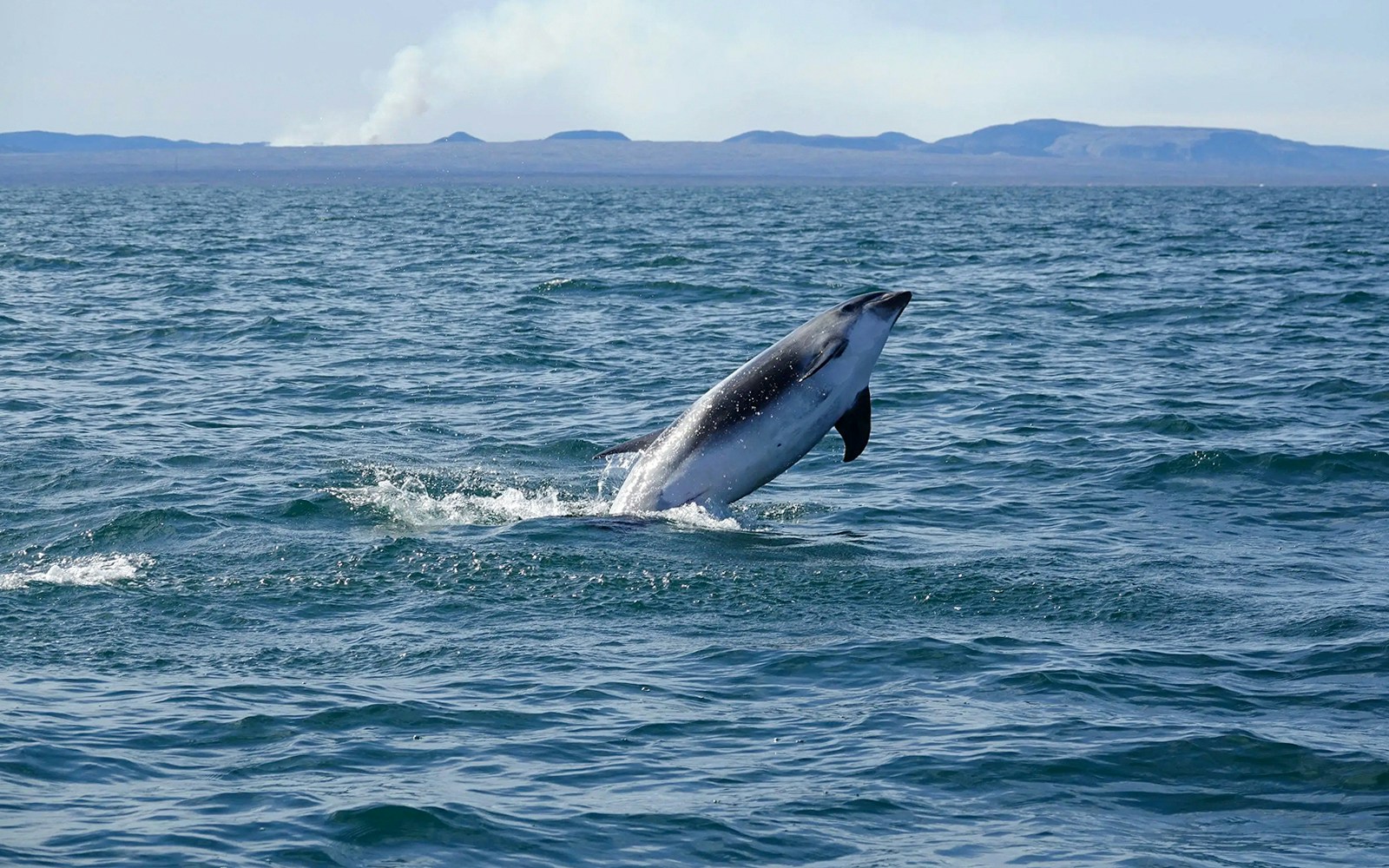
White-beaked dolphins move through Skjálfandi Bay in fast, coordinated groups and often ride the bow wave when conditions are calm. They have a sturdy build, a dark charcoal body, and a clear white patch on the beak. Their tight turns and short bursts of speed make them easy to follow in these waters.

Harbour porpoises

Harbour porpoises are small and quiet in Skjálfandi Bay, often appearing as quick, shallow rolls just above the surface. They travel in loose pairs or trios and prefer the calmer inner bay. Their small triangular dorsal fin is the easiest way to spot them.

Blue whales (occasional)

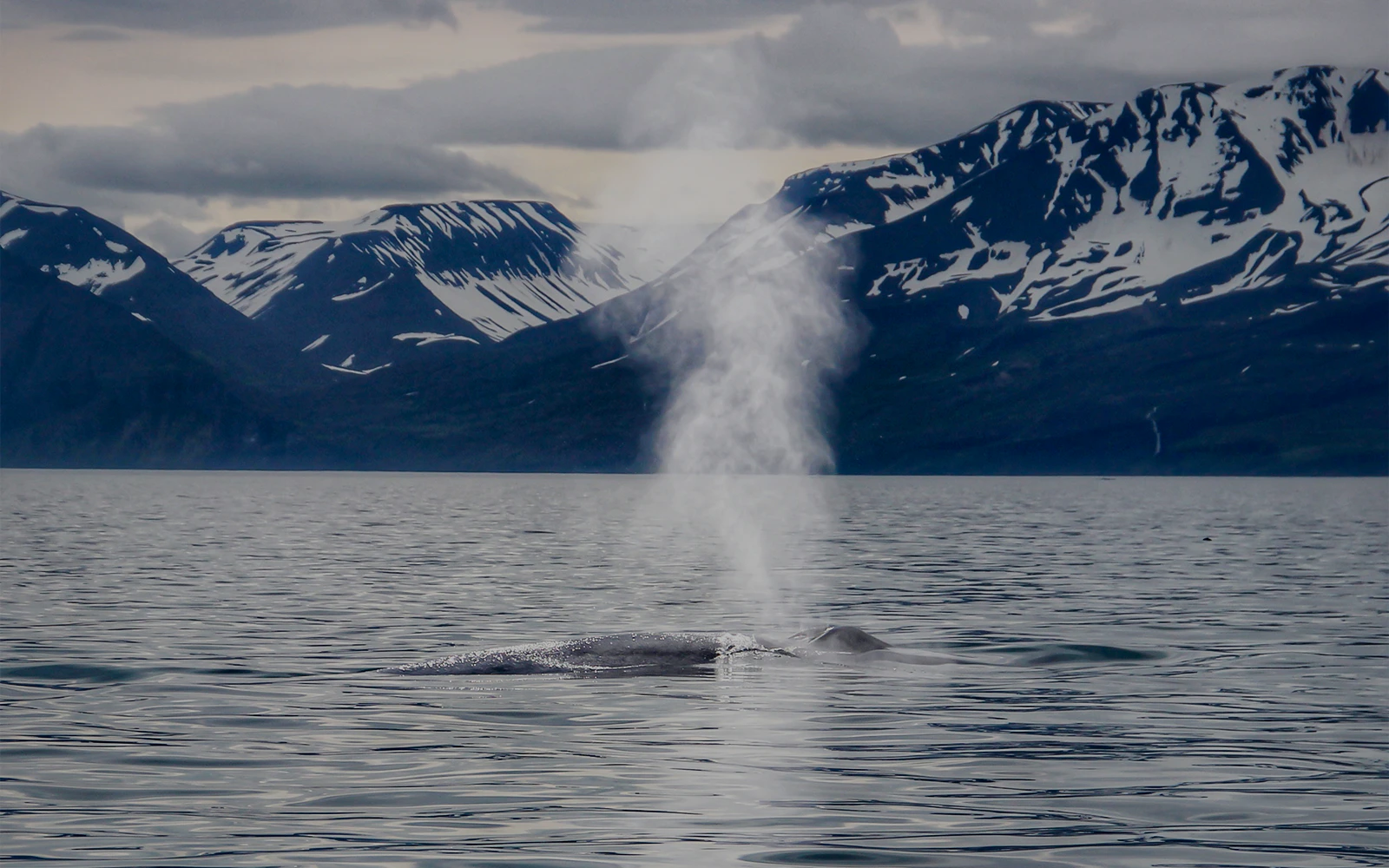
Blue whales appear rarely in Skjálfandi Bay, but when they do, the scale is unmistakable. A single exhale rises like a tower, and the length of the whale can exceed 25 meters, longer than most boats in the harbor. Sightings feel calm and deliberate, with slow, heavy surfacings that leave the entire bay quiet for a moment.

Puffins (seasonal, around Lundey and Flatey)

Puffins gather in large numbers around Lundey and Flatey during summer, settling on the cliffs and diving through the bay’s shallow feeding zones. You often see them bobbing in small groups beside the boat before they lift off with quick wingbeats and cut across the surface toward their nesting spots.

Whale-safe practice and eco standards in Húsavík

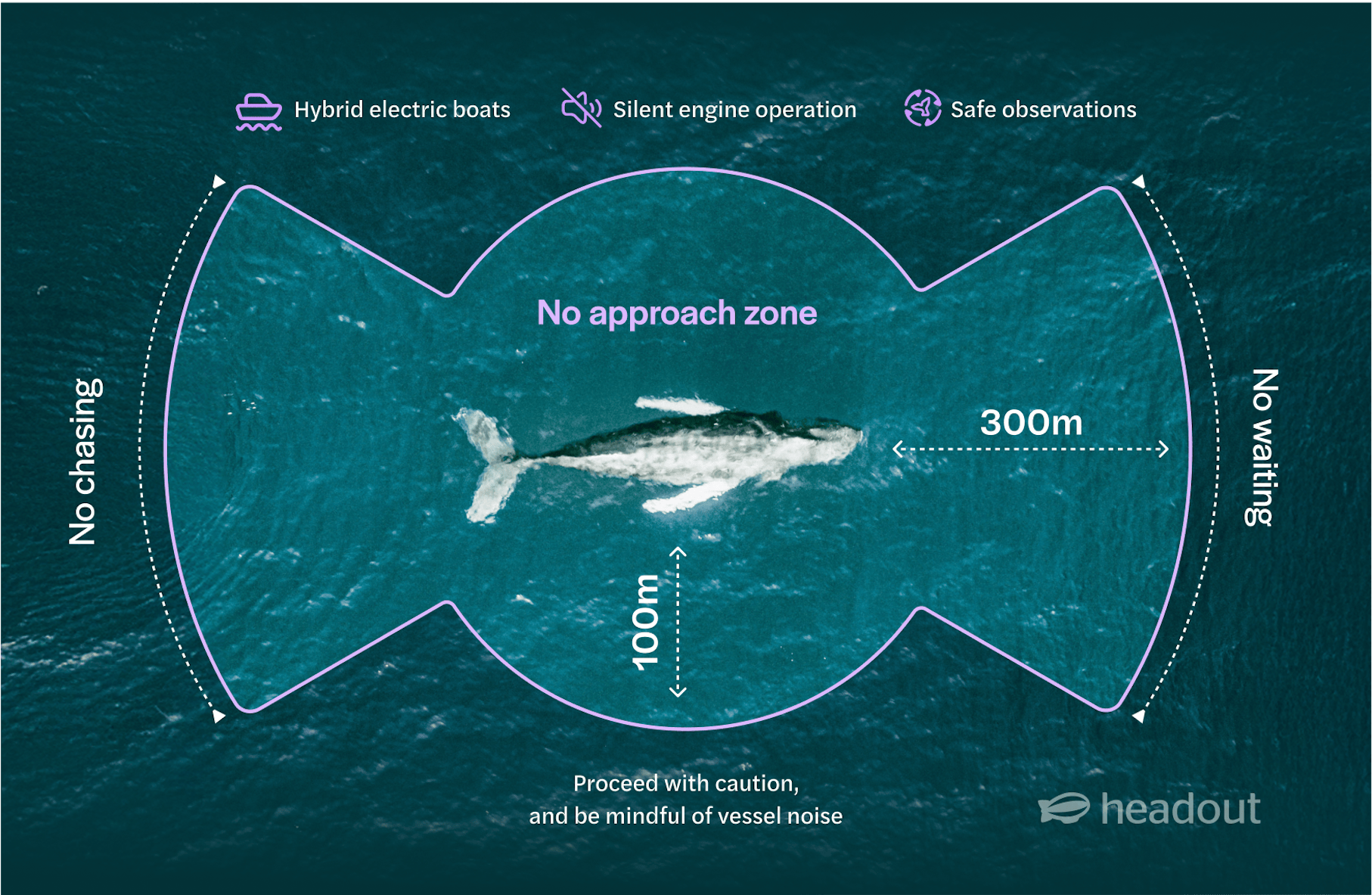
The tours follow a clear, research-based code of conduct developed and promoted through IceWhale and local industry groups. That code sets approach distances, speed limits, and rules for how boats position relative to feeding or nursing animals. It exists to protect whales’ feeding time and energy budgets while keeping encounters safe and meaningful for guests.

Silent watching and noise control
Skjálfandi Bay tours reduce engine noise during sightings: captains slow down to low speeds or cut engines and allow whales to choose the distance. Guides use quiet observation, binoculars, and slow maneuvering so animals are not chased or encircled. These simple steps lower stress on the animals and improve the quality of encounters for passengers.
Plan your Husavik whale watching tour

Frequently asked questions about whale watching tours from Husavik

For first-time visitors, the classic oak boat tour is usually the best choice. It moves steadily through Skjálfandi Bay, gives you plenty of space to watch the water, and stays long enough in each feeding area for relaxed sightings.