Plan your visit to Whales of Iceland Museum
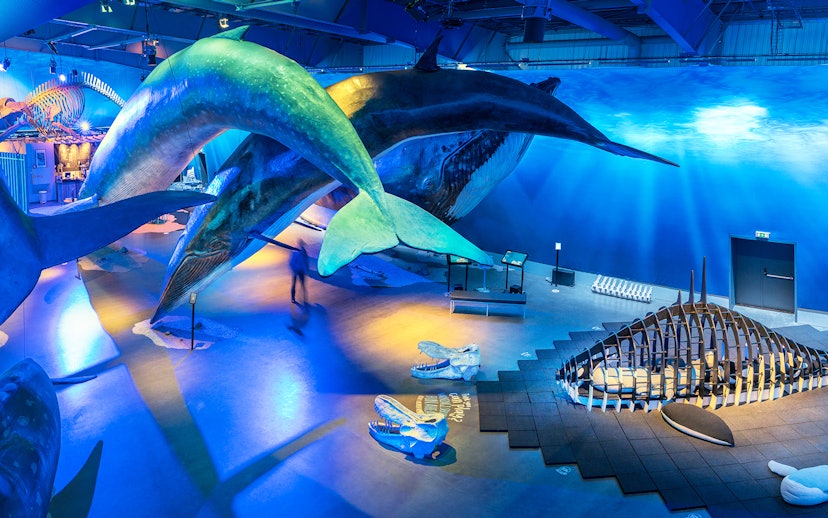
Whales of Iceland Museum is an indoor whale museum in Reykjavik best known for its 23 life-sized whale models and atmospheric film theater. The experience is compact, easy to navigate, and family-friendly, so most visits stay under 2 hours, but it feels much richer if you plan around a documentary screening and actually use the included audio guide instead of rushing the hall. This guide helps you sort out arrival, tickets, timing, and what to prioritize once you’re inside.
Quick overview: Whales of Iceland Museum at a glance
If you want the short version before you book, start here.
- When to visit: The museum is open year-round, and weekday mornings are noticeably calmer than summer afternoons because many visitors arrive after nearby whale-watching departures and Hop-On Hop-Off stops.
- Getting in: From about €29 for standard entry, with daily English guided tours included in admission; you can usually buy on the day, but summer afternoons and group visits are better booked ahead.
- How long to allow: 1–1.5 hours suits most visitors, but a full documentary, the audio guide, and a café stop can push that closer to 2 hours.
- What most people miss: The Fin Whale Theatre and the whale-tracking display add far more depth than a quick walk around the replica hall.
- Is a guide worth it? Yes, if you want extra context in a short visit, but the included audio guide already does a strong job for independent visitors.
Jump to what you need
🕒 Where and when to go
🎟️ Which ticket is right for you?
🗺️ Getting around
🐋 What to see
♿ Facilities and accessibility
Where and when to go
How do you get to Whales of Iceland Museum?
Whales of Iceland sits in Reykjavik’s Grandi harbor district, just outside the downtown core and a short walk from the Old Harbor.
Fiskislóð 23–25, 101 Reykjavik, Iceland
- Bus: Route 14 → stop outside the museum → the easiest public transit option from central Reykjavík.
- Hop-On Hop-Off bus: Whales of Iceland stop → right outside → the simplest choice if you’re combining it with other harbor attractions.
- Walk: From downtown Reykjavík → about 15 minutes → a straightforward waterfront walk if the weather is decent.
- Taxi / rideshare: Drop-off at the main entrance → almost no walk → useful if you’re arriving with children or in bad weather.
- Parking: On-site parking is available → easiest for self-drivers → especially handy if you’re exploring Grandi by car.
Which entrance should you use?
The museum setup is simple, and most visitors overthink this part. There is one main public entrance, and queues are usually light outside peak summer afternoons.
- Main entrance: Located at the front of the museum on Fiskislóð. Best for all ticket holders and walk-ins. Expect around 0–10 minutes’ wait on most days.
When is Whales of Iceland Museum open?
- Year-round: Open across all seasons except December 25
- Guided tours: English tours usually run at 11am and 3pm
- Film screenings: Scheduled throughout the day inside the Fin Whale Theatre
When is it busiest? Summer afternoons, weekends, and the period just after nearby whale-watching tours make the exhibit hall feel fuller and the interactive stations slower to access.
When should you actually go? Weekday mornings are your best window if you want more space around the largest models and easier access to the anatomy table before families and boat-tour pairings arrive.
Which Whales of Iceland Museum ticket is best for you
| Ticket type | What's included | Best for | Price range |
|---|---|---|---|
Whales of Iceland Admission Ticket | Museum entry + life-sized whale hall + Fin Whale Theatre + audio guide | A flexible visit where you want to move at your own pace and decide on the film once you arrive. | From €29 for adult |
How do you get around Whales of Iceland Museum?
Museum layout
The museum is compact and mostly linear, with one large whale hall, a few interactive stops, and the theater branching off the main route. In practice, it’s easy to self-navigate, but you’ll get more from it if you don’t treat the documentary room and interactive displays as optional extras.
- Main whale hall: Full-size whale models from species found in Icelandic waters → budget 30–45 minutes.
- Interactive area: Minke whale anatomy table and digital learning stations → budget 15–20 minutes.
- Whale-tracking display: Follow tagged whales moving around Icelandic waters → budget 5–10 minutes.
- Fin Whale Theatre: Short documentary screenings included with admission → budget 20–40 minutes depending on the film.
- Café and gift shop: A natural stop at the end if you want to slow the pace → budget 15–20 minutes.
Maps and navigation tools
- Map: On-site museum map → covers the exhibit hall, theater, and amenities → pick it up at reception when you collect your audio guide.
- Signage: Wayfinding is straightforward, but the theater schedule and interactive displays are easy to skip unless you check them early.
- Audio guide/app: Included audio guide in 17+ languages → adds species-by-species context → worth using if you’re visiting without the live tour.
💡 Pro tip: Check the documentary schedule as soon as you arrive, then work backward through the whale hall so you don’t end up choosing between a full film and the exhibits.
What happens inside Whales of Iceland Museum?

Blue whale
Species: Blue whale
This is the scale-setting moment of the museum, and it’s the model that makes the rest of the visit click. Standing beneath it gives you a far better sense of whale size than any boat tour ever can. Most visitors look up, take a photo, and move on too fast but forget to spend a minute noticing how the lighting and suspension make it feel like it’s moving overhead.
Where to find it: In the main exhibit hall, suspended above the central route.
Sperm whale
Species: Sperm whale
The sperm whale model stands out because it feels more individual and less abstract than some of the other giants. It was modeled after a real whale and includes details like battle scars, which most visitors miss unless they slow down and read the panel. It’s one of the best displays for understanding how much texture and variation these animals carry in the wild.
Where to find it: In the main whale hall, along the central walkthrough among the larger species.
North Atlantic right whale
Species: North Atlantic right whale
This is one of the rarest and most conservation-heavy displays in the museum. It matters because it shifts the visit from pure scale to urgency. You’re not just looking at anatomy, but at a species with an especially fragile future. Many visitors pass it quickly because it isn’t the biggest model in the room, but it’s one of the most meaningful stops.
Where to find it: In the main exhibit hall among the species found in Icelandic waters.
Fin Whale Theatre
Experience type: Documentary screening
The theater adds the emotional layer the replica hall can’t give on its own. Films such as Whale Wisdom and Sonic Sea make whale behavior, communication, and conservation feel immediate rather than just educational. Most people only notice the room after they’ve nearly finished the hall, which is why checking the screening board early changes the whole visit.
Where to find it: Just off the main hall, beside the central exhibit route.
Minke Whale Anatomy Table
Experience type: Interactive science exhibit
This is the hands-on stop that works especially well with children and curious adults. You can explore skeletal structure and internal anatomy through touch-sensitive elements rather than static labels, which makes the science easier to remember. It’s also one of the first areas to get crowded, so it’s worth doing before the mid-day family rush builds.
Where to find it: Near the start of the museum experience, before or alongside the main whale hall.
Whale tracking display
Experience type: Research and migration display
This display links the museum to real whale research happening around Iceland right now. It lets you track tagged whales and see that the visit isn’t only about replicas but also about ongoing science and conservation. Many visitors skip it because they’ve already had their big visual moment in the hall, but it’s one of the most Iceland-specific exhibits here.
Where to find it: In the interactive exhibit area near the science-focused displays.
Facilities and accessibility
- 🎧 Audio guide: A free audio guide is included with admission and covers the exhibits in 17+ languages.
- 🎬 Film theater: The Fin Whale Theatre is included with admission and runs documentary screenings throughout the day.
- 🍽️ Cafe: Big Little Whale Cafe serves coffee, hot chocolate, and pastries, and works well as a built-in break near the end of the visit.
- 🛍️ Gift shop: The on-site shop sells whale-themed books, plush toys, Icelandic-designed merchandise, and practical souvenirs that are easy to pack.
- 🪑 Seating/rest areas: The theater and cafe are the easiest places to sit down without leaving the museum experience.
- 🅿️ Parking: On-site parking is available, which makes the museum one of the easier Grandi attractions to visit by car.
- 🚏 Transit access: City bus 14 and the Reykjavik Hop-On Hop-Off bus stop right outside, so arrival is unusually simple for a harbor attraction.
- ♿ Mobility: The museum is wheelchair-friendly, and the open exhibit-hall layout is easier to move through than many multi-floor museums.
- 👁️ Visual impairments: The included audio guide adds useful spoken context at the exhibits, which helps if you prefer not to rely only on wall text.
- 🧠 Cognitive and sensory needs: The blue lighting and whale-song atmosphere are calming for many visitors, but the dim environment and ambient sound can feel sensory-heavy if you’re sensitive to sound or low light.
- 👨👩👧 Families and strollers: The museum is stroller-friendly, and the main route is simple enough to manage without constant backtracking.
- 🚪 Layout: The experience is mostly on a single, easy-to-follow route, which reduces navigation stress compared with larger museum complexes.
Whales of Iceland Museum works well for children because the giant models, hands-on science stations, and whale sounds make the visit feel more immersive than a standard read-the-label museum.
- 🕐 Time: Around 45–90 minutes is realistic with younger children, and the main hall plus the anatomy table are usually the best parts to prioritize.
- 🏠 Facilities: The café is helpful for mid-visit breaks, especially if children need a snack before sitting through a documentary.
- 💡 Engagement: Let children pick their favorite whale first, then use the audio guide or panels only for that species. It keeps the visit focused instead of turning into a long facts march.
- 🎒 Logistics: Bring your own headphones if your child will use the audio guide, and aim for morning entry before the interactive areas get busier.
- 📍 After your visit: A nearby whale-watching departure from the Old Harbor is the most natural next stop if your child wants to see the real animals after learning the species indoors.
Rules and restrictions
What you need to know before you go
- Entry requirement: Standard admission is flexible rather than tightly timed, and you can book online or buy at the desk.
- Children: Children under 7 enter free, while children from 7–15 years use the reduced child ticket.
- Tours: English guided tours usually run at 11am and 3pm, so arrive a little earlier if you want to join one without rushing the exhibits.
- Dress note: There’s no special dress code, but Grandi can be windy and wet outside if you’re walking in from downtown.
Not allowed
- 🚬 Smoking/vaping: This is an indoor museum environment, so smoking and vaping aren’t part of the visitor experience.
- 🖐️ Behavior: Treat the displays gently and follow staff guidance around touch-friendly versus non-touch areas so the models and interactives stay in good condition.
- 🍽️ Food/drink: Café purchases are the easiest food option here, and the main exhibit hall is better treated as a viewing space rather than a picnic stop.
Photography
Personal photography is part of what most visitors do here, especially in the main whale hall where the giant models are the centerpiece of the experience. Be considerate around documentary screenings and interactive stations, and keep tripods or bulky setups out of the flow in this compact indoor space.
Practical tips
- Booking and arrival: You can usually buy on the day, but summer afternoons and family-heavy weather days feel busier, so booking ahead makes more sense then than in winter.
- Pacing: Don’t burn through the main hall in 20 minutes and call it done. The theater and tracking display are what make the visit feel more complete.
- Crowd management: The best window is usually weekday morning, because the harbor area is quieter before whale-watching pairings and sightseeing buses feed into Grandi later in the day.
- Tours: If you want the live English tour, plan around the 11am or 3pm start instead of arriving at a random time and hoping you catch one.
- What to bring: Bring your own headphones if you care about audio-guide comfort, since that makes a surprisingly big difference on a self-paced visit.
- With children: Do the anatomy table early, because it’s one of the first places younger visitors cluster and wait time builds fastest there.
- Food and drink: If you’re only doing the museum, eat after your visit; if you’re pairing it with a harbor cruise, the café is a useful buffer before or after the boat.
- Value: The museum feels strongest when you experience at least two of the three major extras: the audio guide, theater, or guided tour, since a fast walk-through can feel short for the price.
What else is worth visiting nearby?
Commonly paired
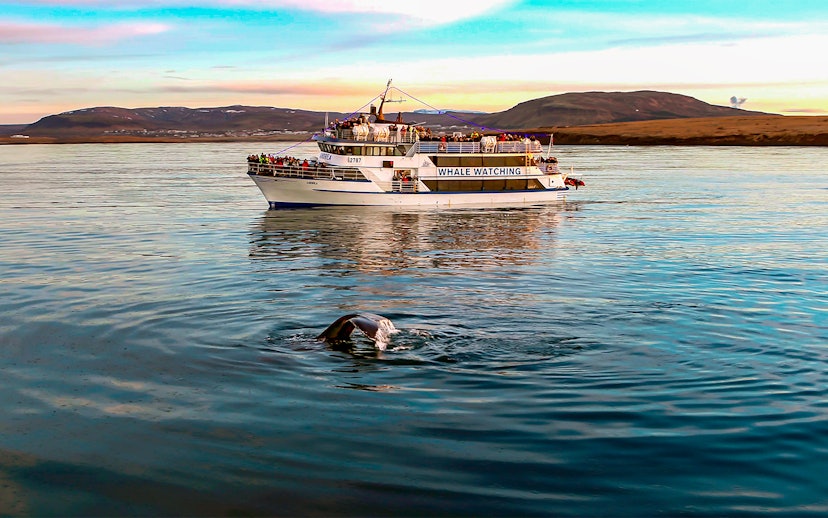
Reykjavik whale-watching tours
Distance: 3–5 minute walk
Why people combine them: It’s the most natural same-day pairing. The museum gives you species context indoors, and the harbor cruise gives you the chance to spot the real animals outside.
Commonly paired
FlyOver Iceland
Distance: About 800 m, around 10 minute walk
Why people combine them: Both are easy indoor attractions in the harbor area, so they work especially well on cold, wet, or windy Reykjavik days.
Also nearby
Perlan
Distance: About 5 minutes by taxi
Worth knowing: If you want to keep the science-and-nature theme going, Perlan adds Iceland geology, glacier content, and a longer indoor museum-style visit.
Harpa Concert Hall
Distance: Roughly a waterfront walk from Grandi
Worth knowing: Harpa is a good follow-up if you want architecture, views, and a more central Reykjavík stop after the museum.
Eat, shop and stay near Whales of Iceland Museum
- On-site: Big Little Whale Cafe serves coffee, hot chocolate, and pastries, and it’s worth using as a convenient mid-visit or post-visit break rather than leaving the building too early.
- Better options nearby: Grandi’s waterfront food spots and cafés are the best move if you want something more substantial than pastries after the museum.
- Best timing: Eat after your visit if you plan to watch a film, because the theater schedule is the only part of the museum day that works on a fixed clock.
- 💡 Pro tip: The cafe makes most sense as a buffer before or after a whale-watching tour, not as a destination meal on its own.
- Museum gift shop: Best for whale plush toys, books, magnets, Icelandic-designed whale merchandise, and easy-to-pack family souvenirs.
- Grandi area shops: The harbor district is a better place than the museum itself if you want to keep browsing design-led Reykjavik stores after your visit.
Grandi is a practical base for a short Reykjavik stay if your plan centers on the harbor, whale-watching, and easy walks to a few standout attractions. It’s quieter than the main downtown core and less nightlife-focused, which suits travelers who want calmer evenings and straightforward sightseeing. If you want Reykjavik’s densest restaurant and bar scene right outside your hotel, downtown is usually the better call.
- Price point: The area tends to skew mid-range to upper-mid-range compared with more varied downtown options.
- Best for: Short stays focused on harbor attractions, families who want simpler logistics, and travelers pairing indoor sights with whale-watching departures.
- Consider instead: Downtown Reykjavik works better for longer stays, more dining options, and easier access to the city’s main shopping and nightlife streets.
Frequently asked questions about visiting Whales of Iceland Museum
Most visits take 1–1.5 hours. If you watch a full documentary, use the audio guide properly, and stop at the café, you can stretch that to around 2 hours, but a quick walk-through of just the whale hall can be much shorter.
No, you usually don’t need to book far in advance for this museum. Same-day entry often works, but summer afternoons, group visits, and bad-weather days can make pre-booking the safer choice if you don’t want to plan on the fly.
Arriving 10–15 minutes early is enough for most visits. That gives you time to check in, collect the audio guide, and look at the documentary or guided-tour schedule before you decide how to pace the rest of your visit.
Yes, a small day bag is the easiest option for this visit. The museum is compact and indoor, so you won’t need much, and traveling light makes it easier to move around the whale hall and interactive areas with children.
Yes, personal photos are a normal part of the visit. The main whale hall is especially photo-friendly, but it’s worth being considerate in the theater and around the interactive stations where people tend to stop longer.
Yes, the museum works well for groups. It’s easy to navigate, there are scheduled English tours at set times, and the open layout makes it simpler for mixed-age groups than a more complex, multi-floor museum.
Yes, it’s one of the easier Reykjavik museums to do with children. The life-sized whale models, touch-friendly science displays, and relaxed pace keep younger visitors engaged better than a museum that relies only on text panels.
Yes, the museum is promoted as wheelchair-friendly. The exhibit hall is open and easy to follow, which helps with maneuverability, and it’s also stroller-friendly for families visiting with younger children.
Yes, there’s a café on-site. Big Little Whale Café is good for coffee, hot chocolate, and pastries, and the wider Grandi harbor area gives you more substantial food options if you want a proper meal afterward.
Yes, the audio guide is included with admission. It’s available in more than 17 languages, which makes it one of the easiest ways to get more value from the visit if you aren’t joining the live English tour.
The museum gives you guaranteed access to whale species, scale, and conservation context in any weather, while a whale-watching tour gives you the chance to see real animals at sea. Many visitors pair them because each one fills the gap the other leaves.
Yes, combo options such as Land & Sea packages are available. These are best if you already know you want both the harbor cruise and the museum, because they simplify the day and usually make the whale theme feel more complete.