Quick Information

Plan your visit

Did you know?

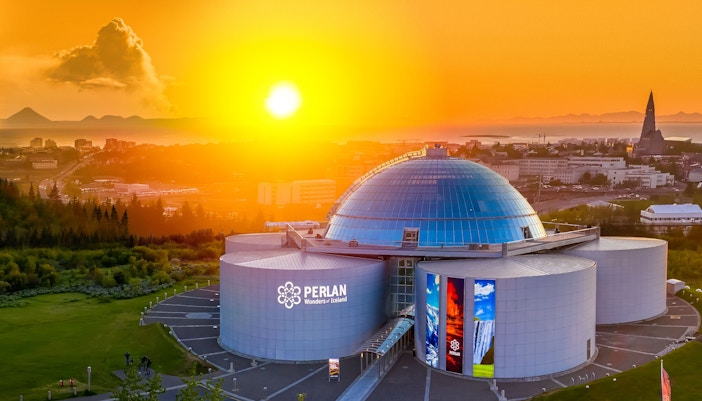
Perlan stands on former hot water storage tanks that once helped distribute geothermal water around Reykjavík; today those tanks house exhibitions and a planetarium.

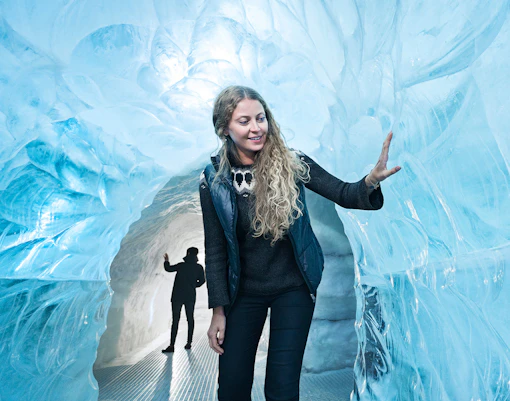
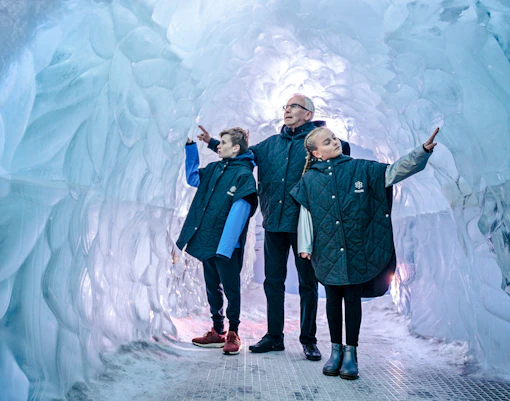
The museum’s artificial ice cave is built from hundreds of tons of real Icelandic ice and kept below freezing, creating glacier-like conditions indoors.

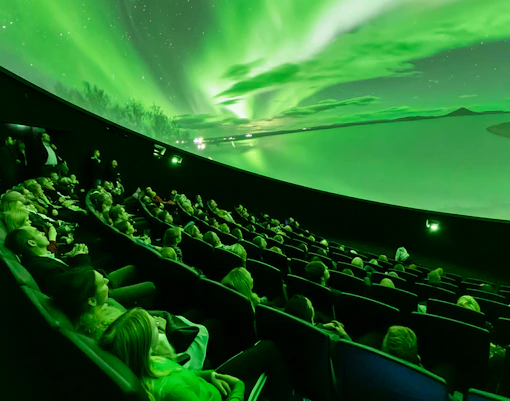
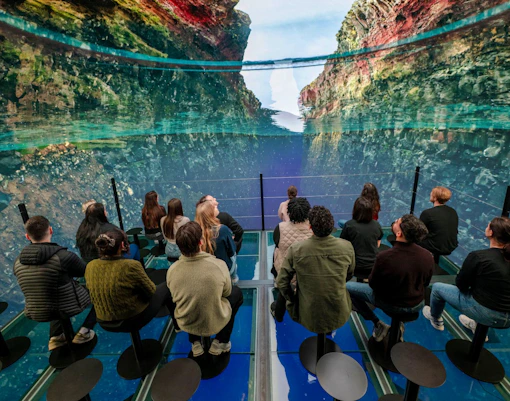
Áróra was produced with Icelandic artists and scientists, combining real aurora footage with educational narration about how the northern lights form.

Is Perlan Museum worth visiting?

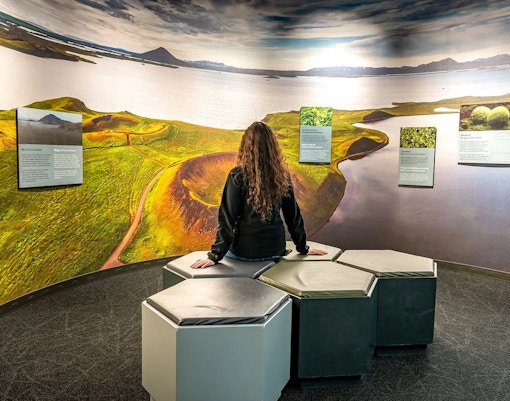
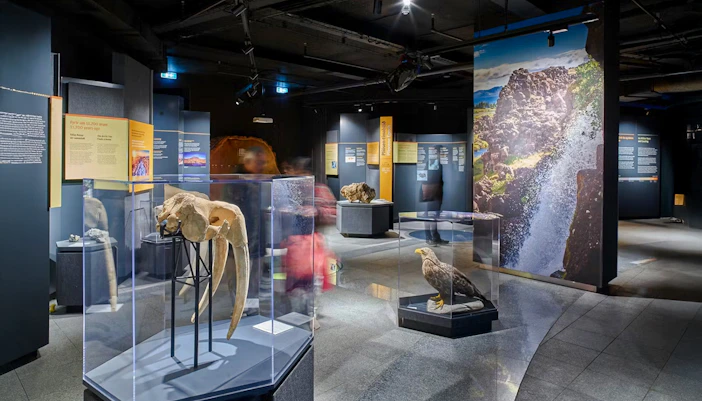
Perlan feels less like a traditional museum and more like an experience. One moment you’re walking through a cold, blue-lit glacier tunnel, and the next you’re looking out over Reykjavík from inside a glass dome. You can explore exhibits about lava, oceans, wildlife, and even a simulated Northern Lights show, all without leaving the building.

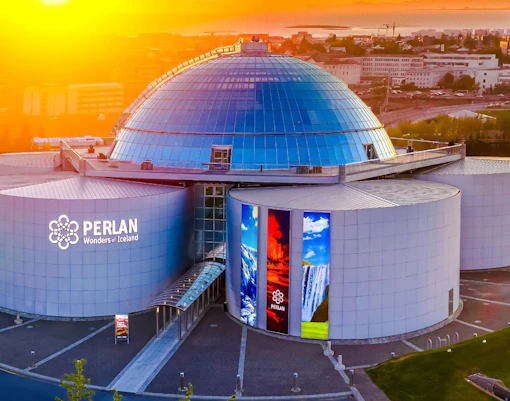
The museum was built from old hot-water storage tanks and later transformed into a modern attraction that explains Iceland’s nature in a simple, visual way. It helps you understand glaciers, volcanoes, and the landscape much more clearly than reading about them alone.

The best part is the view from the observation deck, which connects everything you’ve seen inside with the real Iceland outside.

Skip it if: you’ve already done glacier caves, volcano tours, and Northern Lights trips, and prefer untouched natural settings over indoor exhibits.

What’s inside the Perlan Museum?

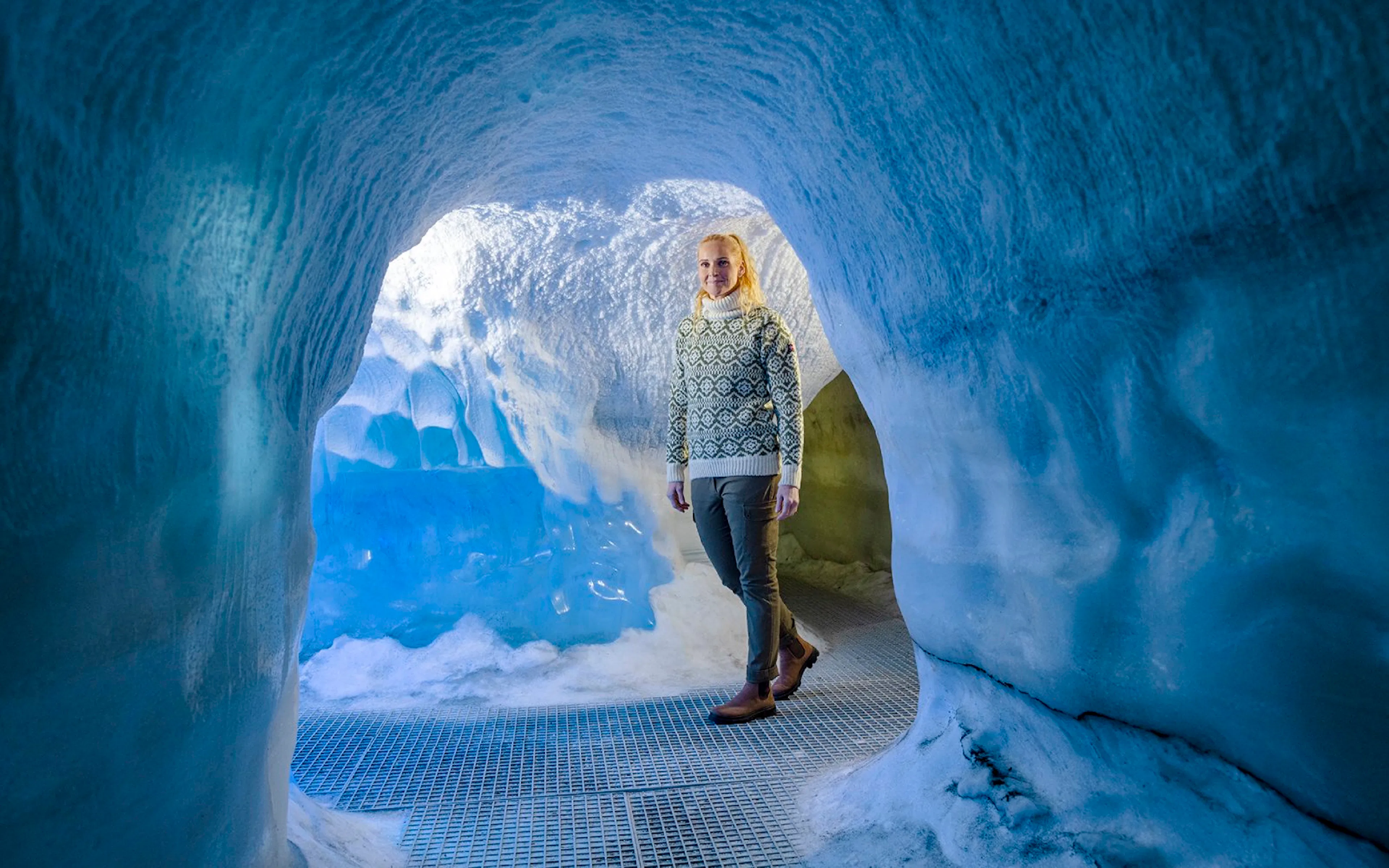
Blue-lit ice cave tunnel at Perlan Museum
1/7

The real ice cave

Built from real snow and ice inside one of the former tanks, this 100-meter (328-foot) tunnel is kept at a constant -10°C (14°F). Visit early in the day for fewer crowds and the best chance to capture its clear, blue glow in photos.

The indoor geyser

Styrmir erupts through the atrium several times a day, sending water 25 m (82 ft) upward. It’s your first reminder that Perlan is really about Iceland’s geothermal energy, not just museum displays.

Glaciers and climate exhibits

These galleries explain how Iceland’s ice fields form, move, and shrink, so the cave doesn’t feel like a stunt. They’re most impactful when you take time to study the maps, footage, and before-and-after glacier data.

Arora planetarium

The Northern Lights show is the most reliable aurora experience in Reykjavik: no weather gamble, no late-night bus. Seats fill fastest in peak season, so take the earliest show time offered when you enter.

Volcano and earthquake zone

Perlan’s lava, eruption, and quake exhibits turn textbook geology into something physical. Check the simulator schedule when you arrive; it runs separately from the main galleries and can draw a short queue on wet-weather afternoons.

Ocean life and bird cliffs

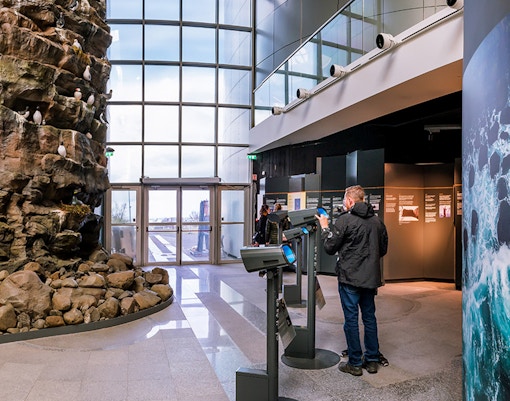
Digital underwater displays, whale content, and the towering Látrabjarg bird-cliff replica balance out the fire-and-ice story. This is one of the best zones for children, especially if they like buttons, sounds, and big visual models.

Observation deck and dome

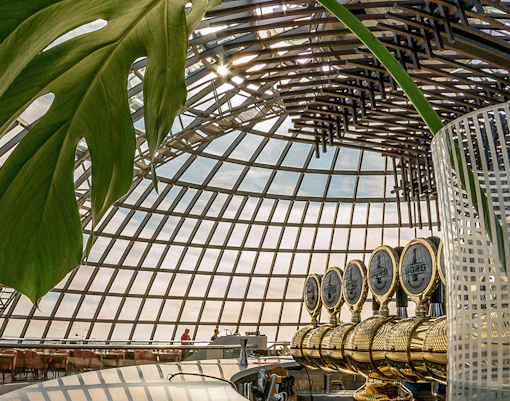
Finish here. The wraparound deck gives Reykjavik’s clearest city-and-mountain panorama, and the glass dome frames the skyline beautifully. Stay for twilight if you can; the low light changes the harbor, hills, and distant peaks completely.

How to explore the Perlan Museum

Visit pacing and time needed

Budget 90 minutes at the bare minimum; 2 hours is the sweet spot, and closer to 3 works best if you want every gallery, the planetarium show, and time at the dome café. The biggest variable is pacing: some people move quickly through the science displays, while others spend ages in the glacier, volcano, and wildlife rooms.

Suggested route

Start with the ice cave and glacier galleries while the building is quiet, then take the next available Arora show so you’re not rearranging the rest of your visit around a fixed screening time. After that, work through the volcano and earthquake exhibits, continue into the ocean and bird displays, and finish on the observation deck when you’re ready to slow down and take in Reykjavik.

Must-see and optional stops

  • Must-see: The real ice cave, the Arora planetarium, and the observation deck.
  • Optional: The dome café and the deeper science panels in the water and climate galleries; they add 30–45 minutes and are best if you enjoy reading exhibits.

Guided vs. self-paced

Self-paced works well here because the layout is intuitive, but a guide adds real value if you want help connecting the indoor displays to Iceland’s actual landscapes and recent eruptions.

Brief history of Perlan Museum

  • 1930s–1940s: Oskjuhlid hill became part of Reykjavík’s geothermal infrastructure, with massive hot-water tanks built to serve the growing city.
  • 1991: A glass dome and public spaces transformed the tank complex into Perlan, turning utility architecture into one of Reykjavik’s best-known landmarks.
  • 1990s: The revolving restaurant and observation deck made Perlan a destination for locals and visitors, valued as much for the view as the building itself.
  • 2017: Perlan reopened as Wonders of Iceland, shifting from lookout point to immersive museum with a real indoor ice cave and nature-focused exhibitions.
  • Today: Perlan functions as both museum and city icon, introducing visitors to Iceland’s glaciers, volcanoes, wildlife, and skies in one place.

Architecture of Perlan Museum

Style

Late-20th-century modern civic architecture. The glass dome softens the heavy tank base, so the building feels both industrial and unexpectedly light as you approach it through the wooded hill.

Materials

Concrete storage tanks, steel framing, and broad glass panels define the structure. You can still read its original utility purpose, even while the reflective surfaces make it feel open and public.

Engineering

Perlan’s real feat is adaptive reuse. Instead of replacing the hot-water tanks, the redesign turned them into usable museum space and crowned them with public circulation and views.

Architect

Architect Ingimundur Sveinsson is generally credited with the landmark redesign, shaping a building that treats utility, spectacle, and city identity as parts of the same idea.

Who built Perlan Museum?

Perlan is closely associated with architect Ingimundur Sveinsson, whose late-20th-century redesign turned Reykjavik’s working hot-water tanks into a civic landmark under glass. The ambition was practical and symbolic at once: keep the infrastructure, but make it public, social, and unmistakably tied to the city skyline.

Best time to visit Perlan in your Iceland trip

Perlan is unusually useful at the start of an Iceland trip because it gives names, context, and scale to things you’ll later see on the road. After walking through the glacier exhibit or the volcano zone, tours to actual ice caves, lava fields, whale-watching spots, or geothermal areas tend to land harder. It also works well at the end of a trip for the opposite reason: you recognize what you’re looking at. Few attractions in Reykjavik do that kind of mental stitching-together as effectively.

Frequently asked questions about the Perlan Museum

Yes, especially on a short Reykjavík stay. Perlan gives you glaciers, volcanoes, wildlife, and aurora context in one stop, plus the city’s best panoramic view. Book tickets to Perlan Museum in advance.

More reads