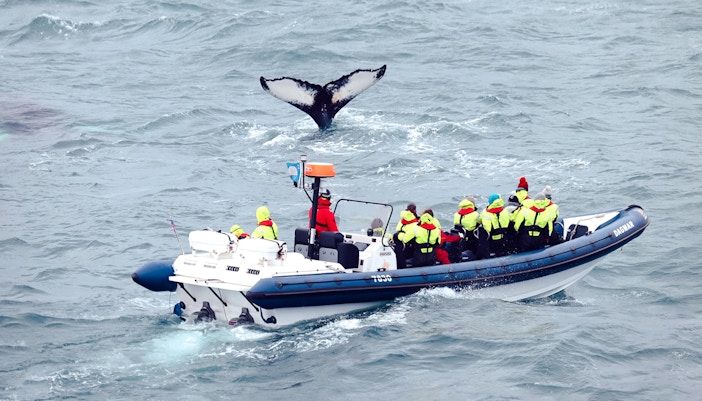
Best time to see whales in Iceland 

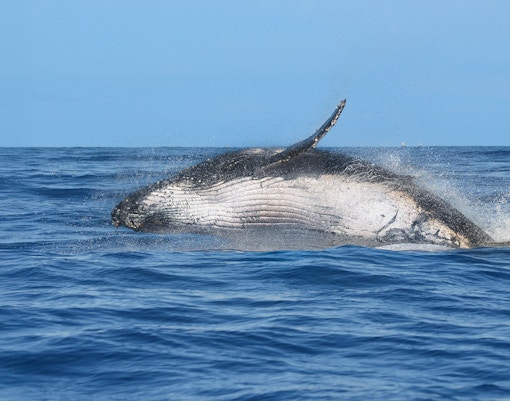
Whales come back to Iceland every year for one reason: food. These nutrient-rich waters create one of the best feeding grounds in the North Atlantic, and that is what turns Iceland into a summertime gathering zone for humpbacks, minkes, blues, and even the occasional orca. Understanding why they come here makes it much easier to understand when you should visit.

Why whales choose Iceland’s waters: The science behind their migration

Whales spend their winters in warm southern waters to mate and calve, but these regions are poor in food. Once spring reaches the North Atlantic, Iceland’s coastline becomes a buffet of krill and small fish. The whales follow the food, heading north to gorge through summer.

Because Iceland is located between Arctic and Atlantic currents, its coastal waters become highly productive and rich in marine nutrients. This collision stirs the ocean like a giant mixing bowl, pulling nutrients to the surface. Whales time their arrival precisely to this seasonal shift.

Iceland’s Plankton Bloom

As daylight expands and waters warm, microscopic plankton explode in number. Fish gather to feed on them. Whales gather to feed on the fish. It is a chain reaction of life, and it drives almost every whale that visits Iceland.

Your best window to see them: When Iceland’s whale activity peaks

The peak whale watching season in Iceland runs from May to September, with June, July, and August offering the most consistent sightings. This is when the plankton bloom is strongest, fish are abundant, and whales feed around the clock under the midnight sun.

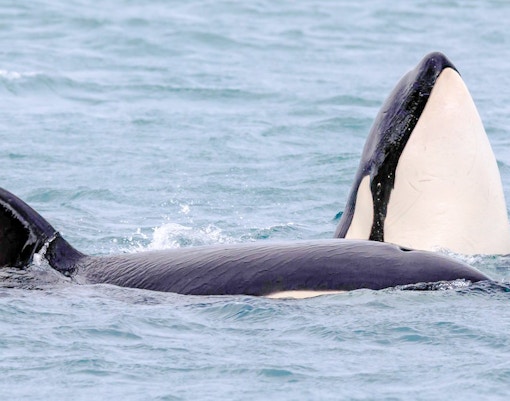
Early spring (April to early May) brings the first arrivals. Autumn (September to October) still offers excellent sightings, though weather becomes more variable. Winter is quieter for migratory whales but you might see the occasional orcas in parts of West Iceland.

Whale watching by region

Reykjavik

Reykjavik’s Faxaflói Bay is broad, wildlife-rich, and easily accessible from the capital. You can spot humpbacks, minkes, porpoises, and seasonal puffins on nearby islands. Tours operate year-round, with summer offering the most stable sightings.

Recommended tour:

Reykjavik: Whale Watching and Puffin Tour on RIB Speedboat for a fast and agile ride across the bay for spotting whales at eye level.
Húsavík

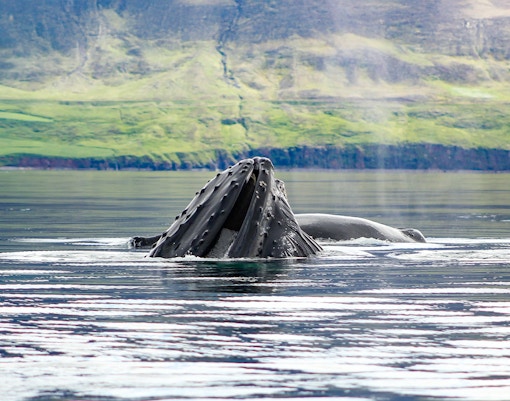
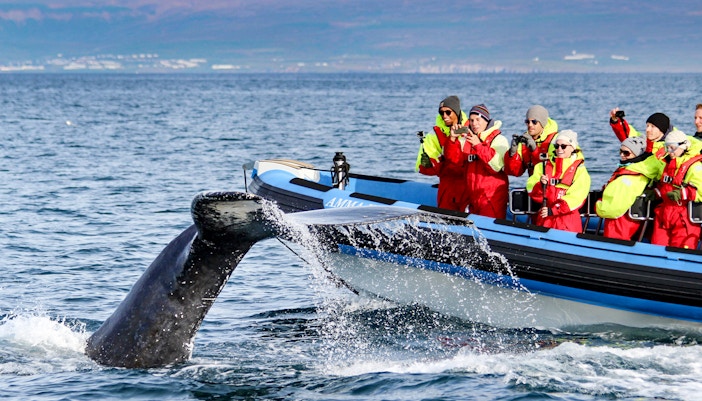
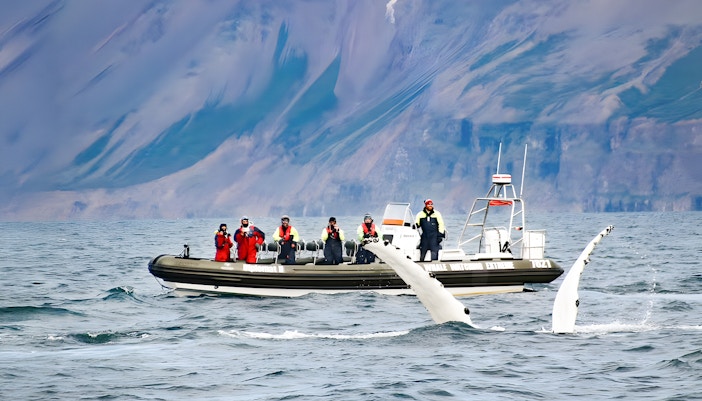
Often called the “Whale Capital of Iceland,” Húsavík sits right beside Skjálfandi Bay, one of the richest feeding grounds in the North Atlantic. This bay benefits directly from the cold glacial river that empties into it, supercharging nutrient levels and attracting huge numbers of humpbacks.

Recommended tour:

Húsavík: Whale Watching and Puffin Tour on RIB Speedboat will get you closest to Iceland’s humpbacks and Puffin Island.

Akureyri

Akureyri offers a different experience inside Eyjafjörður, Iceland’s longest fjord. Its sheltered waters are calmer than the open bays, making it ideal for stable tours and scenic fjord landscapes. Minke and humpback whales are common here.

Recommended tour:

Go for the RIB Whale Watching Tour from Akyureyri for a fast-paced ride through glacier-carved fjord scenery.

What to expect on a whale watching tour (Season-by-season guide)

Summer: Calm waters, birdlife, longest daylight

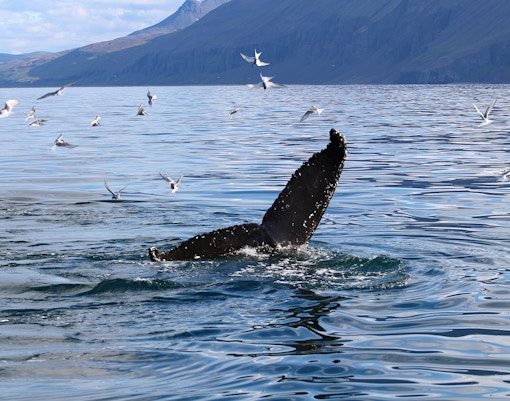
June to August offers peak whale activity, warmest seas, and incredible visibility under long days. Puffins, Arctic terns, and thousands of seabirds join the spectacle. This is Iceland’s whale watching at its most vibrant.

Spring: First whale arrivals

April and May mark the whales’ return as they follow the plankton bloom north. Sightings increase rapidly week by week. Weather can be mixed, but the anticipation of the season’s first humpbacks makes it exciting.

Autumn: Quieter tours but still strong sightings

September is excellent for whales, especially in Húsavík. Cooler weather and fewer crowds make it a relaxed time to visit.

Winter: Orca hotspots

Migratory whales leave, but  few orcas do appear in certain western bays following herring schools, and some tours focus entirely on this seasonal phenomenon.

When is Puffin season in Iceland?

Iceland is not just whale territory. It is also home to one of the world's largest puffin colonies. Puffins return to land between April and August to nest, and these months overlap with peak whale season. From Reykjavik, tours visit Akurey and Lundey, while tours from Húsavík stop at Puffin Island where thousands nest on the cliffs.

Seeing whales and puffins together becomes one of the most rewarding wildlife experiences in Iceland.

Frequently asked questions on the best time to see whales in Iceland

Sightings are very frequent in summer, especially in Húsavík, but nature can never be guaranteed. Many operators offer free return tickets if no whales appear.