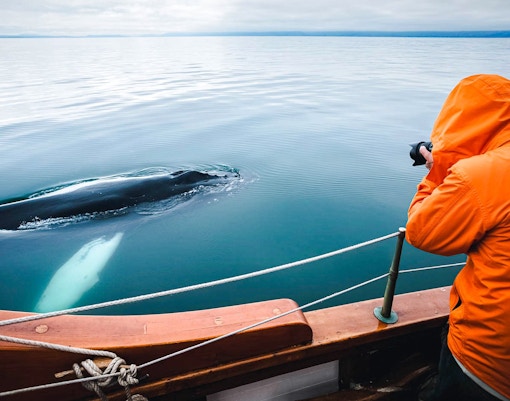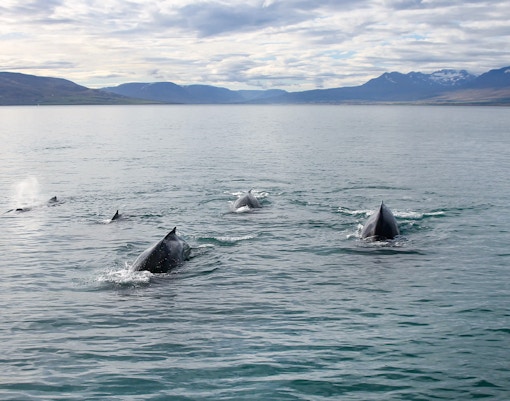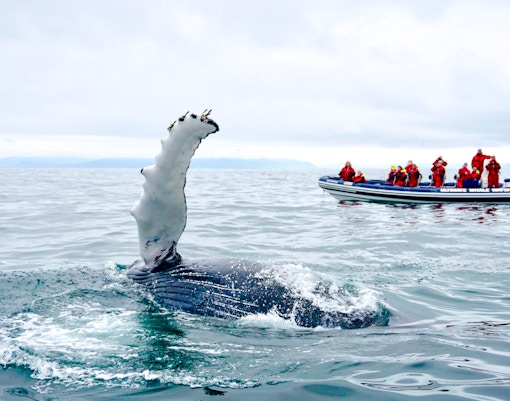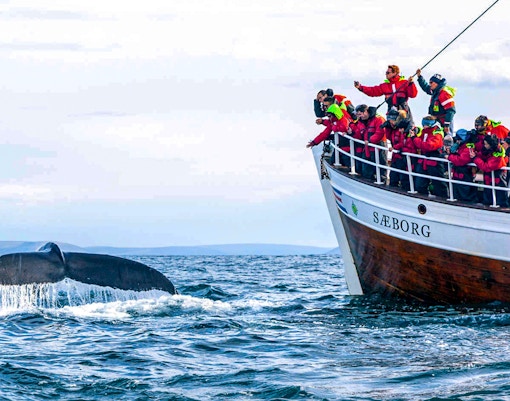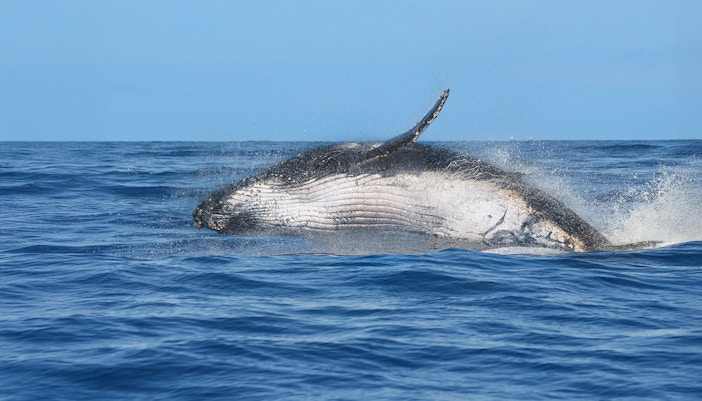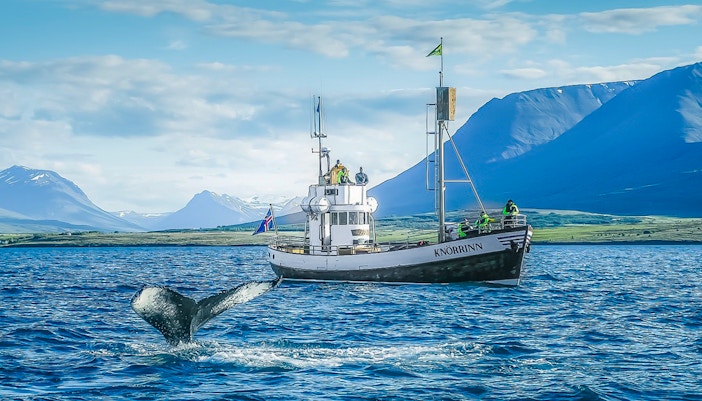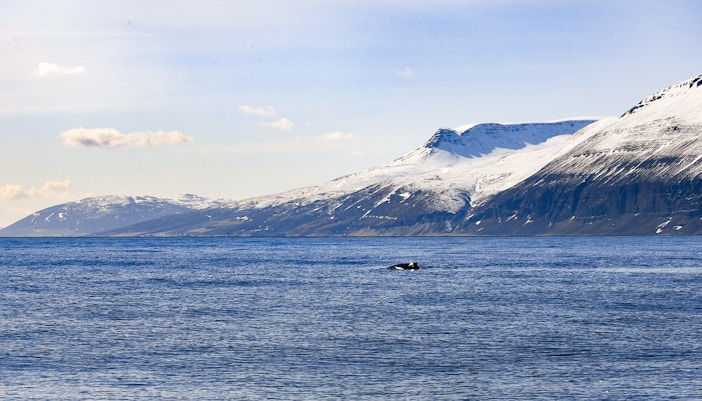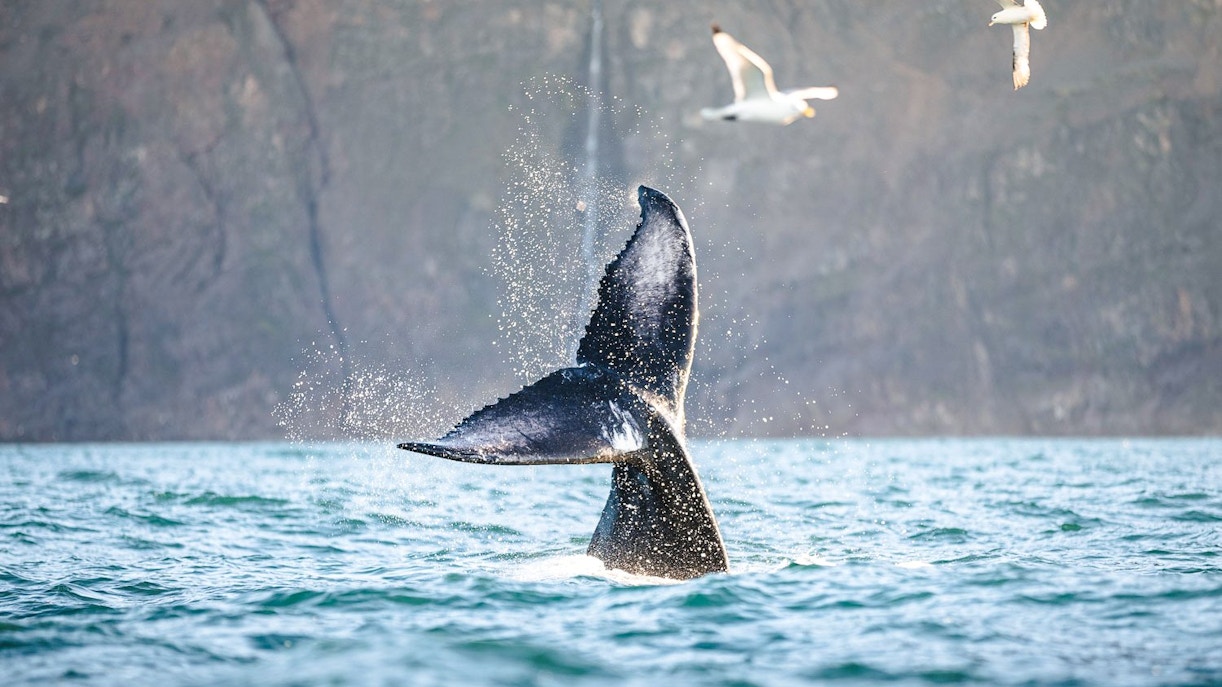
Most large whale species arrive from late March to April, when longer days and rising plankton levels indicate the start of the feeding season. By May, Iceland’s coastal waters are fully active, attracting humpback, minke, and fin whales, and occasionally blue whales. This migration peaks during the summer months (June to August), when food availability is at its highest and whales spend long periods feeding close to shore.
As autumn approaches (September–October), sightings gradually decrease as whales begin their journey south toward warmer breeding grounds in the Caribbean, West Africa, and the Azores. While a few species, such as minke whales, can still be spotted into early winter, the main migration season to Iceland runs from April to September, with summer offering the most consistent and diverse whale activity.