Open bays like Faxaflói near Reykjavík are exposed to Atlantic currents and serve as transit corridors for migratory whales such as minkes, fin whales, and occasionally blues moving along the Mid-Atlantic route. Sheltered fjords in North Iceland, including Eyjafjörður near Akureyri and Skjálfandi Bay near Húsavík, are calmer and warmer, allowing whales to remain feeding for days or weeks rather than passing through.
Best places for whale watching in Iceland
Iceland is one of the few places in the world where you can see more than 20 whale species within sight of land, often just minutes after leaving the harbour. This is not open-ocean cruising or seasonal luck. Plankton-rich bays, deep Atlantic waters and long-established coastal communities that have lived alongside these waters for generations is the reason why Iceland has some of the best whale watching experiences in the world.
Read the rest of the article to find out which bases offer the ultimate whale watching experience in Iceland.
Why is Iceland a whale magnet?
Iceland sits directly along major North Atlantic migratory routes, but whales do not stop here by accident. Seasonal plankton blooms fuel massive fish populations, especially capelin and herring, which draw whales close to shore. The island’s varied coastline offers shallow feeding grounds, deep offshore drop offs, and protected fjords, all within short distances. This rare combination allows both migratory and feeding whales to remain near Iceland for months rather than simply passing through.
More about the best time to visit Iceland for whale watching here.
How whale habitats differ across Iceland’s coast
One thing you need to know is that Iceland’s coastline is not uniform, and neither are its whale habitats. Ocean depth, coastline shape, currents, and food availability change dramatically from region to region, creating distinct zones that attract different whale species at different times of year.
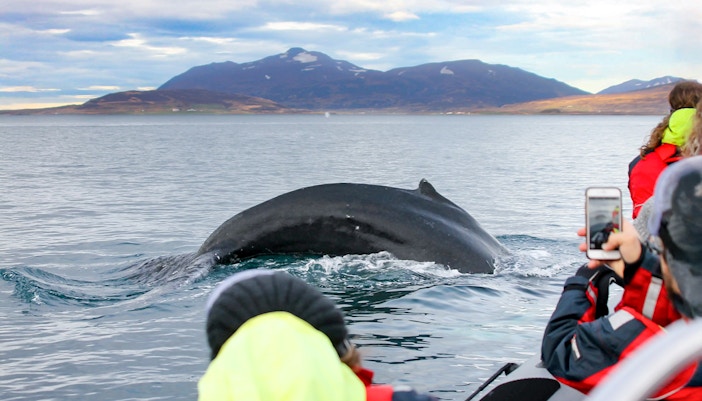
Open bays vs. sheltered fjords
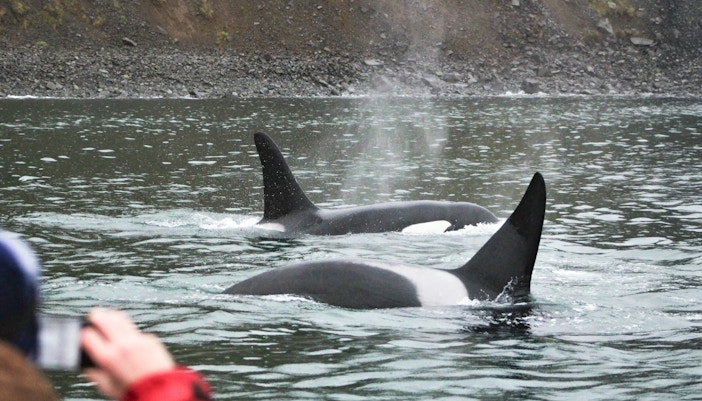
Shallow feeding grounds vs. deep water drop-offs
Shallow, nutrient-rich feeding grounds in Skjálfandi Bay and parts of Eyjafjörður concentrate plankton and small fish, making them ideal for humpback whales that rely on lunge feeding. In contrast, deep-water drop-offs along the Snæfellsnes Peninsula and Westfjords lie close to shore, attracting fin and blue whales that follow capelin and herring schools along steep underwater shelves.
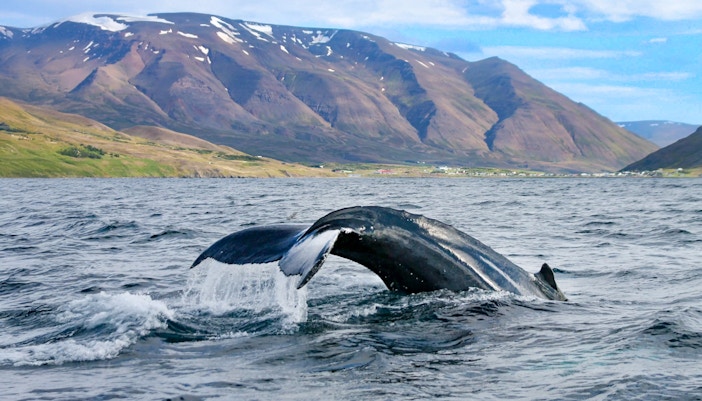
Migratory routes vs. resident feeding areas
South and west Iceland sit along major migratory routes used by whales traveling between Arctic feeding grounds and southern breeding areas, resulting in seasonal but varied sightings. North Iceland is where most resident feeding areas are, where humpbacks return year after year, drawn by predictable fish runs and stable plankton blooms.
Best places for whale watching in Iceland
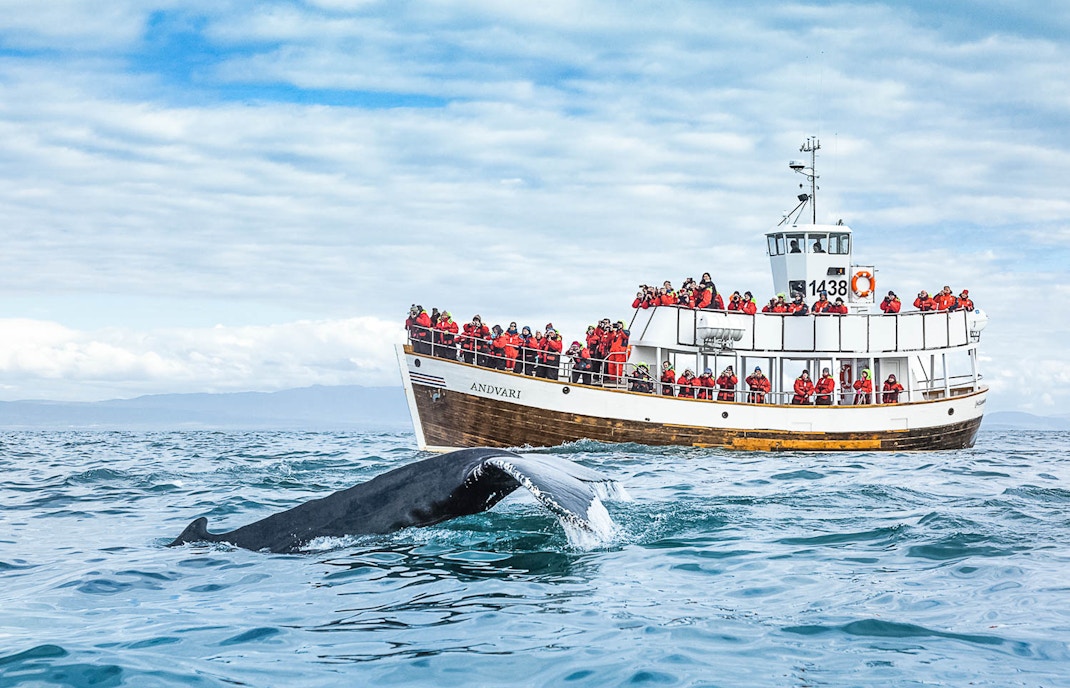
Húsavík
Main bay: Skjálfandi Bay, shallow and plankton rich
Whale species most commonly seen: Humpback whales, minke whales, blue whales, dolphins
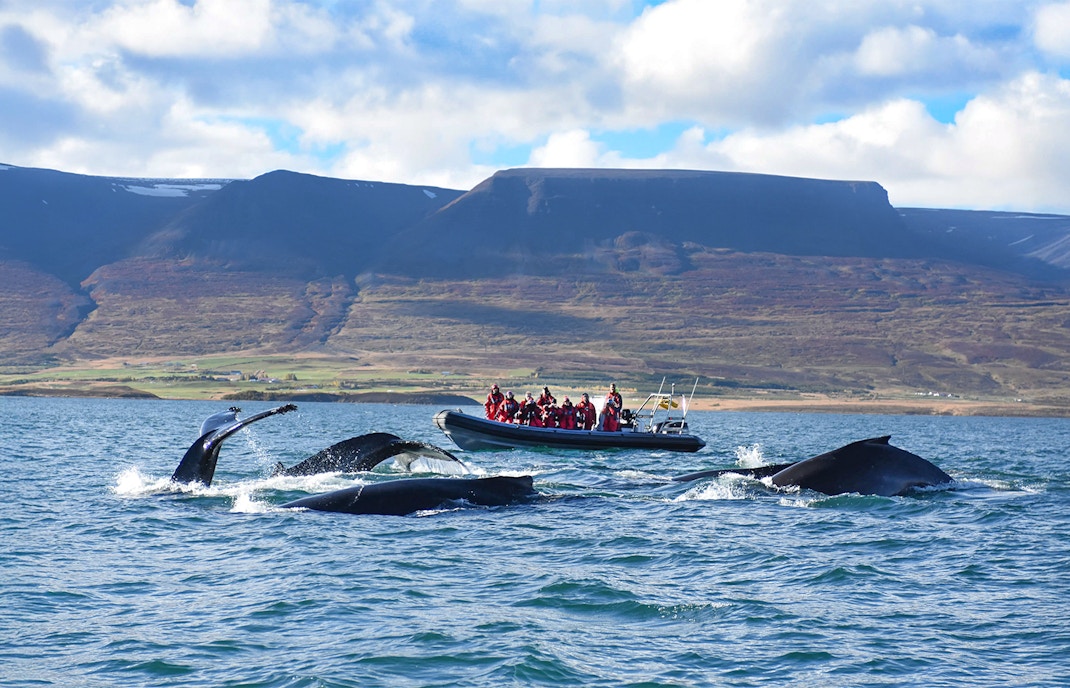
Húsavík earned its reputation long before whale watching became mainstream in Iceland. Skjálfandi Bay is wide, gently sloping, and cold, fed by Arctic currents that keep plankton and fish concentrated close to shore. This steady food supply is why humpback whales return here every summer and often stay for weeks, sometimes surfacing just minutes after departure. Sightings regularly exceed 95 percent in peak season, among the highest in the country.
Recommended tour
Akureyri
Main bay: Eyjafjörður fjord, long and sheltered
Whale species most commonly seen: Humpback whales, dolphins, occasional minke whales
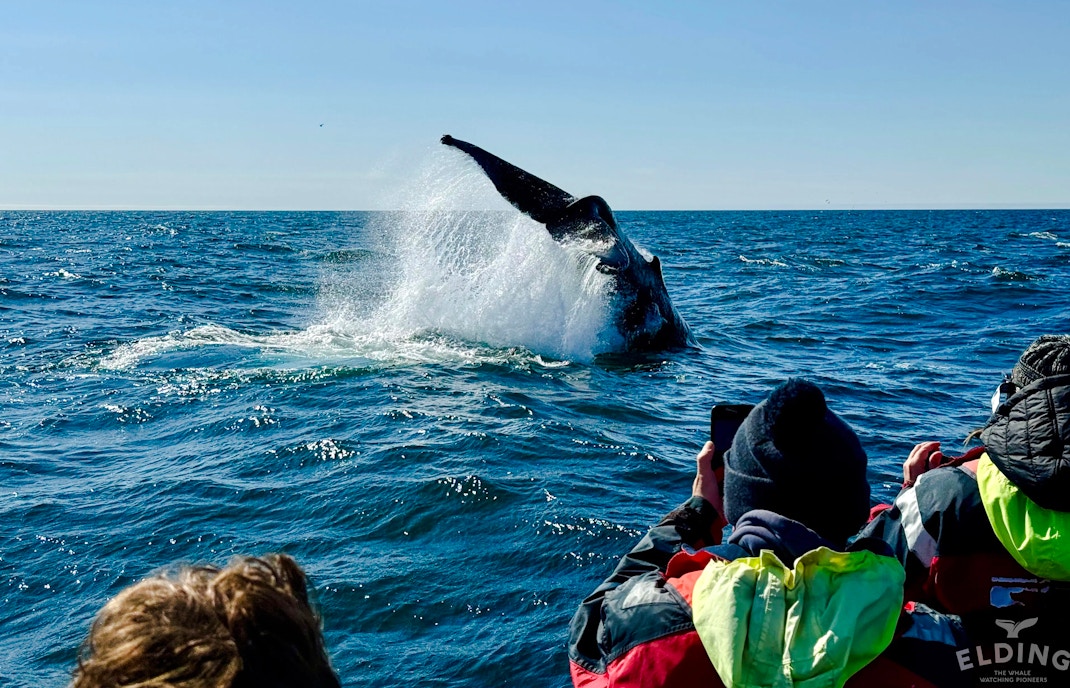
Akureyri’s Eyjafjörður fjord stretches nearly 60 kilometers inland, creating one of Iceland’s most sheltered whale habitats. When herring enter the fjord in summer, humpback whales often follow them deep inside. Sightings here are highly seasonal but can spike dramatically in July and August. The fjord’s steep sides block wind and swell, making conditions calmer than open bays and ideal for longer, more relaxed whale encounters.
Recommended tour
Reykjavík
Main bay: Faxaflói Bay, wide and open
Whale species most commonly seen: Minke whales, humpbacks, dolphins, porpoises
Reykjavík is the most accessible whale watching base in Iceland, sitting right on the edge of Faxaflói Bay, a broad, open feeding area shaped by Atlantic currents. The bay attracts fast-moving species like minke whales, along with humpbacks, dolphins, and porpoises when there’s enough food. Just offshore, small islands such as Akurey and Lundey host large puffin colonies in summer.
Recommended tour
Standard whale watching tour from Reykjavik
Snæfellsnes Peninsula
Bay type: Open coastal waters with deep offshore access
Whale species most commonly seen: Orcas, humpbacks, sperm whales
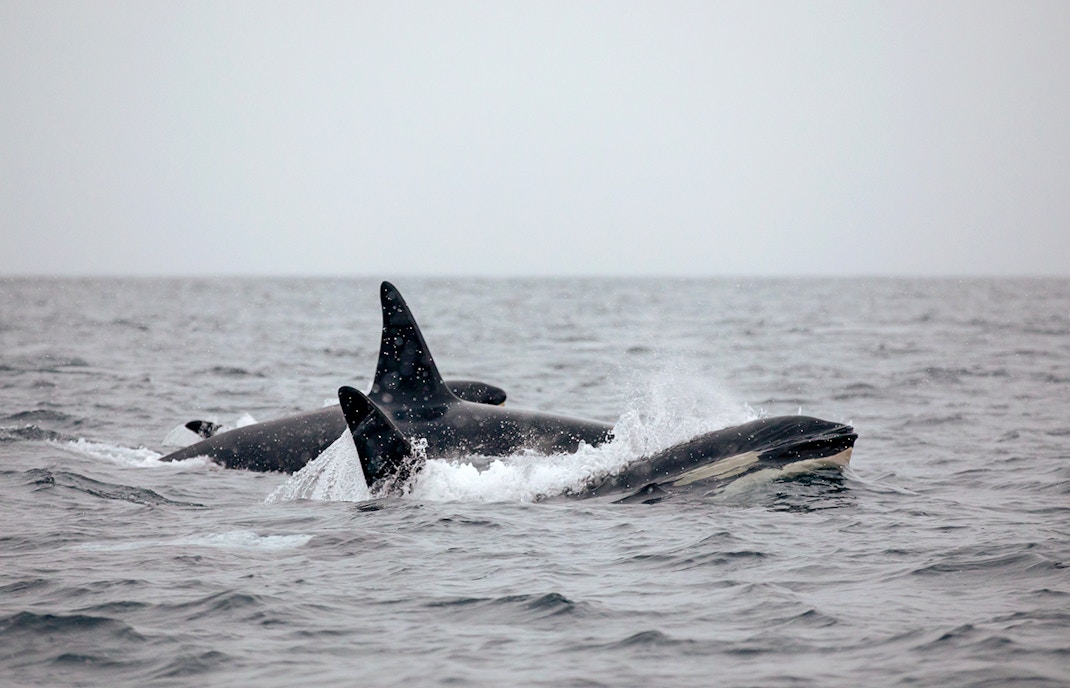
Snæfellsnes is located where deep Atlantic waters come up very close to shore, making it one of Iceland’s strongest orca regions. Tours usually depart from coastal towns like Grundarfjörður and Ólafsvík. Orcas follow herring here in winter, with sighting rates often exceeding 80 percent during peak months. The scenery is raw and dramatic with snow capped mountains, lava cliffs, and quiet fishing villages.
Westfjords
Bay type: Deep fjords with minimal disturbance
Whale species most commonly seen: Blue whales, fin whales, humpbacks
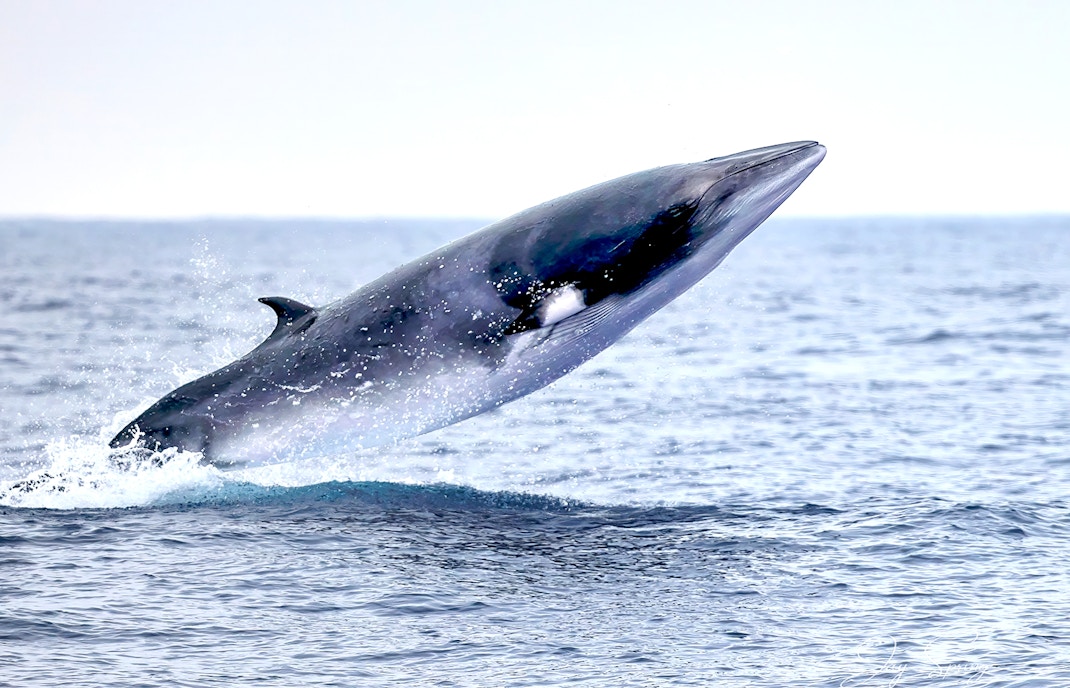
The Westfjords sit in Iceland’s far northwest, cut by long fjords like Ísafjarðardjúp and Skutulsfjörður where deep water runs close to shore. Tours often depart from Ísafjörður, a small port surrounded by steep mountains. Minke whales, humpbacks, white-beaked dolphins, and occasional blue whales pass through in summer. Birdlife is just as striking here with sea cliffs hosting millions of nesting birds.
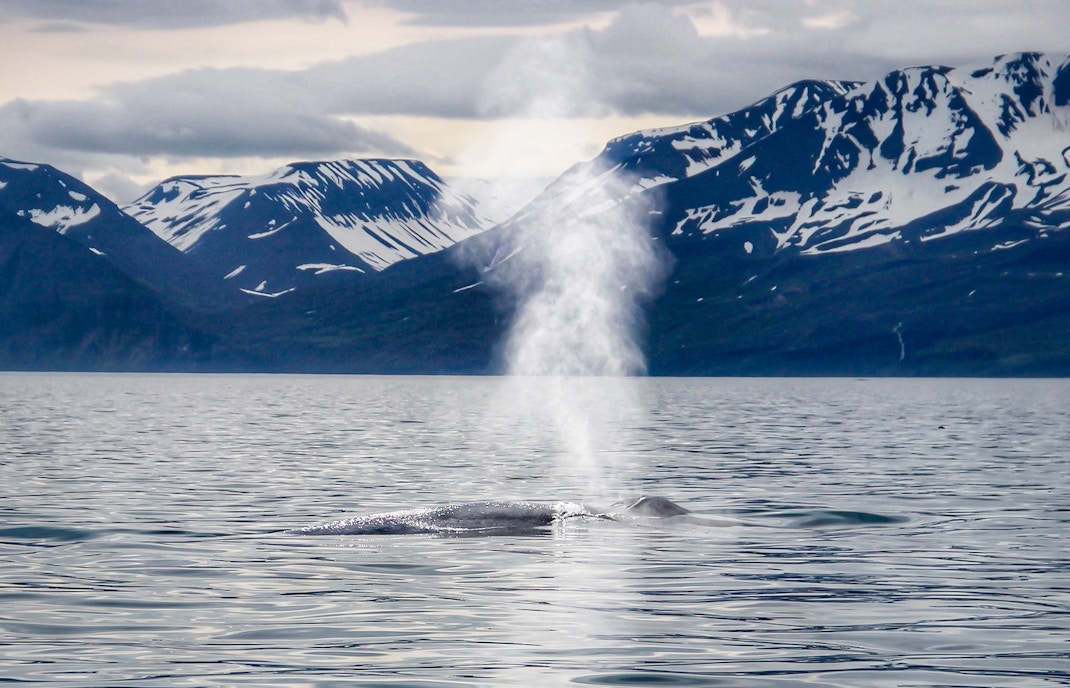
Remote North Coast
Bay type: Open Arctic facing coastline
Whale species most commonly seen: Blue whales, fin whales, humpbacks
Iceland’s remote North Coast stretches between small fishing villages like Raufarhöfn and Þórshöfn, facing the open Arctic Ocean with no sheltering fjords. The seabed drops steeply offshore, creating ideal conditions for blue and fin whales during mid to late summer. Cold, plankton-rich currents fuel dense krill and fish blooms, drawing the largest whales close to land. Whale watching here is infrequent and weather-dependent, but when seas cooperate, sightings are powerful and often uncrowded.
Frequently asked questions about best places to see whales in Iceland
If it’s your first time and you want more reliable whale sightings, then go for Húsavík. Summer sighting rates here often cross 90 percent because whales feed repeatedly in Skjálfandi Bay. That said, reaching Húsavík does require extra travel. If you want to keep things simple, whale watching tours from Reykjavík are a convenient and still rewarding alternative.
In most cases, yes. Fjords shelter boats from wind and let whales feed longer in one place. Open bays demand more searching, but they suit fast-moving species.
No, and this is important. Whales follow food, not calendars. A bay that peaks in July can feel empty in October. Whale watching in Iceland depends on seasonal movement and there’s never one permanent hotspot.
Long fjords like Eyjafjörður near Akureyri are the most forgiving. Even when offshore winds pick up, these fjords stay navigable. If seasickness worries you, this matters more than whale species.
Depth controls prey. Humpbacks thrive where krill gathers in shallower water. Fin and blue whales need steep drop-offs where large fish schools move vertically. This is why some fjords see giants and others never do.
Yes they do. On strong tidal days, whales surface where currents push fish toward shallow shelves. Guides track this daily. If you notice boats clustering in one area, it’s rarely random.
It can. Heavy traffic changes surfacing patterns and shortens feeding time. This is why regulated zones and codes of conduct matter. Long-term reliability depends on restraint.
Whales remember success. Bays that consistently host herring or capelin become seasonal feeding stops. This pattern repeats year after year, which is why certain Icelandic bays build reputations that last decades.


