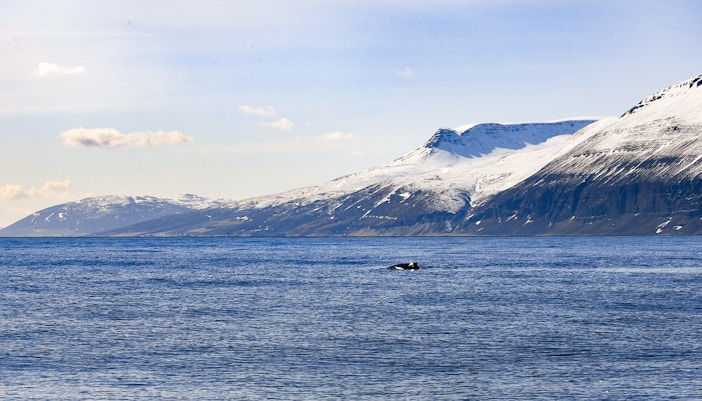
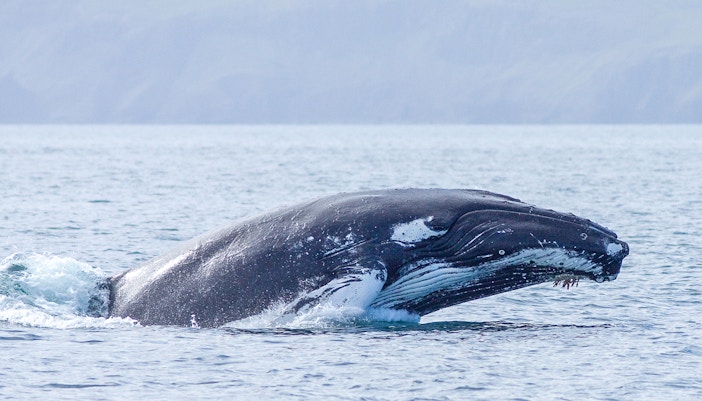
Eyjafjörður: Sail on the calm waters of Eyjafjörður and spot humpback whales
Quick overview
- Location: North Iceland, stretching inland from the Greenland Sea to the town of Akureyri
- Geography: Iceland’s longest fjord, framed by steep mountains and wide coastal plains
- Length: Around 60 km (37 miles), with calm, sheltered waters
- Landscape: Glacier-carved slopes, fertile lowlands, and snowcapped peaks in the distance
- Climate: Cooler and more stable than open-coast areas, with relatively mild summers
- Character: Quiet, expansive, and scenic, blending dramatic nature with small-town life
- Notable settlement: Akureyri, often called the “Capital of North Iceland,” sits at the fjord’s head
Eyjafjörður over the years: A brief history
Eyjafjörður has been inhabited since Iceland’s early settlement period in the 9th century. Its long, sheltered fjord offered calm waters, fertile land, and access to rich fishing grounds, making it an attractive location for Norse settlers. Small farming and fishing communities developed along the shoreline, forming the backbone of life in North Iceland for centuries.
During the medieval period, Eyjafjörður became an important regional hub for agriculture and trade. Livestock farming thrived in the fjord’s valleys, while fishing and seasonal trade connected local communities with other parts of Iceland. Despite its remote northern location, the fjord played a steady role in sustaining Iceland’s rural economy.
In the late 19th and early 20th centuries, Eyjafjörður gained greater prominence with the growth of Akureyri at its head. The town evolved into a key port, commercial center, and cultural hub for North Iceland. Today, Eyjafjörður reflects a blend of deep-rooted Viking-era heritage and modern Icelandic life, shaped by centuries of settlement, trade, and adaptation to its dramatic natural surroundings.
Geography of Eyjafjörður
The fjord was shaped by glacial activity during the last Ice Age. Massive glaciers carved deep troughs into the landscape, leaving behind a fjord with relatively calm, sheltered waters and a gently sloping seabed. This glacial origin also explains the fertile valleys and flat plains around the fjord’s inner reaches, which support farming and settlements.
Surrounded by mountains that rise over 1,000 meters in places, Eyjafjörður is well protected from harsh ocean conditions. Several rivers flow into the fjord, carrying freshwater and sediments from inland glaciers and highlands. This mix of freshwater and cold Arctic seawater influences local climate, visibility, and marine conditions, giving Eyjafjörður its distinctive northern character and stable geography.
What to expect on whale watching tours at Eyjafjörður
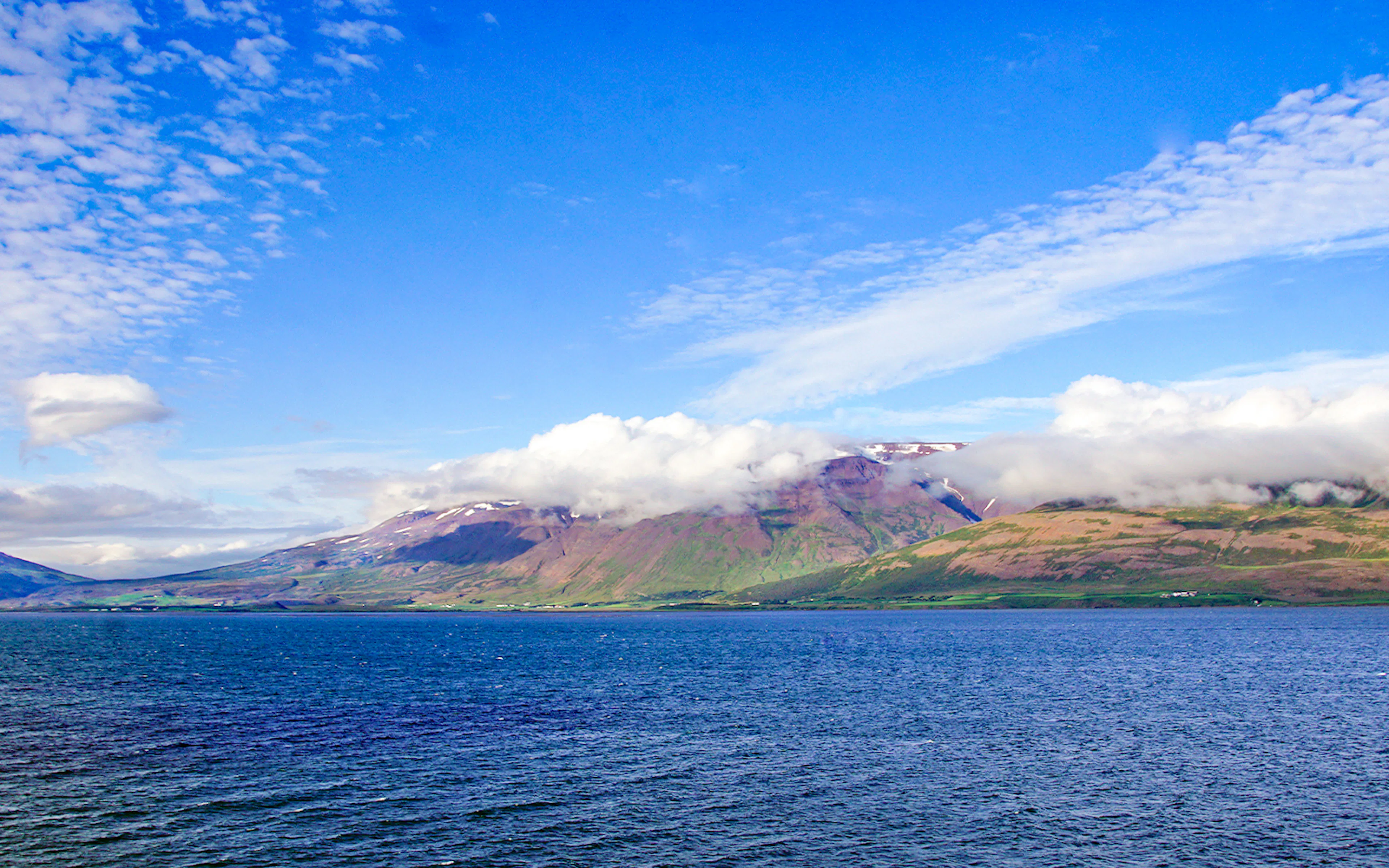
Calm fjord sailing
Whale watching in Eyjafjörður takes place in sheltered fjord waters, making the ride noticeably smoother than open-sea tours. The surrounding mountains help block strong winds and waves, creating comfortable conditions even for first-time whale watchers.
High chances of humpback sightings
Eyjafjörður is especially known for frequent humpback whale appearances, often seen feeding close to the surface. Minke whales, white-beaked dolphins, and harbor porpoises are also commonly spotted during the season.
Scenic mountain backdrops
As you cruise through the fjord, expect sweeping views of snow-capped peaks, green valleys in summer, and small coastal settlements. The scenery is a major highlight, adding a dramatic Arctic setting to every wildlife sighting.
Expert-led spotting and commentary
Tours are led by experienced guides or marine biologists who help spot whales and explain their behavior in real time. You’ll learn how feeding patterns, tides, and fjord geography influence where whales surface.
Close but responsible encounters
Boats slow down near whales and maintain safe distances, following strict whale-welfare guidelines. This allows you to observe natural behaviors like fluking, breaching, or surface feeding without disturbing the animals.
Comfort-focused boats
Most Eyjafjörður tours operate on stable catamarans or classic whale-watching vessels with indoor heated cabins and open decks. Warm overalls are usually provided, letting you stay outside longer for photos and sightings.
A relaxed, nature-first experience
Compared to busier departure points, Eyjafjörður offers a quieter, more immersive atmosphere. The combination of calm waters, reliable sightings, and expansive landscapes makes these tours feel unhurried and deeply connected to nature.
Highlights of Eyjafjörður

Iceland’s longest fjord
Stretching deep into North Iceland, Eyjafjörður is the country’s longest fjord, known for its wide waters and dramatic sense of scale.

Visitor tips
- Choose the right boat type: Larger boats and catamarans offer more stability and indoor seating, while RIB speedboats are faster and closer to the water but feel colder and bumpier.
- Arrive early at the harbor: Boarding usually starts 15–30 minutes before departure, and early arrival gives you better seating and time for safety briefings.
- Listen to the guides: Whale sightings often depend on subtle cues like seabird activity or surface ripples. Guides know exactly what to look for.
- Bring a camera with a zoom lens: Whales can surface close or far away, and a modest zoom helps capture clearer shots without disturbing wildlife.
- Prepare for motion sickness: Eyjafjörður is calmer than open sea, but light swells are still possible; ginger tablets or wristbands can help.
- Respect wildlife rules: Boats follow strict whale-welfare guidelines, so sightings may happen at a respectful distance, which ensures ethical and sustainable encounters.
Frequently asked questions about Eyjafjörður
It’s Iceland’s longest fjord, known for calm waters, scenic mountain views, and reliable humpback whale sightings, especially in summer.
The most commonly spotted species are humpback whales and minke whales, with occasional sightings of dolphins, porpoises, and rare blue whales.
The best time is April to September, when seas are calmer and whale activity peaks. Summer also offers long daylight hours for better viewing.
Most tours run between 2 and 3 hours, depending on the boat type and weather conditions.
Wear warm layers, a windproof jacket, sturdy shoes, gloves, and a hat. Even in summer, temperatures on the fjord can feel cold.